Uttarakhand CM Office: Concrete steps to cut disaster risk
Synopsis
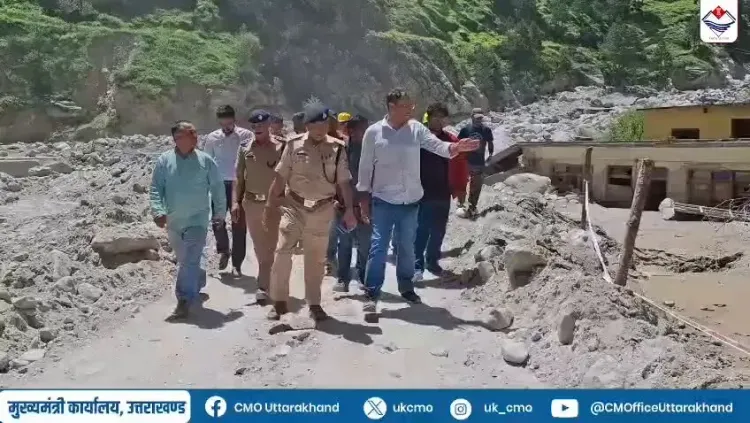
The Chief Minister's Office of Uttarakhand announced on 13 August 2026 that the state is taking concrete steps to reduce disaster risk, spotlighting Chamoli — a district scarred by the 2021 glacial outburst flood — as a focal point of the government's ongoing risk-reduction push.
Key Takeaways
The Chief Minister's Office of Uttarakhand announced on 13 August 2026 that the state government is taking concrete steps to reduce disaster risk.
Chamoli district was specifically highlighted — it was the site of a deadly glacial lake outburst flood on 7 February 2021 that destroyed two hydropower projects and killed dozens.
Uttarakhand strengthened its State Disaster Management Authority after the 2013 Kedarnath floods and expanded glacier monitoring after the 2021 Chamoli disaster.
The state faces a triple threat of seismic activity, glacial melt, and extreme monsoon rainfall, making disaster management a permanent governance priority.
No specific measures, budget figures, or project names were disclosed in the post; details are expected through upcoming government announcements.
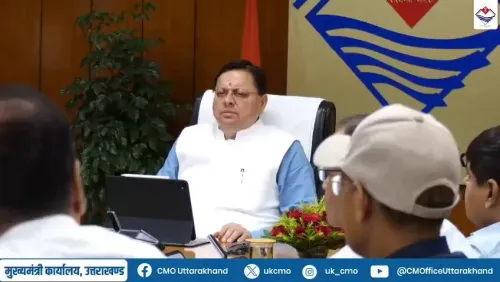
In a state where the mountains themselves can turn deadly, the Chief Minister's Office of Uttarakhand signalled on Thursday, 13 August 2026 that the government is taking concrete steps to reduce disaster risk across the state — with a specific focus on Chamoli, the district that bore the brunt of one of India's most devastating glacial catastrophes in recent memory.
The post, shared on the official CMO account, stated: 'Uttarakhand mein aapda ke jokhim ko kam karne ke liye rajya sarkar utha rahi hai thos kadam' — 'The state government is taking concrete steps to reduce disaster risk in Uttarakhand.' Short on specifics, but pointed in intent.
Why Chamoli is always the name that haunts the conversation
On 7 February 2021, a glacial lake outburst flood tore through the Rishiganga and Dhauliganga valleys in Chamoli district, killing scores of people and destroying two hydropower projects. It was a grim reminder that Uttarakhand sits at the intersection of seismic activity, glacial melt, and extreme rainfall — a triple threat that no single policy cycle has fully resolved.
That disaster accelerated the state's push to expand glacier monitoring networks and risk-reduction projects in vulnerable valleys. Before that, the 2013 Kedarnath floods — which claimed thousands of lives — had already forced a structural overhaul of the Uttarakhand State Disaster Management Authority and its early-warning systems. Each catastrophe has written another chapter of hard-won institutional learning.
A state perpetually on the edge
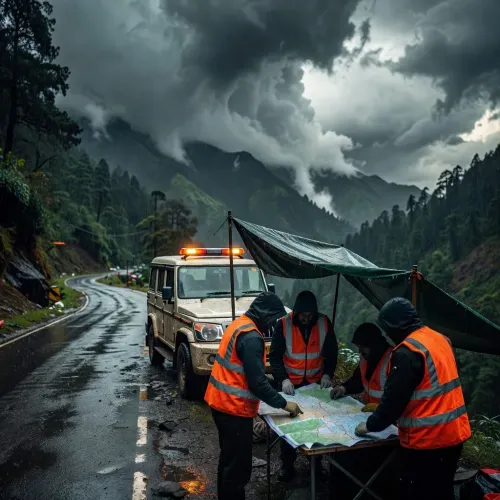
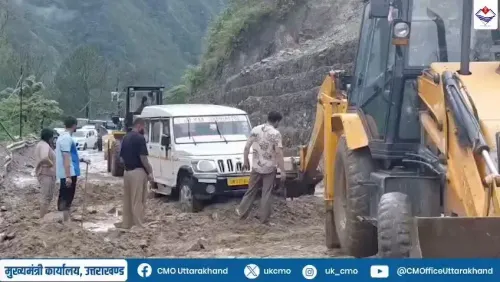
Uttarakhand is not simply disaster-prone — it is geographically predisposed to cascading risk. Landslides, flash floods, earthquakes, and glacial outbursts can strike simultaneously or in sequence. Successive governments have tried to weave disaster management into development planning rather than treat it as a post-crisis afterthought, integrating resilience into road construction, hydropower siting, and community infrastructure.
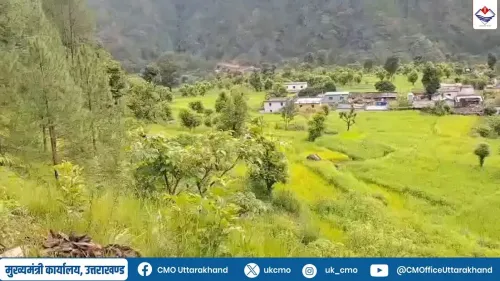
The communities of Chamoli and other high-altitude Himalayan districts live with this calculus every monsoon season. For them, 'concrete steps' is not a bureaucratic phrase — it is a matter of survival.
The specifics of what the government is now doing — new early-warning installations, budget allocations, infrastructure hardening — have not been detailed in the post. Those answers are what the people of Chamoli will be watching for.
Point of View
A pattern common to state governments managing disaster-prone constituencies where expectations run high after repeated tragedies. Chamoli's inclusion is politically significant: the 2021 glacial flood remains an open wound in public memory, and any government that fails to visibly act there risks electoral consequences in a state where disaster response is a defining governance test. The broader arc here is whether Uttarakhand can move from reactive crisis management to genuinely predictive, infrastructure-backed resilience — a shift that requires sustained capital and inter-agency coordination beyond a single social media post.
NationPress
13 Aug 2026
Frequently Asked Questions
What steps is the Uttarakhand government taking to reduce disaster risk?
The Chief Minister's Office announced on 13 August 2026 that concrete steps are being taken, but specific measures were not detailed in the post. Past initiatives have included expanded glacier monitoring, early-warning systems, and resilient infrastructure planning following the 2013 Kedarnath floods and the 2021 Chamoli glacial outburst.
Why is Chamoli highlighted in Uttarakhand's disaster management plans?
Chamoli district suffered a catastrophic glacial lake outburst flood on 7 February 2021 that destroyed two hydropower projects and killed scores of people, making it a focal point for the state's ongoing risk-reduction efforts.
What is the Uttarakhand State Disaster Management Authority?
It is the state body responsible for coordinating disaster preparedness, response, and risk reduction in Uttarakhand. It was significantly strengthened after the 2013 Kedarnath floods, which claimed thousands of lives.
Why is Uttarakhand so prone to natural disasters?
Uttarakhand sits in the Himalayas and faces a combination of seismic activity, glacial melt, and intense monsoon rainfall, making it vulnerable to earthquakes, landslides, flash floods, and glacial lake outburst floods — often in sequence.
What happened in the 2021 Chamoli disaster?
On 7 February 2021, a glacial lake outburst flood swept through the Rishiganga and Dhauliganga valleys in Chamoli, Uttarakhand, killing dozens of people and causing severe damage to two hydropower projects and surrounding infrastructure.