Uttarakhand Govt Creates Enabling Environment for Women SHGs
Synopsis
The Uttarakhand government is creating a favourable environment for women's self-help groups to become self-reliant, with Bageshwar district highlighted as a focus area. The initiative aligns with the national DAY-NRLM framework and targets rural women facing geographic isolation and limited local employment.
Key Takeaways
The Chief Minister's Office of Uttarakhand announced on 27 July 2026 that the state is building an enabling environment for women's SHGs.
Bageshwar district in the Kumaon division is specifically highlighted as a focus area for this initiative.
The effort aligns with the national Deendayal Antyodaya Yojana–National Rural Livelihoods Mission (DAY-NRLM) , launched in 2011 .
SHGs typically comprise 10 to 20 women who pool savings, extend micro-credit, and undertake collective income-generating activities.
The initiative addresses structural challenges in hill districts including male out-migration and limited access to formal financial institutions.
The state's approach emphasises a systemic 'enabling environment' covering regulatory support, capacity building, and market linkages.
The Chief Minister's Office of Uttarakhand announced on Monday, 27 July 2026 that the state government is actively creating a favourable environment to make women's self-help groups (SHGs) self-reliant, with a specific focus on Bageshwar district.
Context
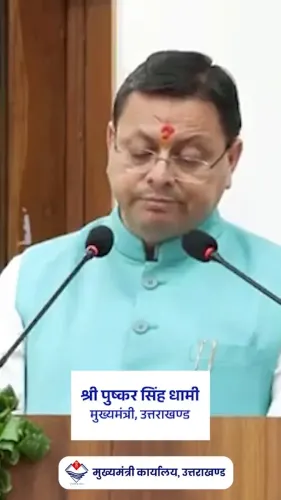
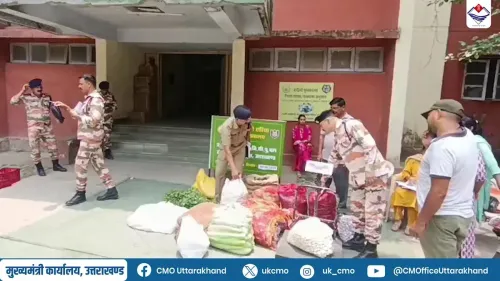
The official post, shared in Hindi, states: 'Uttarakhand mein mahila swayam sahayata samoohon ko aatmanirbhar banane ke liye anukool vatavaran muhayya kara rahi hai rajya sarkar' — 'The state government is providing a conducive environment to make women's self-help groups self-reliant in Uttarakhand.' The announcement highlights Bageshwar as a focal district and is accompanied by a video illustrating ground-level activity.
Self-help groups are community-level collectives, typically comprising 10 to 20 women, that pool savings, extend micro-credit to members, and undertake collective income-generating activities. They have been a cornerstone of rural livelihood policy in India for over three decades.
Policy Backdrop
The broader national framework underpinning this initiative is the Deendayal Antyodaya Yojana–National Rural Livelihoods Mission (DAY-NRLM), launched in 2011 to scale up SHG networks and build sustainable livelihoods across rural India. Uttarakhand, as a participating state, channels central and state funds through this mission to organise, train, and financially link women's groups.
Bageshwar, a predominantly rural and mountainous district in the Kumaon division of Uttarakhand, has historically faced challenges including male out-migration for employment, leaving women as primary managers of household economies. SHG-based interventions in such districts are designed to convert this de facto economic role into a formally supported livelihood pathway.
Uttarakhand state governments across administrations have used SHGs as instruments to address limited local employment, promote savings habits, and seed micro-enterprises in sectors such as handicrafts, food processing, and horticulture — areas where the state's geography and cultural heritage offer comparative advantage.
Stakeholders and Impact
The primary beneficiaries are rural women in Uttarakhand, particularly SHG members in hill districts such as Bageshwar who face geographic isolation and limited access to formal financial institutions. A well-functioning SHG ecosystem can provide women with credit access, skill training, and a collective bargaining platform.
Secondary stakeholders include district administration officials, bank correspondents, and state rural livelihood mission staff who facilitate the linkage between SHGs and formal credit channels. The broader community benefits through reduced household poverty and improved social indicators linked to women's economic participation.
The emphasis on an 'enabling environment' — rather than a single scheme — signals a systemic approach: regulatory support, capacity building, market linkages, and financial inclusion working together rather than standalone cash transfers.
What's Next
Observers will watch for concrete programme updates from Bageshwar and other Uttarakhand districts, including state budget allocations directed at SHG capacity building, performance reviews of existing livelihood missions, and any new state-level schemes announced to complement the central DAY-NRLM framework.
As Uttarakhand continues to position women's collectives at the centre of its rural economy strategy, the effectiveness of this enabling environment will ultimately be measured by the income gains, credit access, and enterprise growth recorded by SHG members on the ground.
Point of View
A district where out-migration has long hollowed out the male workforce, the state implicitly acknowledges that women's economic agency is not merely a welfare objective but a structural necessity. The emphasis on an 'enabling environment' rather than a named scheme suggests the government is framing its role as facilitative — clearing regulatory and financial hurdles — rather than purely distributive. Whether this translates into measurable income gains for SHG members will depend on the quality of bank linkages, market access, and skilling support that follows the political messaging.
NationPress
27 Jul 2026
Frequently Asked Questions
What are self-help groups and how do they work in Uttarakhand?
Self-help groups (SHGs) are community collectives, usually of 10 to 20 women, that pool regular savings, extend micro-credit to members, and undertake income-generating activities. In Uttarakhand, they operate under the national DAY-NRLM framework and are linked to banks for formal credit access.
Why is Bageshwar district highlighted in the Uttarakhand SHG announcement?
Bageshwar is a rural, mountainous district in Uttarakhand's Kumaon division where high rates of male out-migration leave women as primary household economic managers. SHG-focused interventions here aim to convert that informal economic role into a supported livelihood pathway.
What is the DAY-NRLM and how does it relate to Uttarakhand's SHG initiative?
The Deendayal Antyodaya Yojana–National Rural Livelihoods Mission (DAY-NRLM), launched in 2011, is the central government's flagship programme to scale up SHG networks and build rural livelihoods. Uttarakhand channels funds through this mission to organise and financially link women's groups across the state.
What does 'enabling environment for SHGs' mean in practice?
An enabling environment refers to a combination of regulatory support, capacity building, skill training, market linkages, and access to formal financial institutions — as opposed to one-time cash transfers. It means creating sustained conditions under which SHGs can grow into viable economic units.
How does women's SHG empowerment address Uttarakhand's development challenges?
Uttarakhand's hilly terrain and out-migration limit local employment options. SHGs help women form enterprises in handicrafts, food processing, and horticulture, reducing poverty, improving financial inclusion, and strengthening community resilience in geographically isolated districts.