Chirag Paswan backs Anti Paper Leak Amendment Bill in Lok Sabha
Synopsis
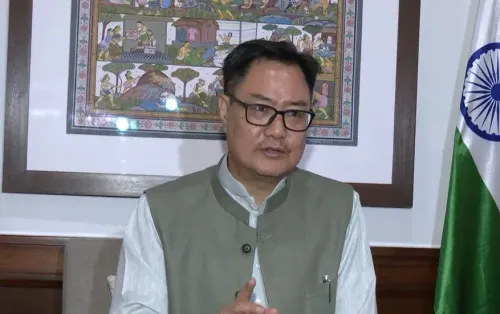
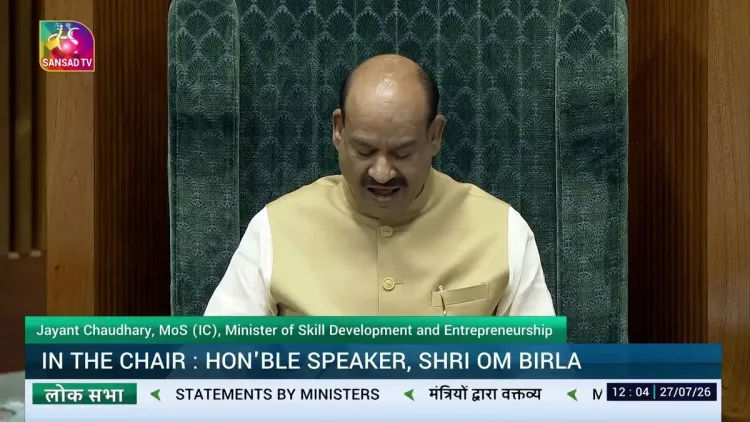
Union Minister Chirag Paswan on 27 July 2026 backed the Anti Paper Leak (Amendment) Bill, 2026, introduced in Lok Sabha by Dr. Jitendra Singh, and accused the opposition of disrupting proceedings to score political points rather than protect the futures of crores of exam aspirants.
Key Takeaways
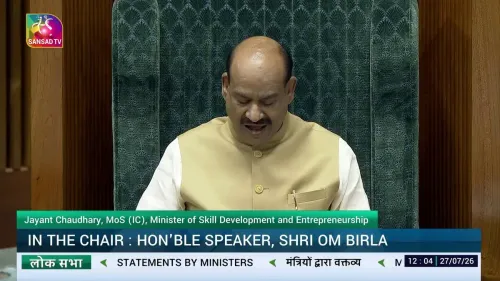
Jitendra Singh presented the Anti Paper Leak (Amendment) Bill, 2026 in Lok Sabha on 27 July 2026 .
The bill seeks to make the existing Public Examinations (Prevention of Unfair Means) Act, 2024 more stringent.
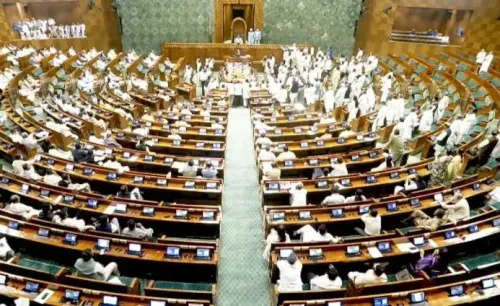
Minister Chirag Paswan accused the opposition of continuous sloganeering and disrupting House proceedings during the bill's introduction.
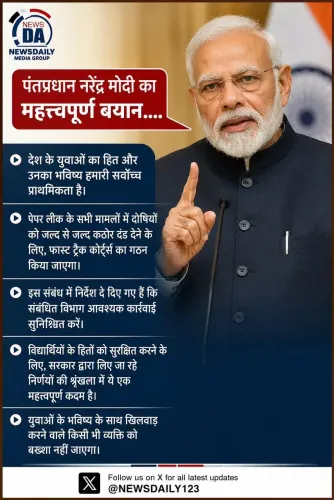
Paswan stated the government will ensure 'strict action against the guilty' to protect the futures of crores of students.
The government has framed the amendment as a pro-youth measure aimed at restoring credibility in competitive examinations.
Whether the bill will be referred to a parliamentary committee or fast-tracked for passage remains to be seen.
Union Food Processing Minister Chirag Paswan on Monday, 27 July 2026, strongly backed the Anti Paper Leak (Amendment) Bill, 2026, presented in Lok Sabha by Union Minister Dr. Jitendra Singh, while sharply criticising the opposition for disrupting parliamentary proceedings during the bill's introduction.
Context
Paswan, posting in Hindi on X, said the government's bill was met with sustained protests and sloganeering by the opposition, which he argued amounted to obstructing a debate critical to the futures of millions of students. 'विपक्ष ने लगातार विरोध और नारेबाजी कर सदन की कार्यवाही बाधित करने का प्रयास किया' [The opposition continuously tried to disrupt the proceedings of the House through protests and sloganeering], he wrote.
The minister was unequivocal in his reading of the opposition's intent: 'Their intention is clear — to create disruption for political gain rather than protect the interests of the youth.' He added that the government 'will not tolerate any tampering with the future of the youth.'
Policy Backdrop
The 2026 amendment bill builds on the Public Examinations (Prevention of Unfair Means) Act, 2024, which Parliament passed to impose strict penalties for paper leaks and malpractices in central recruitment and competitive examinations. The 2024 law was itself a legislative response to a series of high-profile exam irregularities that had shaken public confidence in the integrity of government-conducted tests.
Paswan indicated the amendment is designed to make the existing law 'even more stringent,' ensuring 'strict action against the guilty so that the future of crores of students across the country remains secure.' The exact new provisions of the 2026 amendment have not yet been made public.
Stakeholders and Impact
The primary beneficiaries of tighter anti-paper-leak legislation are the tens of millions of exam aspirants who appear each year for central government recruitment tests, including those conducted by the Staff Selection Commission, the Union Public Service Commission, and national entrance examinations. Repeated leaks in recent years have forced exam cancellations, delayed recruitments, and eroded trust among students who invest years preparing for these tests.
The opposition's disruptions, Paswan argued, signal an unwillingness to engage substantively with legislation that directly affects this demographic. Parliamentary sessions have repeatedly seen opposition walkouts and protests on education and employment-related bills, often curtailing floor debate.
What's Next
The immediate legislative question is whether the Anti Paper Leak (Amendment) Bill, 2026, will be referred to a standing or select parliamentary committee for detailed scrutiny, or whether the government will seek to advance it through the House in the current session. Any state-level enforcement coordination mechanisms tied to the amended law will also be closely watched, given that many competitive examinations are conducted jointly or in parallel by state agencies. The ruling coalition's framing of the bill as a pro-youth measure is likely to keep it at the centre of political messaging in the weeks ahead.
Point of View
The ruling coalition attempts to shift the narrative from legislative scrutiny to patriotic duty toward youth. The episode reflects a broader parliamentary pattern in which high-salience social legislation becomes a theatre for competing identity claims rather than granular policy debate. How the bill fares in committee — and whether opposition parties articulate a substantive critique of its provisions — will determine whether this framing holds.
NationPress
27 Jul 2026
Frequently Asked Questions
What is the Anti Paper Leak Amendment Bill 2026?
The Anti Paper Leak (Amendment) Bill, 2026, is a proposed law introduced in Lok Sabha on 27 July 2026 that seeks to strengthen the existing Public Examinations (Prevention of Unfair Means) Act, 2024 by making penalties for paper leaks and exam malpractices more stringent.
Who introduced the Anti Paper Leak Bill in Parliament?
Union Minister Dr. Jitendra Singh introduced the Anti Paper Leak (Amendment) Bill, 2026, in Lok Sabha on behalf of the government on 27 July 2026.
What did Chirag Paswan say about the opposition and the paper leak bill?
Chirag Paswan accused the opposition of continuously disrupting Lok Sabha proceedings through protests and sloganeering when the bill was introduced, and said their intent was to seek political gain rather than protect the futures of crores of students.
What was the Public Examinations Prevention of Unfair Means Act 2024?
The Public Examinations (Prevention of Unfair Means) Act, 2024, was a law passed by Parliament to impose penalties for paper leaks and malpractices in central government recruitment and competitive examinations; the 2026 amendment aims to make it even stricter.
Will the paper leak amendment bill go to a parliamentary committee?
It has not yet been confirmed whether the Anti Paper Leak (Amendment) Bill, 2026, will be referred to a parliamentary standing or select committee for detailed review or taken up directly for passage in the current session.