CM Uttarakhand Pushes Tea Cultivation Across Hill Districts
Synopsis
The Chief Minister's Office of Uttarakhand has signalled a major push to expand tea cultivation across the hill state, building on early pilot projects in Pauri and Chamoli. The move aims to raise farm incomes, curb rural out-migration, and potentially position Uttarakhand as a new Himalayan tea origin.
Key Takeaways
The Chief Minister's Office of Uttarakhand announced on 28 May 2026 that tea cultivation will be expanded across the state.
Uttarakhand conducted pilot tea plantation projects in Pauri and Chamoli districts as early as the 2000s .
The Tea Board of India , under the Ministry of Commerce, has a mandate to support tea cultivation in non-traditional Himalayan areas.
A successful expansion could open pathways to a Geographical Indication (GI) tag for Uttarakhand tea, enabling premium pricing.
The initiative mirrors crop-diversification strategies adopted by other Indian Himalayan states to address rural out-migration and low farm incomes.
Key next steps include subsidy details, land-allocation schemes, and formal linkages with central horticulture and tea-promotion programmes.
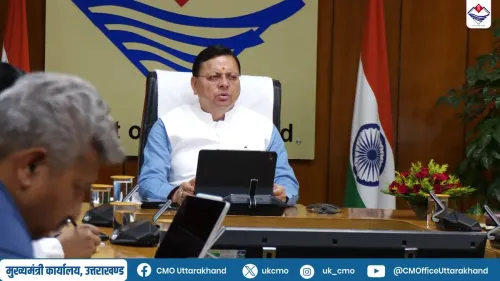
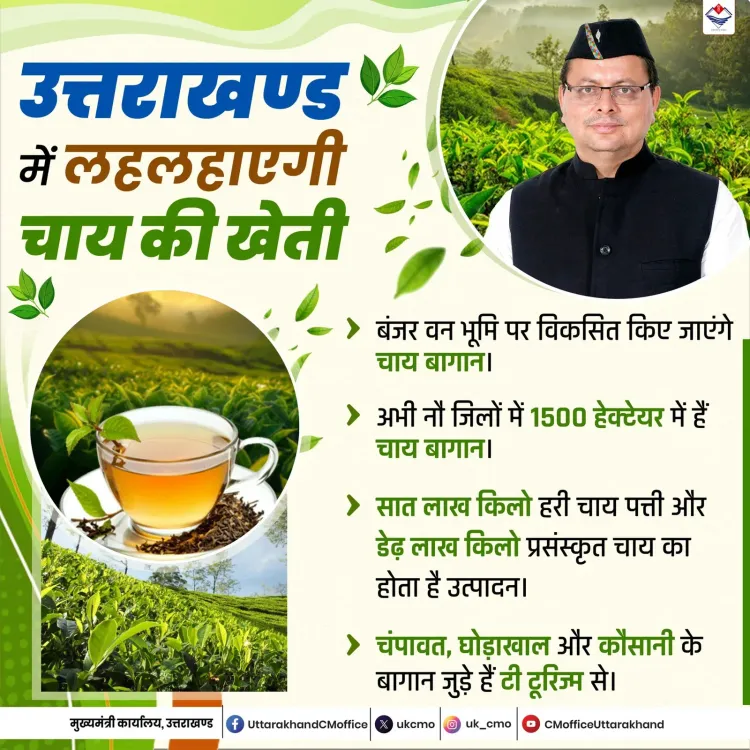
The Chief Minister's Office of Uttarakhand on Thursday, 28 May 2026, signalled a major push to expand tea cultivation across the Himalayan state, declaring that tea farming will flourish in Uttarakhand — a move aimed at boosting rural livelihoods in its hilly terrain.
Context
The post, in Hindi, reads: 'Uttarakhand mein lahlahaegi chai ki kheti' — 'Tea cultivation will flourish in Uttarakhand.' The statement from the Chief Minister's Office signals a formal state-level commitment to scaling up tea farming as a high-value cash crop for hill communities.
Uttarakhand's terrain — marked by steep slopes, cool temperatures, and adequate rainfall — mirrors the agro-climatic conditions that have historically made Assam and West Bengal the twin pillars of Indian tea production. The state's push now seeks to leverage those natural advantages for its own farming communities.
Policy Backdrop
Uttarakhand is not starting from scratch. The state launched pilot tea plantation projects in districts such as Pauri and Chamoli in the early 2000s, experimenting with crop diversification away from subsistence farming. Those pilots laid the groundwork for a more systematic expansion now being signalled by the government.
The Tea Board of India, the statutory body under the Ministry of Commerce that regulates and promotes tea cultivation, has previously extended support to non-traditional growing areas across the Himalayas. State-level initiatives in this sector frequently align with central schemes for horticulture development and organic certification, which could provide financial scaffolding for Uttarakhand's ambitions.
Across Indian Himalayan states, crop diversification toward high-value cash crops has emerged as a policy response to rural out-migration and declining farm incomes. Himachal Pradesh and parts of the Northeast have followed similar trajectories, using tea and other specialty crops to anchor rural populations to their land.
Stakeholders and Impact
The most direct beneficiaries of an expanded tea economy would be hill farmers and smallholder growers in Uttarakhand's mid-altitude zones, many of whom currently depend on fragmented landholdings and remittances. A viable tea market could provide a reliable, recurring income stream that subsistence crops do not.
Beyond the farm gate, a thriving tea sector creates downstream demand for processing units, packaging, logistics, and eventually branding — including the possibility of a Geographical Indication (GI) tag for Uttarakhand tea, which would command premium prices in domestic and export markets. Women's self-help groups in hill districts have historically been central to tea-plucking operations in other Himalayan states, suggesting a potential gender-inclusion dimension to this initiative.
What's Next
The immediate watch points include the release of state agricultural production targets, details of any subsidy structure or land-allocation scheme, and whether the government pursues formal linkages with the Tea Board of India for technical and financial support. An application for GI tagging and the identification of buyer or auction-house partnerships would signal that the initiative is moving from announcement to implementation.
If Uttarakhand successfully scales tea cultivation, it could position the state as a third Himalayan tea origin alongside Darjeeling and Kangra — adding a new chapter to India's centuries-old tea geography.
Point of View
Which has seen significant depopulation of its hill villages. If the state can secure Tea Board of India backing and GI recognition, the economic upside for smallholders could be substantial. The real test, however, will be whether this announcement is followed by a concrete subsidy architecture and market-linkage framework, or whether it remains aspirational rhetoric.
NationPress
11 Oct 2026
Frequently Asked Questions
Will tea cultivation expand in Uttarakhand?
Yes, the Chief Minister's Office of Uttarakhand announced on 28 May 2026 that tea farming will be expanded across the state, building on earlier pilot projects in districts like Pauri and Chamoli.
Which districts in Uttarakhand grow tea?
Pilot tea plantation projects were initiated in Pauri and Chamoli districts in the early 2000s. The new push is expected to broaden cultivation to other suitable hill districts.
How does the Tea Board of India support Uttarakhand tea farmers?
The Tea Board of India, a statutory body under the Ministry of Commerce, extends technical and financial support to tea cultivation in non-traditional areas, including Himalayan states like Uttarakhand.
Can Uttarakhand tea get a GI tag?
A Geographical Indication tag is a possibility being watched by policy observers. GI recognition would allow Uttarakhand tea to command premium prices in domestic and international markets, similar to Darjeeling tea.
Why is tea cultivation important for Uttarakhand hill farmers?
Tea is a high-value cash crop that provides recurring income, unlike subsistence farming. It can help reduce rural out-migration by making hill agriculture economically viable for smallholder families.