Vaishnaw Highlights India-Made Battery Cell Materials
Synopsis
Union Minister Ashwini Vaishnaw posted on X claiming every layer and material inside a battery cell is now being made in India, underscoring the government's Rs 18,100 crore ACC PLI scheme and its Atmanirbhar Bharat push in clean technology and EV manufacturing.
Key Takeaways
Union Minister Ashwini Vaishnaw posted on September 25, 2026 , asserting that every layer and material of a battery cell is being manufactured in India.
The government approved the PLI scheme for Advanced Chemistry Cells (ACC) in 2021 with an outlay of Rs 18,100 crore to build domestic battery manufacturing capacity.
The ACC PLI scheme targets not just finished cells but the upstream materials — cathode, anode, electrolyte, and separator components.
India's battery material push is a key part of the Atmanirbhar Bharat strategy to reduce import dependence, particularly from China-dominated supply chains.
EV manufacturers and battery component suppliers are the primary beneficiaries as domestic supply chains mature.
Every layer of a battery cell — and every material inside it — is now being made in India. That is the claim Union Minister Ashwini Vaishnaw made on Friday, September 25, 2026, in a thread post on X spotlighting the country's advancing domestic battery manufacturing ecosystem.
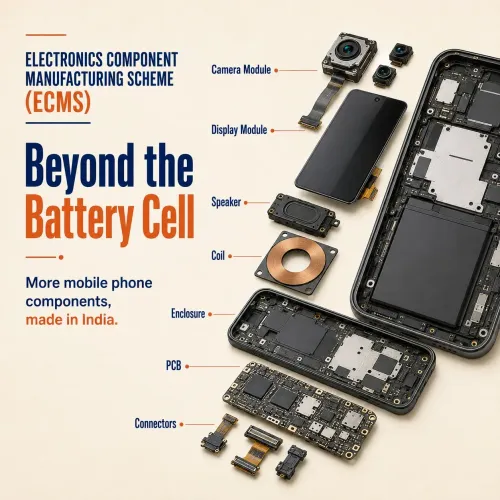
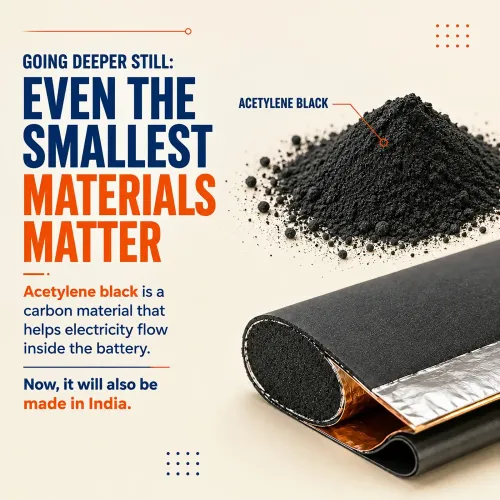
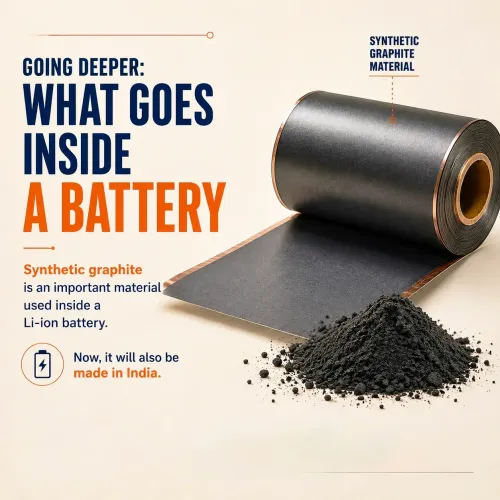
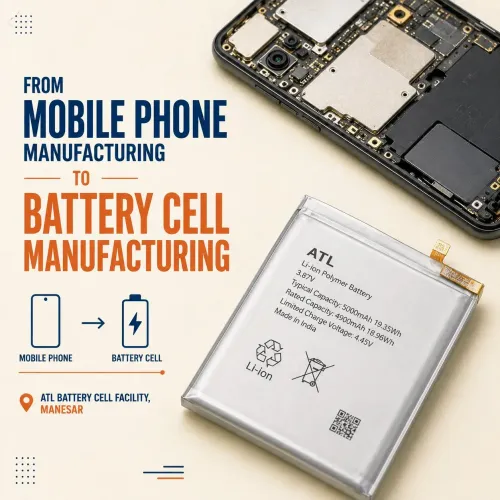
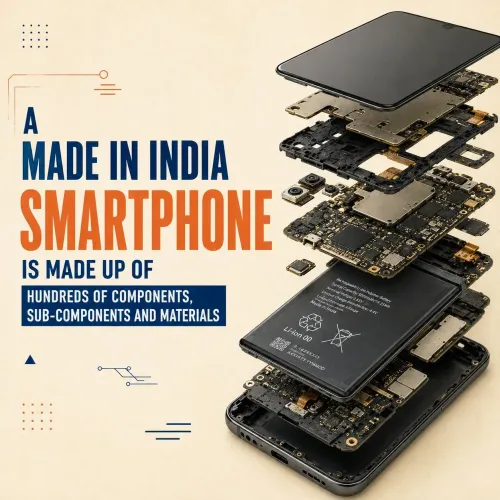
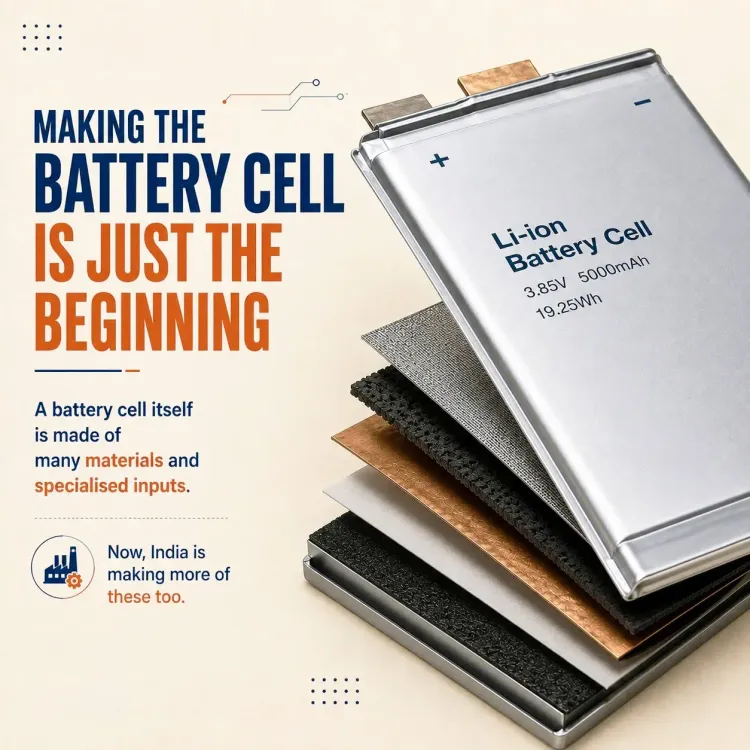
Posting as part of a numbered thread, Vaishnaw wrote: 'A battery cell needs several materials to work. Each layer, each material — is being made in India!' The post, accompanied by an image, is part of a broader communication effort to highlight the depth of India's push into the battery supply chain — not just finished cells, but the constituent materials that go into each one.
From cells to components: the supply chain logic
A modern battery cell is a layered structure — cathode, anode, separator, electrolyte, and casing — each requiring specialised materials and manufacturing processes. For years, India imported most of these inputs, leaving its nascent electric vehicle industry exposed to global supply-chain shocks and foreign pricing. The minister's emphasis on 'each layer, each material' signals a claim that this dependence is being systematically dismantled. This push is anchored in the Production Linked Incentive (PLI) scheme for Advanced Chemistry Cells (ACC), approved by the Government of India in 2021 with a budgetary outlay of Rs 18,100 crore. The scheme was designed to attract investment into domestic battery cell manufacturing — and, critically, into the upstream materials that feed those cells — with the goal of building an integrated, India-rooted EV supply chain.Atmanirbhar Bharat's clean-tech front
The battery sector sits at the intersection of two of the government's most consequential policy bets: the shift to electric mobility and the Atmanirbhar Bharat drive in electronics and clean technology. Import dependence on battery materials — many of which are sourced from China — has long been flagged as a strategic vulnerability. Domestic production of those materials, if scaled, would insulate Indian EV makers from price volatility and geopolitical disruption. EV manufacturers and battery component suppliers are the direct stakeholders watching the ACC PLI scheme's implementation. The key question going forward is how quickly new domestic facilities for cathode active material, anode graphite, electrolyte salts, and separator film can reach commercial scale — and whether the PLI incentive structure is sufficient to sustain them through the capital-intensive early years. If India's battery material ecosystem is as broad as Vaishnaw's thread suggests, the next challenge is not just making these materials — it is making them competitively enough to power an EV industry that can win on price.Point of View
Each material' is a direct answer to long-standing criticism that India's EV push remained dependent on imported battery inputs. If domestic material production is genuinely scaling, it marks a significant inflection in India's clean-tech industrial policy — but the gap between ministerial assertion and verified commercial-scale output is the fault line opposition voices are likely to probe.
NationPress
25 Sept 2026
Frequently Asked Questions
What is the ACC PLI scheme for battery cells in India?
The Production Linked Incentive scheme for Advanced Chemistry Cells was approved by the Government of India in 2021 with an outlay of Rs 18,100 crore to incentivise domestic manufacturing of battery cells and materials for electric vehicles.
What did Ashwini Vaishnaw post about battery manufacturing?
On September 25, 2026, Union Minister Ashwini Vaishnaw posted on X stating that a battery cell needs several materials to work and that each layer and each material is being made in India.
Why does India want to make battery materials domestically?
India has historically imported most battery materials, creating dependence on foreign — particularly Chinese — supply chains. Domestic production reduces this vulnerability, stabilises costs for EV makers, and aligns with the Atmanirbhar Bharat self-reliance policy.
Which materials go into a battery cell that India aims to manufacture?
A battery cell comprises cathode active material, anode material (typically graphite), electrolyte salts, separator film, and casing components — all of which the government's ACC PLI scheme seeks to produce domestically.
Who benefits from India's domestic battery material production?
Electric vehicle manufacturers and battery component suppliers are the primary beneficiaries, as local supply chains reduce input costs, shorten lead times, and insulate the sector from global supply disruptions.