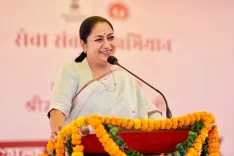
Empowering Women: A Transformative Force in Jammu and Kashmir's Social Landscape, RSKS Activist Addresses UNHRC
Synopsis
On March 15, RSKS activist Darakshan Hassan Bhat highlighted the pivotal role of women's empowerment in transforming Jammu and Kashmir's social landscape during her address at the UNHRC. With increased labor participation and government initiatives, women are reshaping their futures.
Key Takeaways
Women's empowerment is crucial in transforming Jammu and Kashmir's social landscape.
The female labor force participation rate has reached 34.1% .
Over 500,000 women have found wage employment through government initiatives.
Programs like Sambal and Samarthya offer legal and financial support.
The gender ratio improved from 918 to 942 between 2011 and 2019.
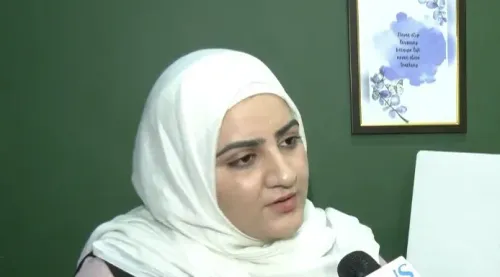
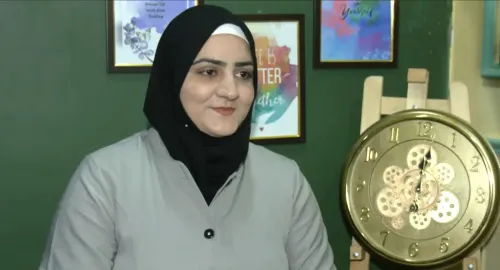
New Delhi, March 15 (NationPress) The liberation and empowerment of women, fueled by their active involvement in the workforce, has emerged as a significant factor in reshaping the social dynamics of Jammu and Kashmir, asserted Rashtriya Sewa Kendra Sangh (RSKS) activist Darakshan Hassan Bhat during her address to the United Nations Human Rights Council (UNHRC).
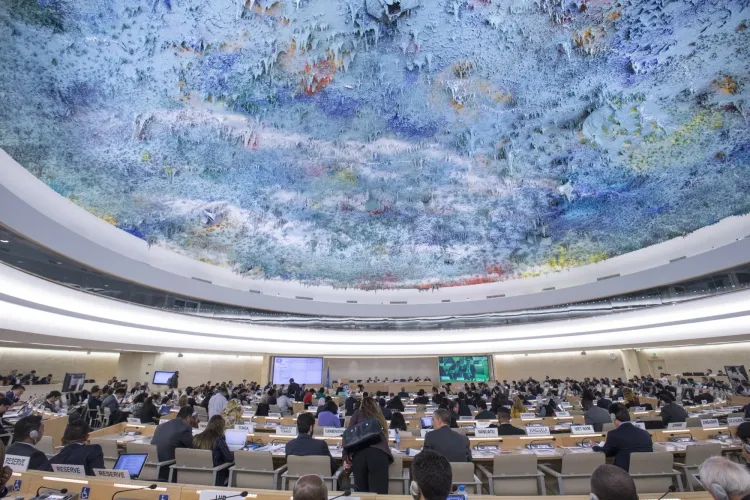
At the 61st session of the UNHRC in Geneva, Bhat discussed the advancement of women and girls in the Valley and emphasized their social and economic transformation due to government-led employment initiatives.
Highlighting key growth metrics, Bhat remarked that the female labor force participation rate in the region has reached an impressive 34.1 percent, surpassing the national average.
She pointed out that government initiatives have enabled over 500,000 women to secure wage employment in the last five years through flagship programs, contributing to their financial independence and enhancing the resilience of their households.
Focusing on two specific initiatives—Sambal and Samarthya—she noted that these programs have provided legal assistance, financial education, and entrepreneurial opportunities to thousands of women, thereby promoting their empowerment.
Bhat stated that resources like women's helplines, emergency response systems, one-stop centers, and women help desks have proven vital in ensuring safety and support for women.
She also acknowledged the increasing involvement of women in Self-Help Groups (SHGs), indicating that over 700,000 women now have access to micro-credit facilities and market connections.
Despite the challenges posed by cross-border terrorism, she emphasized that the region continues to progress and create new narratives of growth and development.
Furthermore, she mentioned the improvement in the gender ratio, attributing this change to initiatives like 'Beti Bachao, Beti Padhao'.
The gender ratio improved from 918 in 2011 to 942 in 2019, Bhat informed the global rights organization.
She added that following the abrogation of Article 370, the Protection of Women from Domestic Violence Act and the Sexual Harassment of Women at Workplace Act have been extended to the region.
Bhat concluded by reiterating that the increasing involvement of women in education, employment, and governance is paving the way for a more hopeful future.
Point of View
It's evident that the empowerment of women in Jammu and Kashmir represents a profound shift in societal norms and economic stability. The government-led initiatives have not only enhanced women's roles in the workforce but have also contributed positively to household resilience and community welfare, indicating a promising future for the region.
NationPress
24 Sept 2026
Frequently Asked Questions
What initiatives are empowering women in Jammu and Kashmir?
Key initiatives include government-led employment programs such as Sambal and Samarthya, which provide legal aid, financial literacy, and entrepreneurship opportunities.
How has the female labor force participation changed in Jammu and Kashmir?
The female labor force participation rate has risen to 34.1%, surpassing the national average.
What is the significance of the gender ratio improvement?
The gender ratio improved from 918 in 2011 to 942 in 2019, reflecting positive changes supported by initiatives like 'Beti Bachao, Beti Padhao'.
How many women have gained employment through government programs?
Over 500,000 women have secured wage employment in the past five years through various government flagship programs.
What support systems are in place for women's safety?
Women's helplines, emergency response systems, one-stop centers, and help desks are critical in providing safety and assistance for women.