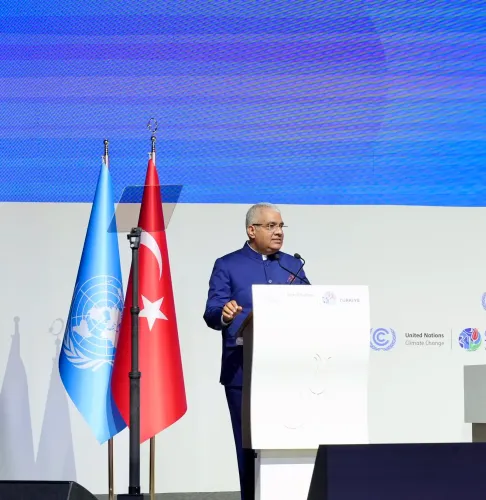
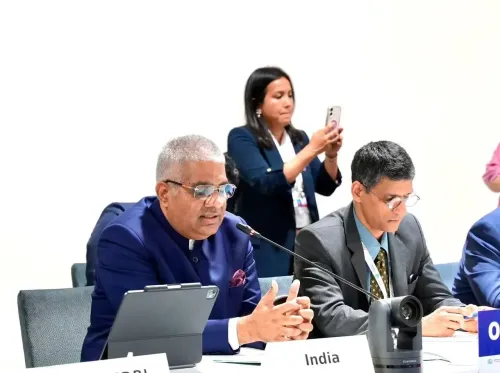
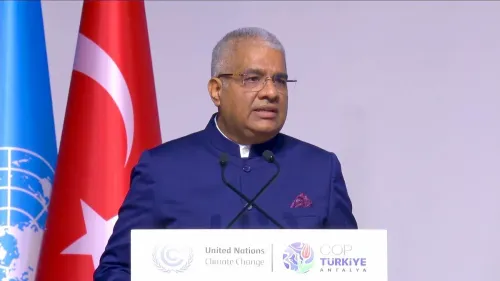
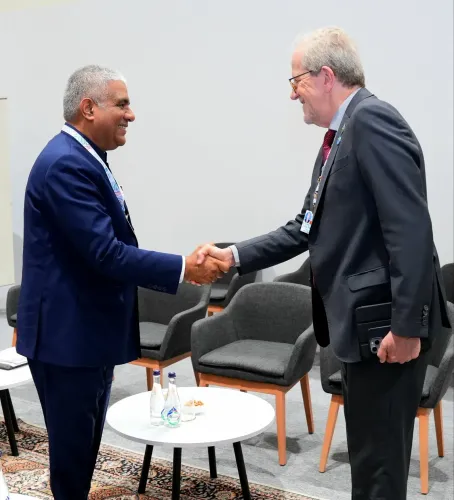
Yadav meets China's Li Gao at COP31, pushes equity in climate talks
Synopsis
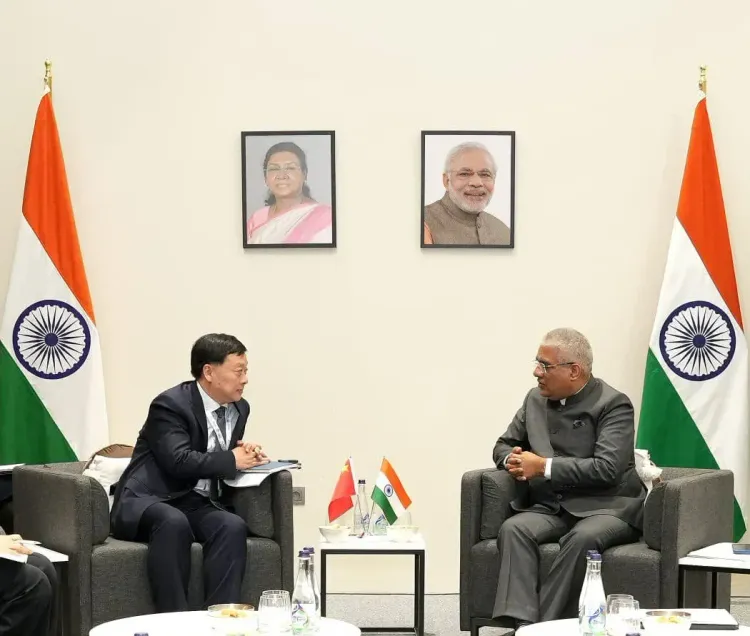
Union Environment Minister Bhupender Yadav met Chinese Vice Minister Li Gao on the sidelines of COP31 in Antalya on 19 November 2026, exchanging views on mitigation, climate finance and technology transfer while stressing equity and CBDR-RC — India's long-standing negotiating pillars.
Key Takeaways
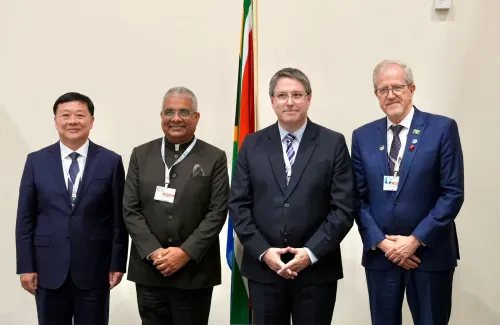
Bhupender Yadav met Li Gao, China's Vice Minister of Ecology and Environment , at the India office at COP31 in Antalya, Türkiye on 19 November 2026 .
Discussions covered mitigation, climate finance and technology transfer — the three most contested items in current UNFCCC negotiations.
Yadav emphasised equity, CBDR-RC and national circumstances , consistent with India's negotiating position since the 1992 UNFCCC .
India and China coordinate through the BASIC group at UNFCCC sessions, aligning on the principle that historical emitters must bear greater financial and technological obligations.
The meeting comes as parties negotiate a New Collective Quantified Goal (NCQG) on climate finance to replace the unmet $100 billion-per-year pledge.
Sideline bilateral meetings allow both nations to compare positions without formally merging negotiating blocs before plenary sessions.
On the sidelines of COP31 in Antalya, Türkiye, a pointed bilateral conversation cut through the noise of the global climate summit: Union Environment Minister Bhupender Yadav sat down on Thursday, 19 November 2026, with Li Gao, China's Vice Minister of Ecology and Environment — and the agenda went straight to the fault lines that define every major climate negotiation.
Yadav confirmed the meeting on X, noting that the two sides 'exchanged views on our mutual interests at the ongoing negotiations with respect to mitigation, climate finance and technology transfer,' and that he 'emphasised equity, CBDR-RC and national circumstances in climate action.' Three phrases, but each one carries decades of geopolitical freight.
Why CBDR-RC still detonates every finance debate
The principle of Common But Differentiated Responsibilities and Respective Capabilities (CBDR-RC) has anchored India's climate negotiating stance since it was written into the UNFCCC in 1992. Its logic is simple and fiercely contested: countries that industrialised first bear a larger historical responsibility for cumulative emissions, and must therefore carry a heavier financial and technological burden going forward. Every time the developed world pushes for a uniform mitigation framework, India — and China — push back with CBDR-RC.
India sharpened that position with its updated Nationally Determined Contributions in 2022, explicitly grounding climate targets in equity and national development circumstances. The language Yadav used in Antalya is not diplomatic boilerplate — it is a live negotiating instruction, signalling that New Delhi will not accept climate finance conditions or technology-transfer arrangements that ignore the development asymmetry between North and South.
India-China: parallel lanes, shared pressure points
India and China are the world's most consequential developing-country emitters, and their bilateral climate dialogue — running through the BASIC group (Brazil, South Africa, India, China) since the mid-2000s — has shaped the architecture of multiple UNFCCC outcomes. They do not always agree: their energy mixes, industrial structures, and geopolitical relationships with the West differ sharply. But on the core demand that the global North mobilise concessional finance and technology transfer before tightening obligations on the South, the two capitals consistently converge.
Sideline meetings like today's allow both sides to compare notes without publicly merging their formal negotiating positions — a distinction that matters in multilateral diplomacy, where every statement on the floor is parsed by over 190 parties to the Paris Agreement.
The live fight: a new global climate finance goal
The immediate stakes at COP31 center on the New Collective Quantified Goal (NCQG) on climate finance — the successor to the long-unfulfilled $100 billion-per-year pledge developed nations made to the developing world. How large the goal is, who counts as a donor, what instruments qualify, and what strings attach to disbursements are all live disputes. Technology transfer — the mechanism by which clean-energy know-how moves from richer to poorer economies — is equally unresolved. These are precisely the issues Yadav and Li Gao were comparing notes on.
When India's minister walks into those formal sessions, today's conversation will have sharpened his read of where Beijing's redlines sit — and vice versa.
For the developing world's negotiating bloc, that alignment, however partial, is the ballast that keeps equity at the centre of the final text.
Point of View
The fact that the two environment ministries are maintaining structured climate dialogue at the highest sub-ministerial level also carries quiet strategic significance. If the NCQG negotiations stall, the coherence of the India-China-led developing bloc — or its fracture — will be a defining variable.
NationPress
20 Nov 2026
Frequently Asked Questions
What is COP31 and where is it being held?
COP31 is the 31st Conference of the Parties to the UNFCCC, the principal annual UN climate summit. It is being held in Antalya, Türkiye in November 2026 .
What is CBDR-RC and why does India keep raising it?
CBDR-RC stands for Common But Differentiated Responsibilities and Respective Capabilities. Embedded in the UNFCCC in 1992 , it holds that developed nations bear greater responsibility for cutting emissions and funding climate action because of their larger historical contribution to cumulative greenhouse-gas levels. India invokes it to resist uniform obligations that ignore the development gap between rich and poor nations.
Who is Li Gao and what is his role?
Li Gao is China's Vice Minister of Ecology and Environment and leads Beijing's delegations in key UNFCCC and Paris Agreement negotiations.
What is the New Collective Quantified Goal on climate finance?
The NCQG is a new global climate finance target being negotiated under the Paris Agreement to replace the developed world's earlier pledge of $100 billion per year for developing nations — a pledge that was consistently not met. Its scale, donor base, and conditionalities are among the most contested issues at COP31.
What is the BASIC group in climate negotiations?
The BASIC group comprises Brazil, South Africa, India and China — four major developing-country emitters that coordinate positions on equity, finance and technology transfer at UNFCCC negotiations. The bloc has been active since the mid-2000s and is influential in shaping outcomes on differentiated responsibilities.