Is the AI Summit a Turning Point for India's Tech Landscape?
Synopsis
The India AI Summit is seen as a critical turning point for technology in India. With 250,000 attendees, including many students, the summit is set to boost AI adoption across various sectors, reshaping the nation's digital future. Nikhil Pahwa's insights highlight the importance of policy focus and public participation in this transformative journey.
Key Takeaways
The AI Summit is deemed a transformative moment for India's tech landscape.
Participation of 250,000 attendees, particularly students, signifies a cultural shift towards AI.
Strong policy focus is essential for accelerating AI adoption across various sectors.
India has substantial opportunities to lead in sector-specific AI applications.
Open-source technologies and indigenous models are crucial for local needs.
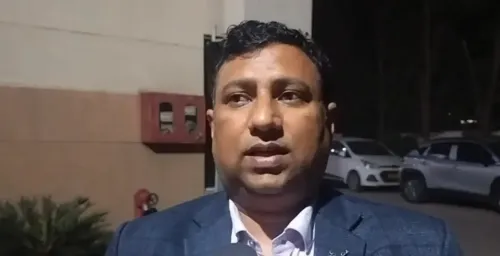
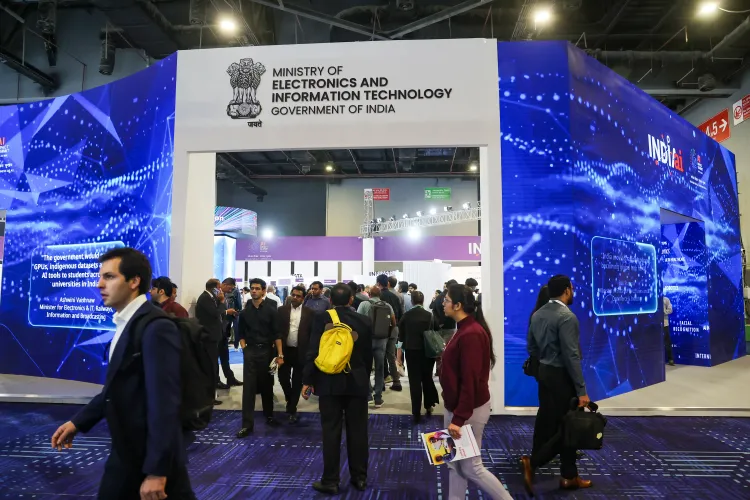
New Delhi, Feb 18 (NationPress) Digital rights advocate and technology policy expert Nikhil Pahwa referred to the ongoing India AI Summit as a "transformational moment" on Wednesday. He asserted that this event has the potential to greatly enhance the adoption of artificial intelligence across governance, industry, and academic sectors in India.
In a series of posts on X, the founder of MediaNama highlighted that despite potential organizational or agenda-related challenges, the level of government interest guarantees that AI becomes a priority for various ministries and state governments.
"An event of this magnitude ultimately prioritizes AI for ministries and state governments," he mentioned, emphasizing that it promotes the spread of AI-centric thinking among industries, students, and policymakers, thus accelerating its integration into governance.
Pahwa drew a comparison to the influence of the Digital India initiative, pointing out that a robust policy focus previously sped up digitization and the adoption of digital technologies nationwide. He suggested that the long-term ramifications of the summit may be more crucial than immediate outcomes or global rankings.
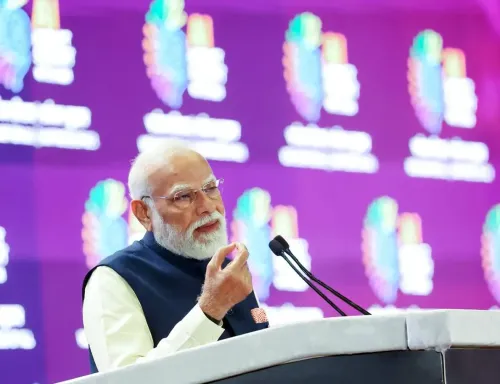
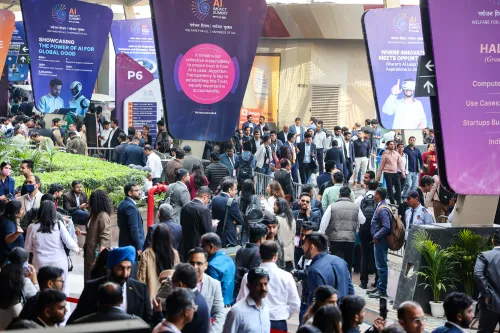
He expressed gratitude to the Indian government and Prime Minister Narendra Modi for organizing the event at a scale representative of India, noting that approximately 250,000 participants, especially students, indicate the onset of a significant shift in mindset.
"This is indeed a transformational moment. With 250,000 attendees, particularly students, we are witnessing the dawn of a new mindset," he remarked.
While recognizing that India currently trails behind the United States and China in core AI capabilities, he emphasized that success in the AI race is contingent on various factors, including hardware accessibility, training data, model architecture, and the diffusion of practical applications.
He also noted the rapid expansion of global AI platforms, mentioning tools like ChatGPT, Gemini, and Copilot becoming integrated into major technology ecosystems, thereby fostering strong user habits. He pointed out that the uptake of international models in India currently far surpasses that of domestic options.
However, Pahwa highlighted sector-specific opportunities like education, healthcare, defense, governance, commerce, manufacturing, and pharmaceutical research where India has a significant chance to excel.
He advocated for the use of open-source technologies and the creation of indigenous small language models tailored to local requirements.
Comparing the present phase to the early days of Digital India, Pahwa expressed optimism about India's AI trajectory, stating that the convergence of policy focus, public engagement, and technological advancements could redefine the digital landscape of the nation in the coming years.
Point of View
It is clear that the AI Summit represents a momentous occasion in India's technological evolution. The emphasis on public engagement and policy focus is crucial for fostering a robust AI ecosystem that can benefit various sectors. The participation of a large number of students underscores the potential for a cultural shift in technology adoption, which is essential for India's growth in the global tech landscape.
NationPress
27 Sept 2026
Frequently Asked Questions
What is the significance of the AI Summit in India?
The AI Summit is significant as it marks a pivotal moment in accelerating the adoption of artificial intelligence across various sectors in India, including governance and academia.
How many people attended the AI Summit?
Approximately 250,000 participants attended the AI Summit, with a significant number being students, indicating a shift in mindset towards AI.
What did Nikhil Pahwa say about AI adoption in India?
Nikhil Pahwa highlighted that AI adoption could be accelerated through strong policy focus and public participation, similar to the effects of the Digital India initiative.
Which countries is India currently competing with in AI?
Currently, India is competing with the United States and China in core AI capabilities but has opportunities for growth in various sectors.
What sectors can benefit from AI in India?
Sectors such as education, healthcare, defense, governance, commerce, manufacturing, and pharmaceutical research can significantly benefit from AI advancements in India.