BOCW conference in Mumbai calls for Centre-state synergy on construction worker welfare
Synopsis
India's construction workers — an estimated 5 crore strong — remain largely outside formal social security nets despite a dedicated law and cess-funded welfare boards. A two-day BOCW conference in Mumbai pushed states to do better, with the Labour Secretary calling for actuarial rigour, greater Centre-state coordination, and welfare schemes that actually account for where workers move, not just where they register.
Key Takeaways
A two-day BOCW conference concluded in Mumbai on 12 September 2026 , bringing states and UTs together on construction worker welfare.
Chandra Bhushan Kumar , Labour and Employment Secretary, called for greater Centre-state synergy , occupational health focus, and actuarial-backed welfare design.
Uttar Pradesh presented its Skill Development programme; Rajasthan showcased Digital Labour Chowks ; Bihar highlighted Shram Seva Suvidha Kendras ; Assam introduced the Nirman Sakhi Portal .
The Secretary underlined the need to incorporate interstate and international worker mobility into social security scheme design.
A dedicated Skilling and Employment session featured presentations from the Ministry of Skill Development and Entrepreneurship and the Ministry of Labour and Employment.
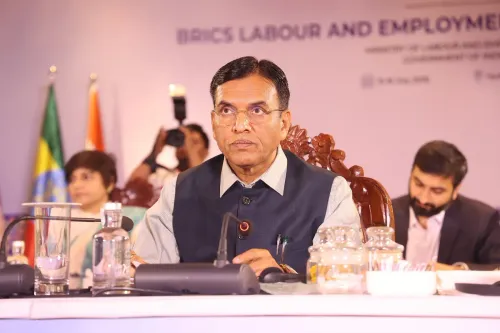
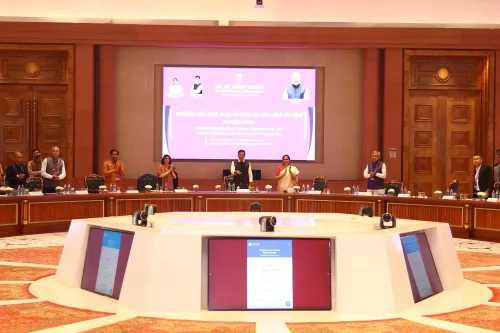
A two-day Building and Other Construction Workers (BOCW) conference concluded in Mumbai on 12 September 2026, bringing together states and Union Territories to exchange best practices and deliberate on strengthening welfare, skilling, employment, and service delivery for one of India's most vulnerable labour segments. The event underscored an urgent push for tighter coordination between the Centre and state administrations to make welfare delivery more effective and equitable.
Key Concerns Raised by the Labour Secretary
Dr. Chandra Bhushan Kumar, Secretary of the Ministry of Labour and Employment, set the tone by mapping out the sector's persistent challenges and emerging opportunities. He stressed that placing the dignity of labour at the heart of policy design — and reinforcing the skill ecosystem — is essential to building a more responsive and resilient labour framework for construction workers.
Dr. Kumar also flagged critical gaps in information access and market linkages, arguing that asymmetries between jobseekers and employers continue to hobble effective welfare delivery. He called for mechanisms that actively connect workers to opportunities, particularly in light of the large-scale interstate and international mobility that defines this workforce.
Occupational health, physical safety, and workplace protections were among the other priorities he highlighted, noting that these concerns are too often sidelined in programme design. He urged more frequent virtual engagements between the Centre and states to sustain collaboration and accelerate mutual learning.
Pathways for Strengthening the BOCW Ecosystem
Looking ahead, the Secretary outlined a roadmap that includes consolidating the diverse welfare measures currently in operation across states and deploying greater actuarial analysis to ensure that welfare interventions remain financially sustainable over the long term. He also called for international and interstate worker mobility to be formally integrated into social security scheme design — a structural adjustment that analysts say has been overdue.
State Presentations and Best Practices
The second day of the conference featured a series of state and UT presentations spotlighting innovative initiatives. Uttar Pradesh showcased its Skill Development of Building Workers programme; Rajasthan presented its Digital Labour Chowks; Bihar highlighted the Shram Seva Suvidha Kendras; and Assam introduced the Nirman Sakhi Portal, an initiative aimed at improving digital access to welfare services for construction workers.
A dedicated session on Skilling and Employment included presentations from the Ministry of Skill Development and Entrepreneurship on training pathways and from the Ministry of Labour and Employment on India's broader employment growth trajectory, followed by open discussions.
Why This Conference Matters
India's construction sector employs an estimated 5 crore workers, many of whom remain outside formal social security nets despite the BOCW Act mandating cess-funded welfare boards in every state. This comes amid longstanding criticism that BOCW cess funds — running into thousands of crores — remain underutilised in several states, leaving workers without the benefits they are legally entitled to. The conference, in that context, is as much an accountability exercise as a policy exchange. Whether the commitments made in Mumbai translate into on-ground change will depend on the follow-through from state governments in the months ahead.
Point of View
Conferences like this risk producing best-practice showcases rather than systemic reform.
NationPress
13 Sept 2026
Frequently Asked Questions
What is the BOCW conference and why was it held in Mumbai?
The Building and Other Construction Workers (BOCW) conference is a national-level platform where states and Union Territories share welfare and skilling initiatives for construction workers. The two-day event in Mumbai on 12 September 2026 was convened to strengthen Centre-state coordination on welfare delivery, skilling, and employment for this large and often underserved workforce.
What did Labour Secretary Dr. Chandra Bhushan Kumar say at the BOCW conference?
Dr. Kumar called for placing dignity of labour at the centre of policy design, addressing information asymmetries in the labour market, and using actuarial analysis to ensure sustainable welfare interventions. He also stressed that interstate and international worker mobility must be factored into social security scheme design.
Which states presented their best practices at the BOCW conference?
Uttar Pradesh showcased its Skill Development of Building Workers programme, Rajasthan presented Digital Labour Chowks, Bihar highlighted Shram Seva Suvidha Kendras, and Assam introduced the Nirman Sakhi Portal. These initiatives represent diverse digital and skilling approaches to improving welfare delivery.
Why does the BOCW welfare system need reform?
India's construction sector employs an estimated 5 crore workers, many of whom remain outside formal social security nets despite the BOCW Act mandating cess-funded welfare boards. Critics have long pointed to underutilisation of cess funds across several states, leaving workers without legally mandated benefits.
What are the next steps after the BOCW conference?
The Labour Secretary outlined consolidation of existing welfare measures and more frequent virtual engagements between the Centre and states as immediate priorities. Greater use of actuarial analysis to support long-term welfare sustainability was also flagged as a key pathway going forward.