Changzhou builds China's first city-level green token factory
Synopsis
Changzhou has unveiled China's first city-level 'green token factory' targeting 60 trillion AI tokens per year, with Alibaba Cloud among seven partners — framing AI inference as industrial output and setting a potential blueprint for clean-powered compute across Chinese cities.
Key Takeaways
Changzhou , Jiangsu province , announced plans for China's first city-level green token factory on Sunday, 20 July 2026 .
The facility is projected to produce 60 trillion tokens per year once operational, powered entirely by renewable energy.
Token output efficiency is expected to improve by 62.5 per cent using the same computing resources, according to the municipal government statement.
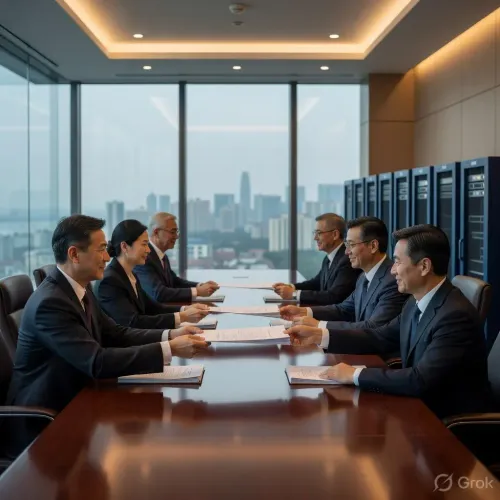
The agreement, signed on Saturday, 19 July 2026 , involves seven parties including Alibaba Cloud and Wangsu Science and Technology .
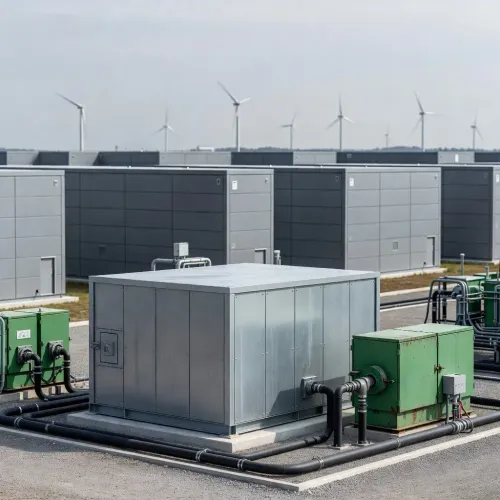
The facility will connect directly to renewable energy plants under a national policy allowing green power to bypass public electricity grids.
No completion timeline has been disclosed by the Changzhou municipal government .
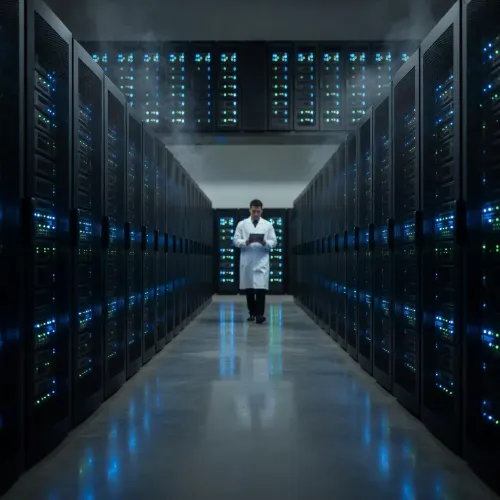
Changzhou, a city in eastern China's Jiangsu province, has announced plans to construct what it describes as the country's first city-level 'green token factory' — a clean-energy-powered AI computing facility capable of producing 60 trillion tokens per year. The announcement was made by the Changzhou municipal government on Sunday, 20 July 2026, during the World Artificial Intelligence Conference in Shanghai, signalling how local administrations are racing to meet Beijing's push to fuel AI infrastructure with renewable energy.
What the facility promises
According to a statement from the municipal government, the facility would be powered entirely by green energy and connected directly to renewable energy plants under a national policy permitting clean power to bypass public electricity grids. The city did not provide a timeline for when the project would be completed.
The design is engineered to maximise power efficiency: token output is expected to rise 62.5 per cent using the same computing resources, the statement said, significantly improving both token supply efficiency and economic viability.
Who's involved
The agreement underpinning the project was signed on Saturday, 19 July 2026, and involves seven parties. Among the key signatories are Alibaba Cloud, the cloud computing arm of Alibaba Group Holding, and Wangsu Science and Technology, a provider of information infrastructure platform services. The multi-party structure suggests the facility is designed as a shared, city-scale AI compute resource rather than a single operator's private deployment.
Why it matters
The initiative reflects a broader national imperative: as large language models and AI agents demand exponentially more compute, China is under pressure to scale inference capacity without deepening its reliance on carbon-intensive power sources. Routing AI workloads through dedicated green-power channels is an emerging policy lever, and Changzhou's project is positioned as a replicable city-level blueprint.
The 'token factory' framing is itself notable — it treats AI inference output as an industrial commodity to be manufactured and measured at scale, a conceptual shift that aligns with Beijing's industrial-policy approach to generative AI and large language model deployment.
The competitive backdrop
Chinese cities are increasingly competing to attract AI infrastructure investment as the central government ties local performance metrics to digital-economy development. Announcements like this one tend to accelerate copycat projects in neighbouring municipalities, potentially reshaping where AI compute capacity concentrates across China.
What's next
With no completion timeline disclosed, the project's pace will be closely watched by industry observers tracking China's AI infrastructure buildout. The involvement of Alibaba Cloud and six other partners suggests the facility could become a reference model for green AI compute at the city level — with other municipalities likely to follow if the efficiency and cost targets hold up in practice.
Point of View
Multi-party consortia, and state-backed scale. What mainstream coverage underplays is the grid-bypass policy at work here; allowing green power to circumvent public networks is a significant regulatory carve-out that could accelerate AI compute buildout far faster than capacity planning alone. The absence of a completion timeline is a red flag worth watching — Chinese municipal AI announcements have a mixed record of translating into operational infrastructure. With Alibaba Cloud anchoring the consortium, the project carries credibility, but the real test is whether the 62.5 per cent efficiency gain survives contact with real-world workloads.
NationPress
18 Oct 2026
Frequently Asked Questions
What is the Changzhou green token factory?
The Changzhou green token factory is a planned city-level AI computing facility in Changzhou , Jiangsu province , China , designed to produce 60 trillion AI tokens per year using clean energy. It is described by the municipal government as the country's first city-level facility of its kind. The project was announced at the World Artificial Intelligence Conference in Shanghai on 20 July 2026 .
Which companies are involved in the Changzhou AI token factory?
The agreement involves seven parties , with Alibaba Cloud and Wangsu Science and Technology named as key participants. Alibaba Cloud is the cloud computing unit of Alibaba Group Holding . The identities of the remaining five parties have not been publicly disclosed.
How will the token factory use renewable energy?
The facility will connect directly to renewable energy plants under a national Chinese policy that allows green power to bypass public electricity grids. This direct-connection model is intended to ensure the AI computing workloads are powered entirely by clean energy. The arrangement also improves cost predictability by sidestepping grid transmission fees.
What does '60 trillion tokens per year' mean for AI?
Tokens are the basic units of text processed by large language models during AI inference — generating responses, summarising content, or powering AI agents. A capacity of 60 trillion tokens per year represents industrial-scale AI output, sufficient to serve millions of concurrent users or enterprise AI workloads. The facility also targets a 62.5 per cent improvement in token output per unit of computing power.
When will the Changzhou green token factory be completed?
The Changzhou municipal government has not disclosed a completion timeline for the project. The announcement focused on the agreement signed on 19 July 2026 and the facility's projected capabilities. Observers will watch for follow-up disclosures on construction schedules and operational milestones.