China mass-produces silicon-28 isotope for quantum computing
Synopsis
China's state nuclear giant CNNC has mass-produced silicon-28 isotope at 99.99% purity for the first time domestically, severing dependence on Russian, European, and US-linked suppliers for a material considered essential to building stable, scalable quantum computers.
Key Takeaways
China National Nuclear Corporation (CNNC) announced on June 15, 2026 it had achieved mass production of silicon-28 isotope at an isotopic abundance above 99.99 per cent .
This is China's first independent, large-scale production of the material, ending dependence on suppliers in Russia , Europe , and US -linked supply chains.
Silicon-28's magnetic stability creates an 'ultra-quiet' environment that allows qubits to maintain their quantum state longer — a key requirement for functional quantum computers.
The breakthrough directly addresses a vulnerability in China's quantum technology supply chain, a sector prioritised by the National Development and Reform Commission .
The development is expected to heighten international attention on export controls governing quantum-related materials.
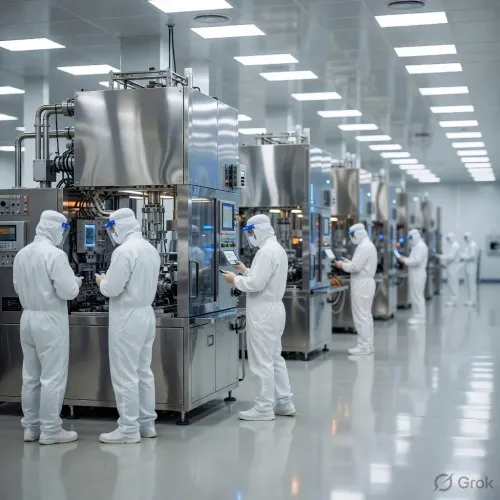
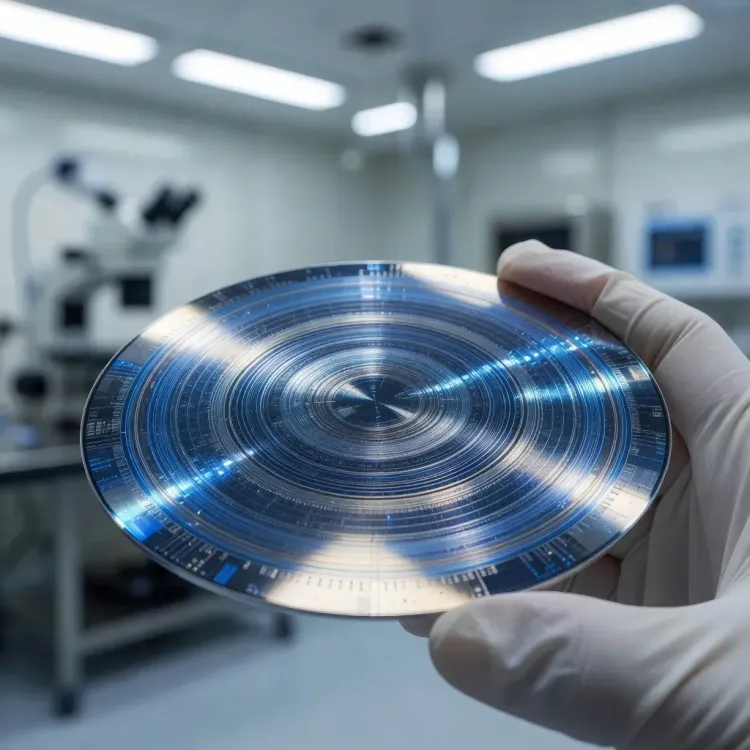
China National Nuclear Corporation (CNNC) announced on Monday, June 15, 2026 that one of its research institutes has successfully achieved mass production of silicon-28 isotope with an isotopic abundance exceeding 99.99 per cent — marking China's first independent, large-scale output of the ultra-pure material critical to building silicon-based quantum computers.
Why it matters
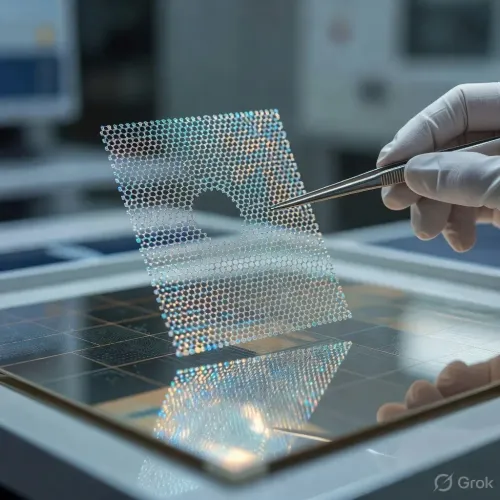
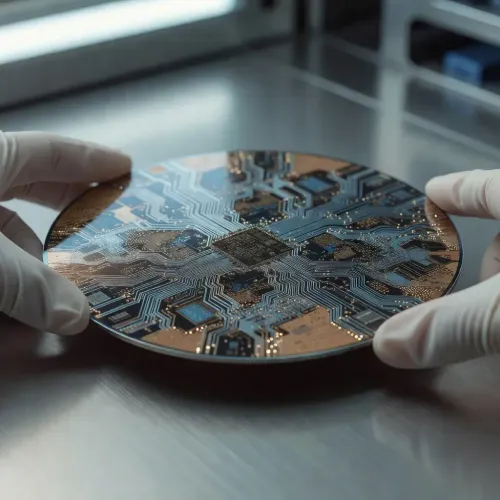
Silicon-28 is not ordinary silicon. While conventional silicon underpins every smartphone and microchip on the planet, quantum computers demand a dramatically purer variant. Standard silicon contains trace isotopes whose magnetic interference — commonly called 'noise' — destabilises qubits, the fundamental units of quantum computation that can represent zero and one simultaneously, enabling calculations that outpace even the fastest supercomputers.
Silicon-28, being a stable isotope, eliminates that magnetic noise, creating what scientists describe as an 'ultra-quiet' environment in which qubits can maintain their quantum state for longer periods. Qubit coherence time is widely regarded as one of the most decisive engineering bottlenecks in the race to build fault-tolerant quantum computers.
Closing a supply-chain gap
According to CNNC, the breakthrough addresses a long-standing vulnerability in China's quantum technology supply chain. Prior to this development, the ability to produce silicon-28 at scale was concentrated among a narrow group of suppliers based in Russia, Europe, and US-linked supply chains — leaving Beijing strategically exposed in a sector it has designated as a national priority.
The state-owned nuclear giant's move is consistent with a broader push by Beijing, backed by the National Development and Reform Commission, to achieve self-sufficiency in deep-tech materials as geopolitical tensions continue to restrict access to foreign components and expertise.
The competitive backdrop
Globally, the silicon-based quantum computing approach has gained significant traction. Researchers at institutions including the Chinese Academy of Sciences have long flagged isotopically purified silicon as a prerequisite for scalable qubit architectures. The China Atomic Energy Authority oversees the regulatory framework under which CNNC operates its isotope enrichment programmes.
The United States, the European Union, and Russia have each invested heavily in isotope production infrastructure, making China's independent capability a meaningful shift in the global supply landscape for quantum materials.
What's next
The immediate question is whether CNNC's production volumes are sufficient to supply domestic quantum hardware developers at the pace required to meet national research timelines. Scaling isotope enrichment from laboratory yields to commercially viable quantities is an engineering challenge distinct from the initial breakthrough itself.
As China works to translate this materials milestone into deployable quantum hardware, the development will likely intensify scrutiny of export controls on quantum-related materials among US and allied policymakers — and could accelerate similar domestic production drives in other nations still reliant on a handful of global suppliers.
Point of View
Amid tightening US export controls on advanced semiconductors and quantum components, suggests Beijing is systematically pre-empting the next tier of potential restrictions before they can bite. The country most exposed in the near term may not be China, but smaller quantum hardware startups globally that still source isotopically enriched silicon from the handful of suppliers whose market position just became less dominant.
NationPress
15 Sept 2026
Frequently Asked Questions
What is silicon-28 and why is it important for quantum computing?
Silicon-28 is a stable isotope of silicon that, when purified to very high levels, eliminates the magnetic 'noise' that destabilises qubits in quantum computers. Because qubits must maintain their quantum state to perform calculations, silicon-28's ultra-quiet electromagnetic environment is considered essential for building reliable, scalable quantum hardware.
What did China's CNNC announce about silicon-28 production?
China National Nuclear Corporation (CNNC) announced on June 15, 2026 that one of its research institutes had successfully mass-produced silicon-28 isotope with an isotopic abundance above 99.99 per cent . The company described it as China's first independent, large-scale production of the material.
Who previously controlled the supply of silicon-28 isotope?
Before this breakthrough, production capabilities for silicon-28 were concentrated among a small group of overseas players in Russia , Europe , and US -linked supply chains, according to CNNC . China's domestic production now reduces its strategic dependence on those suppliers.
How does this development affect the global quantum computing race?
China's ability to independently produce a key quantum material at scale shifts the global supply landscape and reduces the effectiveness of potential export controls targeting quantum inputs. It is likely to intensify policy discussions in the United States and allied nations about restricting trade in quantum-related materials and equipment.
What are qubits and how do they differ from classical computer bits?
Qubits are the basic units of quantum computation. Unlike classical bits, which represent either a zero or a one, qubits can exist as both simultaneously — a property that allows quantum computers to perform complex calculations at speeds exceeding those of conventional supercomputers. However, qubits are highly fragile and lose their quantum state when exposed to environmental interference such as magnetic noise.