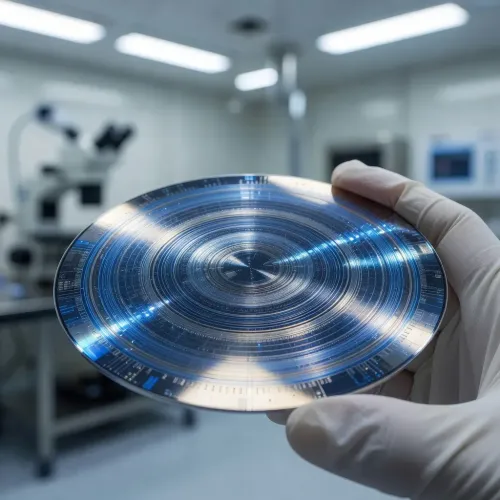
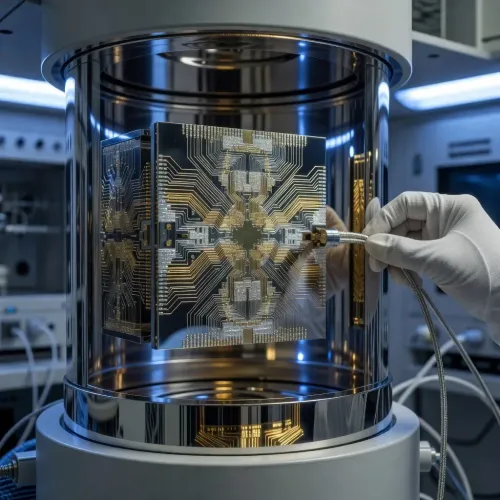
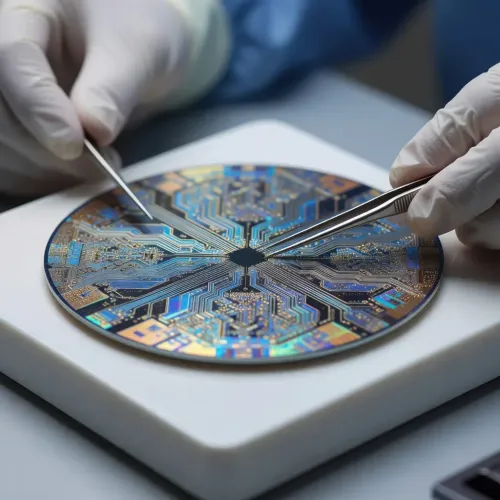
Peking University team fabricates graphene quantum chip platform
Synopsis
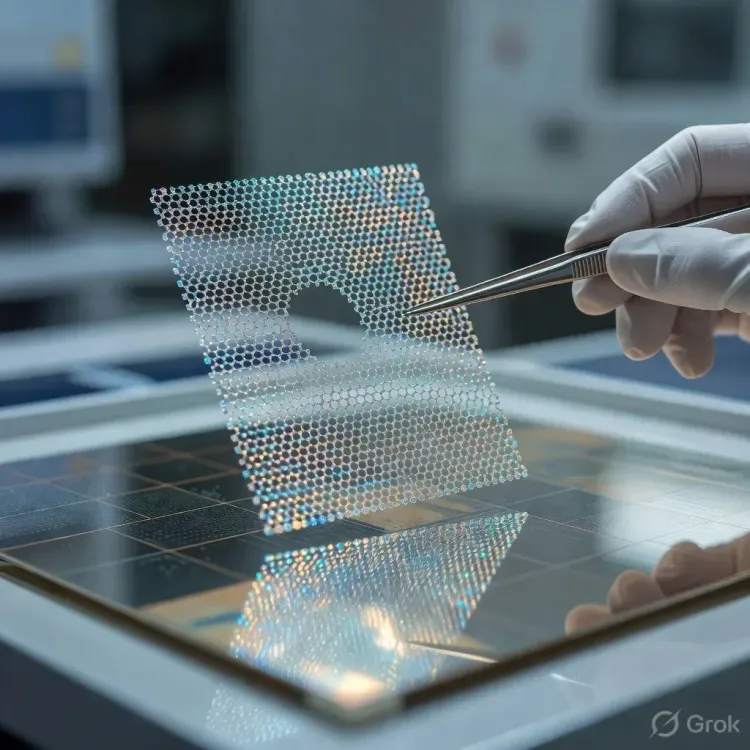
Peking University scientists have fabricated rhombohedral graphene — a material capable of hosting exotic quantum states — at a purity and scale never achieved before, presenting the first realistic production platform for graphene-based quantum chips, according to a July 23, 2026 paper in Science.
Key Takeaways
Peking University 's team led by Liu Kaihui fabricated rhombohedral graphene at record purity and size, as published in Science on July 23, 2026 .
Rhombohedral graphene can host exotic quantum states including superconductivity, making it a strong candidate for next-generation qubit platforms.
Previously, the only method to obtain the material was mechanical exfoliation — incompatible with chip-scale production, according to co-first author Zhang Zhibin .
The research provides what the paper describes as a 'realistic platform' for the production of graphene-based quantum chips.
Graphite — the parent material of graphene — has been an industrial staple since the 1500s ; this work positions it at the frontier of quantum hardware.
The advance comes amid intensifying China – US competition in quantum computing and deep-tech self-sufficiency.
Peking University researchers have cleared a critical barrier in quantum computing by successfully fabricating rhombohedral graphene at unprecedented purity and scale, opening a realistic path to graphene-based quantum chips, according to a paper published on July 23, 2026 in the peer-reviewed journal Science.
The breakthrough explained
The research team, led by Liu Kaihui, produced a long-sought form of graphene — the atomic-scale building block of graphite — known as rhombohedral graphene. The material is prized for its ability to host exotic quantum states, but had previously been too unstable to manufacture at any meaningful size or purity. The paper states the team achieved dimensions and purity levels that were unachievable until now.
Zhang Zhibin, a co-first author of the paper, noted that the only previously known method to obtain rhombohedral graphene was through mechanical exfoliation — a painstaking, small-batch process incompatible with chip-scale production.
Why it matters
Graphite has underpinned human industry for centuries — from pencil manufacturing in the 1500s to steelmaking in the 1800s and modern battery electrodes. The new research suggests this commonplace material could now anchor next-generation quantum computers. Rhombohedral graphene's unique electronic properties, including its capacity to support superconductivity and other exotic quantum phenomena, make it a compelling candidate for scalable qubit platforms.
The significance lies not just in the material itself but in the scalability of the fabrication method. A production-compatible platform for quantum chips has been a missing link between laboratory quantum physics and commercial quantum hardware.
The competitive backdrop
China's push into quantum computing has intensified amid broader technology competition with the United States. Research institutions including Peking University have been central to Beijing's strategy of achieving self-sufficiency in deep-tech domains. Quantum hardware — where physical qubit quality and coherence times are decisive — represents one of the few areas where foundational materials science can still shift the competitive landscape dramatically.
Separately, researcher Cao Yuan, known for earlier graphene superconductivity discoveries, has helped establish graphene's credibility as a quantum materials platform, lending additional context to the Peking University team's advance.
What's next
The publication in Science positions the Peking University findings for broad peer scrutiny and potential replication attempts by labs worldwide. The immediate question is whether the fabrication technique can be integrated into existing semiconductor-adjacent manufacturing workflows. Analysts and competing research groups will be watching closely to see whether this platform can support functional qubit devices — the next milestone before any commercial application becomes viable.
Point of View
Chinese academic institutions are quietly advancing materials-science routes that could sidestep existing IP moats. Rhombohedral graphene's compatibility with carbon-based fabrication processes — rather than exotic cryogenic metals — could lower the barrier to chip-scale quantum integration significantly. What mainstream coverage often misses is that the bottleneck in quantum computing is not algorithm design but physical qubit yield and coherence; a scalable graphene platform directly attacks that constraint. If replication holds, this shifts the centre of gravity in quantum materials research toward Beijing in a domain where the US has so far assumed a comfortable lead.
NationPress
21 Sept 2026
Frequently Asked Questions
What did Peking University researchers achieve in quantum computing?
Peking University researchers fabricated rhombohedral graphene — a form of graphene known to host exotic quantum states — at a purity and size never previously achieved, according to a paper published in Science on July 23, 2026. The team described this as a realistic platform for producing graphene-based quantum chips.
What is rhombohedral graphene and why does it matter for quantum chips?
Rhombohedral graphene is a specific structural arrangement of graphene — the single-atom-thick layer that makes up graphite — prized for its ability to support exotic quantum states including superconductivity. Its unique electronic properties make it a strong candidate for building qubits, the fundamental units of quantum computers.
Why was producing rhombohedral graphene so difficult before this breakthrough?
Until now, the only way to obtain rhombohedral graphene was through mechanical exfoliation, a process that yields only tiny, inconsistent flakes incompatible with chip-scale manufacturing, according to co-first author Zhang Zhibin. The material was also too unstable to produce at the required purity and scale.
How does this advance fit into the broader China–US quantum computing competition?
China has been intensifying investment in quantum computing as part of a broader strategy to achieve self-sufficiency in deep-tech sectors amid competition with the United States. A scalable graphene-based qubit platform developed by a leading Chinese university could shift the competitive balance in quantum hardware, where physical materials quality is a decisive factor.
What happens next after this graphene quantum research is published?
Publication in the peer-reviewed journal Science opens the findings to global scrutiny and replication attempts by competing laboratories. The critical next step is demonstrating that the fabrication technique can support functional qubit devices — a prerequisite before any commercial quantum chip application becomes viable.