China's cheap graphite-titanium coating may democratise stealth tech
Synopsis
A Foshan University team has published research on a graphite-titanium dioxide composite that could make radar-absorbing stealth coatings cheap enough for mass industrial production — potentially ending the military's near-monopoly on the technology.
Key Takeaways
Foshan University researchers developed a microwave-absorbing composite using expanded graphite and titanium dioxide , published in the Journal of Ceramics in April 2026 .
The material delivers strong electromagnetic wave attenuation while using cheaper, more widely available raw materials than conventional radar-absorbing composites.
Traditional radar-absorbing materials rely on costly inputs such as graphene and carbon nanotubes ; the new approach could significantly reduce production costs.
The research team said the method improves mass-production feasibility and could broaden applications beyond military platforms.
Shenzhen Star-Navi Technology Co is an existing commercial player in China's radar-absorbing materials market with its XRAM-C series .
Researchers at Foshan University have developed a low-cost microwave-absorbing composite using expanded graphite and titanium dioxide that could bring radar-absorbing material (RAM) technology within reach of mass industrial production, according to a peer-reviewed paper published in the Journal of Ceramics in April 2026. The breakthrough challenges the long-held assumption that stealth coatings are exclusively high-cost, military-grade materials.
The science behind the coating
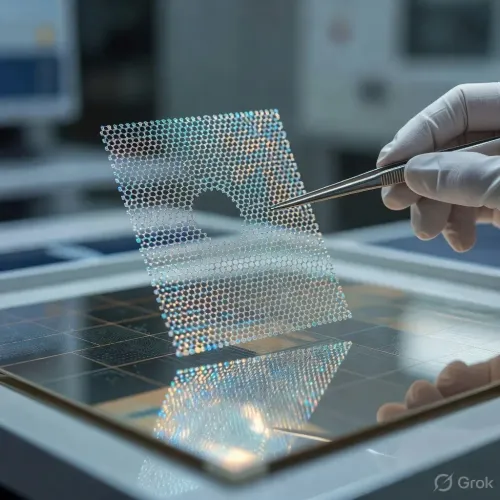
The composite material combines strong electromagnetic wave attenuation with a relatively simple manufacturing process, the research team said. Unlike conventional high-performance absorbing materials that rely on expensive inputs such as graphene, carbon nanotubes, and engineered composites, the Foshan team substituted these with expanded graphite — a far cheaper and more widely available carbon derivative. According to the authors, this substitution could significantly improve the feasibility of large-scale production.
Why it matters
Radar-absorbing materials have historically been confined to high-end military platforms — stealth fighters, cruise missiles, and advanced naval vessels — where performance justifies steep costs. A cost-effective alternative that retains strong electromagnetic attenuation properties could fundamentally alter the economics of stealth technology. The researchers noted that the approach could broaden practical applications well beyond military niches, opening pathways to industrial, commercial, and civil infrastructure uses.
The competitive backdrop
China has been steadily advancing its domestic materials science capabilities, particularly in electromagnetic and functional composites. Shenzhen-based Shenzhen Star-Navi Technology Co is among the commercial players already operating in the radar-absorbing materials space with its XRAM-C series products. The Foshan University research, if successfully commercialised, could intensify competition in this segment and accelerate cost deflation across the broader RAM market globally.
What's next
The peer-reviewed publication signals that the material has cleared an initial scientific credibility threshold, but commercialisation timelines remain unclear. Scaling laboratory results to industrial production volumes typically involves additional engineering challenges around consistency, durability, and regulatory compliance. Defence and industrial analysts will be watching whether Chinese manufacturers move to license or independently develop production lines based on this research in the near term.
Point of View
Lithium batteries, and drone components. If expanded-graphite composites can replicate even a fraction of the electromagnetic performance of graphene-based coatings at a fraction of the cost, the implications extend far beyond military procurement: commercial aviation, autonomous vehicles, and 5G infrastructure all have latent demand for affordable microwave management materials. What mainstream coverage tends to underplay is the regulatory and export-control dimension — as stealth-adjacent materials move toward commodity pricing, Western governments face mounting pressure to tighten dual-use export classifications. The real question is not whether China can produce this at scale, but how quickly the technology diffuses into grey-market supply chains.
NationPress
15 Sept 2026
Frequently Asked Questions
What did Foshan University researchers develop?
Researchers at Foshan University developed a low-cost microwave-absorbing composite made from expanded graphite and titanium dioxide , according to a paper published in the Journal of Ceramics in April 2026 . The material is designed to absorb radar waves and could be manufactured at significantly lower cost than existing high-performance alternatives.
Why is this stealth coating research significant?
Radar-absorbing materials have traditionally depended on expensive inputs like graphene and carbon nanotubes , restricting their use to high-cost military platforms. A cheaper composite that retains strong electromagnetic attenuation could make stealth coatings viable for mass industrial production and a wide range of civilian applications.
Could this technology be used outside the military?
Yes. The Foshan University research team explicitly stated that the approach could broaden practical applications beyond military niches. Potential civilian uses include electromagnetic shielding in commercial infrastructure, telecommunications, and transportation.
Who are the key commercial players in China's radar-absorbing materials market?
Shenzhen Star-Navi Technology Co is an established commercial player in China's radar-absorbing materials segment, offering products under its XRAM-C series line. The new university research, if commercialised, could introduce additional competition and accelerate price declines in this market.
What are the next steps for this stealth coating technology?
The research has cleared peer review, but moving from laboratory results to industrial-scale production involves additional engineering and regulatory hurdles. Analysts will be monitoring whether Chinese manufacturers pursue commercialisation based on the Foshan University findings in the near term.