China's 6G metasurface tech wins Geneva gold, turns walls into sensors
Synopsis
Chinese researchers at Southeast University have turned building walls into active 6G signal boosters and motion sensors using a single metasurface layer — winning a Geneva gold award and potentially rewriting how future networks handle dead zones and smart-city sensing.
Key Takeaways
Southeast University (Nanjing) developed DISACM , a metasurface system that converts walls and pipes into combined 6G signal relays and environmental sensors.
In smart-city tests, cascading 10 DISACM modules on a building facade boosted dead-zone signal strength by 10 to 20 dB (RSRP) while delivering wireless data rates of up to 400 Mbps .
The system simultaneously performed people-flow counting and environmental sensing — without dedicated sensor hardware.
The technology won a gold award at the International Exhibition of Inventions, Geneva in March 2026 ; results were announced online on June 14, 2026 .
The project is led by Professor Cheng Qiang and Academician Cui Tiejun , a pioneer in information metamaterials.
The technology has been tested in environments including underground mine tunnels , expanding its potential beyond urban deployments.
Southeast University researchers in Nanjing have developed a 6G-ready metasurface system that converts ordinary building walls and infrastructure into simultaneous signal boosters and motion sensors, winning a gold award at the International Exhibition of Inventions in Geneva — results of which were announced on June 14, 2026. The breakthrough addresses one of wireless networking's oldest problems: physical obstacles that kill signal coverage.
What DISACM actually does
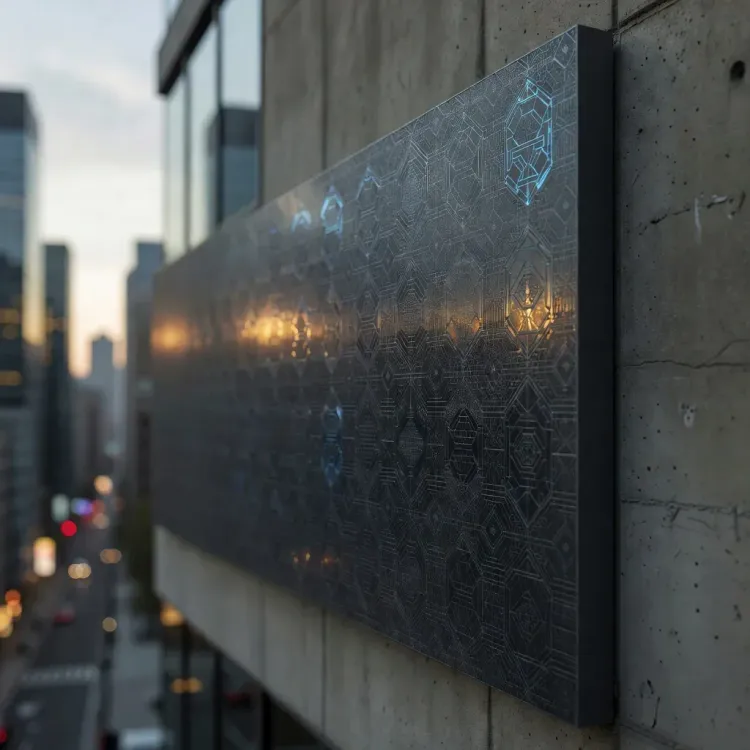
The system is formally named Distributed Integrated Sensing and Communication Metasurface (DISACM). It applies a specially engineered artificial electromagnetic material — described as a 'smart skin' — over wall surfaces, using intelligent reconfigurable surfaces to reshape how wireless signals propagate through built environments.
Unlike passive repeaters, DISACM performs three functions simultaneously: enhancing wireless communication, perceiving the surrounding environment, and coordinating computation. In conventional networks, walls and pillars are dead-zone generators; DISACM turns them into active network infrastructure.
Lab results and real-world performance
In smart-city test scenarios, the research team cascaded 10 DISACM modules across a building facade. Signal strength in dead zones improved immediately by 10 to 20 decibels (dB) — measured as reference signal received power (RSRP) — while the system simultaneously supported wireless data rates of up to 400 megabits per second.
Beyond connectivity, the same modules performed environmental sensing and people-flow counting, functioning in effect as a distributed radar embedded in the building's exterior. The technology has also been validated in challenging environments such as underground mine tunnels, where signal propagation is notoriously difficult.
The team behind the invention
The innovation was developed at Southeast University in Nanjing, led by Professor Cheng Qiang and Academician Cui Tiejun, a recognised pioneer in the field of information metamaterials. The award was presented at the International Exhibition of Inventions in Geneva in March 2026, with online results published on June 14.
Why it matters for 6G and smart cities
The global race to define 6G standards is intensifying, with China, the United States, South Korea, and the European Union all advancing competing visions. Reconfigurable intelligent surfaces (RIS) — the broader category DISACM belongs to — are widely expected to be a foundational 6G technology, enabling networks to actively manage their propagation environment rather than simply brute-forcing coverage with more base stations.
By fusing sensing and communication into a single passive-looking surface layer, DISACM could reduce the infrastructure cost of deploying dense 6G networks in urban environments while simultaneously enabling new smart-city applications such as occupancy monitoring, crowd management, and structural sensing — without dedicated sensor hardware.
What's next
The Southeast University team's Geneva recognition elevates the technology's profile at a critical moment, as international standards bodies are actively soliciting 6G candidate technologies. Whether DISACM advances from laboratory validation to commercial standardisation will depend on industry adoption and its integration into ongoing 6G trials — a process that global telecom vendors and regulators will be watching closely.
Point of View
Potentially reducing the capex burden of dense urban 6G rollouts. Mainstream coverage focuses on the sensing novelty, but the deeper competitive implication is that reconfigurable intelligent surfaces could become a standards battleground, much like MIMO antenna technology was for 4G and 5G. If China's research institutions drive the underlying IP, Beijing gains meaningful leverage in 6G standardisation negotiations at bodies like the ITU and 3GPP. The 10–20 dB gain figures are significant enough to attract operator interest, but the path from Geneva gold medal to commercial deployment runs through a standards process that remains genuinely contested.
NationPress
26 Jun 2026
Frequently Asked Questions
What is China's DISACM 6G technology?
DISACM — Distributed Integrated Sensing and Communication Metasurface — is a 6G-ready system developed at Southeast University in Nanjing that coats wall surfaces with an engineered electromagnetic material, turning them into active signal boosters and motion sensors simultaneously. It was created by a team led by Professor Cheng Qiang and Academician Cui Tiejun.
What award did the Chinese 6G metasurface technology win?
The technology won a gold award at the International Exhibition of Inventions held in Geneva in March 2026, with the online results announced on June 14, 2026. The Geneva exhibition is one of the world's most prominent platforms for recognising applied inventions.
How much does DISACM improve wireless signal strength?
In smart-city tests, 10 cascaded DISACM modules on a building facade improved reference signal received power (RSRP) in dead zones by 10 to 20 decibels while supporting data rates of up to 400 megabits per second. The same modules simultaneously performed people-flow counting and environmental sensing.
Why does this 6G wall-sensor technology matter for smart cities?
DISACM could eliminate the need for separate sensor hardware in smart-city deployments by embedding occupancy monitoring, crowd counting, and signal coverage into a single surface layer applied to existing building facades. This approach could significantly reduce infrastructure costs for dense 6G urban networks.
How does China's metasurface 6G tech compare to existing wireless technology?
Unlike conventional wireless repeaters or passive signal reflectors, DISACM actively reconfigures the electromagnetic propagation environment and performs sensing functions in parallel — a capability that falls under the broader 6G category of reconfigurable intelligent surfaces (RIS). Competing 6G programs in the US, South Korea, and EU are also exploring RIS, making this an active standards battleground.