China's GaN satellite gives 24/7 Earth watch US can't match
Synopsis
China's Ludi Tance-4 01 is the world's only geosynchronous synthetic-aperture radar satellite, using gallium nitride semiconductors — a material China controls at over 95% of global supply — to deliver persistent surveillance the US has failed to match after decades of effort.
Key Takeaways
Ludi Tance-4 01 , launched in August 2023 , is the world's only geosynchronous synthetic-aperture radar satellite.
The satellite orbits at 36,000 km above Earth, enabling continuous surveillance of roughly a third of the planet's surface.
Its radar system relies on gallium nitride (GaN) semiconductors, a material with no cost-competitive substitute in high-performance radar applications.
China produces more than 95 per cent of the world's primary gallium, extracted as a by-product of alumina refining.
Beijing restricted gallium exports following the satellite's launch, compounding supply-chain risks for Western defence programmes.
The United States has spent decades attempting to develop an equivalent geosynchronous radar surveillance capability without success.
China's Ludi Tance-4 01 radar satellite — the world's only geosynchronous synthetic-aperture radar satellite — uses gallium nitride (GaN) semiconductors to deliver round-the-clock surveillance of roughly a third of Earth's surface, according to a new study. The satellite orbits at 36,000 km (22,000 miles) above the planet, a capability the United States has pursued for decades without success.
A One-of-a-Kind Orbital Platform
Unlike low-Earth-orbit surveillance satellites that pass over a target area periodically, the Ludi Tance-4 01 maintains a fixed position in geosynchronous orbit, enabling persistent monitoring of both vast land areas and moving targets simultaneously. The satellite was launched in August 2023 and remains the only platform of its kind in operation globally. Researchers affiliated with the National Key Laboratory of Space Microwave Communication and the Xian Institute of Space Radio Technology detailed its capabilities in the Journal of Microwaves.
Why Gallium Nitride Is the Critical Ingredient
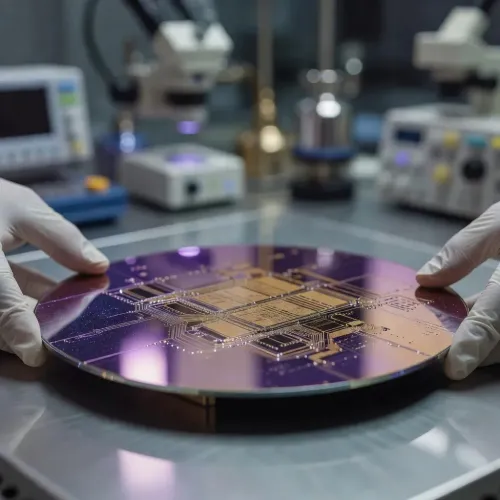
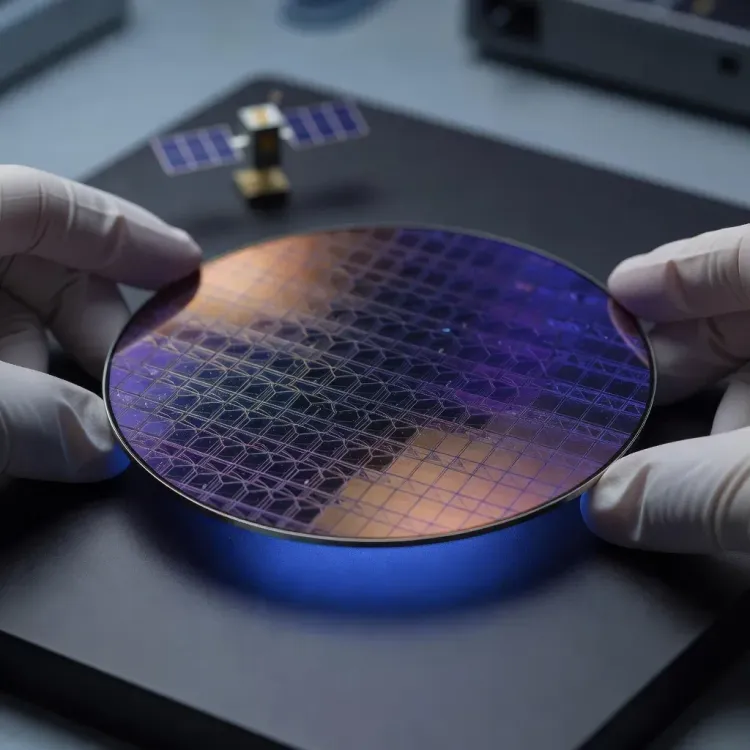
GaN is central to the satellite's active electronically scanned array radar, enabling high-power, high-frequency signal processing in a compact form factor suited for space deployment. The compound is also a foundational material in electronic warfare systems and next-generation defence platforms. Its performance advantages over silicon-based alternatives make it effectively irreplaceable in cutting-edge radar applications.
China's Near-Total Grip on Gallium Supply
China accounts for more than 95 per cent of global primary gallium production, according to the study. The metal is not mined independently but extracted as a by-product of alumina refining — and China, the world's largest aluminium producer, dominates that upstream process. Beijing moved to restrict gallium exports following the satellite's launch in August 2023, tightening a supply chain that Western defence and semiconductor industries have struggled to diversify.
The Competitive Backdrop
The United States has invested heavily over multiple decades in achieving persistent geosynchronous radar surveillance but has not fielded an equivalent system. The combination of GaN semiconductor mastery and geosynchronous radar integration represents a convergence of materials science and aerospace engineering that analysts say is difficult to replicate quickly. China's export controls on gallium — imposed alongside restrictions on germanium — have already disrupted procurement pipelines for allied defence contractors.
What's Next
The export restrictions on gallium remain in force, and no credible alternative supply chain at comparable scale has emerged outside China. As GaN-dependent defence and 5G infrastructure programmes accelerate across NATO member states and Indo-Pacific allies, pressure to develop domestic gallium refining capacity is intensifying. Whether allied governments can close the gap before China expands its geosynchronous radar constellation will be a defining question for the next phase of the satellite intelligence competition.
Point of View
Because the feedstock itself is a chokepoint. Mainstream coverage tends to frame the chip war as a contest over advanced logic semiconductors; this development highlights that compound semiconductors like GaN — critical for radar, 5G and electronic warfare — represent an equally consequential front. The export restrictions imposed after August 2023 suggest Beijing is deliberately coupling materials leverage to capability demonstration, a pattern that mirrors its approach to rare earths a decade ago.
NationPress
21 Oct 2026
Frequently Asked Questions
What is the Ludi Tance-4 01 satellite?
The Ludi Tance-4 01 is China's geosynchronous synthetic-aperture radar satellite, launched in August 2023 , and currently the only satellite of its kind in the world. It orbits at 36,000 km above Earth, maintaining a fixed position that enables continuous, 24/7 radar surveillance of approximately one-third of the planet's surface.
Why does the Ludi Tance-4 01 satellite matter for global security?
The satellite gives China a persistent surveillance capability — monitoring both large areas and moving targets simultaneously — that the United States has tried and failed to achieve for decades. Its geosynchronous orbit means it never loses sight of its designated coverage zone, unlike conventional low-Earth-orbit reconnaissance satellites.
What is gallium nitride and why is it important?
Gallium nitride (GaN) is a compound semiconductor that enables high-power, high-frequency radar and electronic warfare systems in compact form factors. It is the key enabling material for active electronically scanned array radars and next-generation defence platforms, and currently has no widely available cost-competitive substitute.
How much of the world's gallium does China control?
China accounts for more than 95 per cent of global primary gallium production, according to the study. Gallium is extracted as a by-product of alumina refining, and China's dominance of aluminium production makes it the overwhelmingly dominant source of the metal worldwide.
What has China done to restrict gallium exports?
Beijing imposed export restrictions on gallium following the launch of the Ludi Tance-4 01 satellite in August 2023 . These controls have disrupted procurement for Western defence and semiconductor industries that depend on GaN for radar, 5G infrastructure and electronic warfare systems.