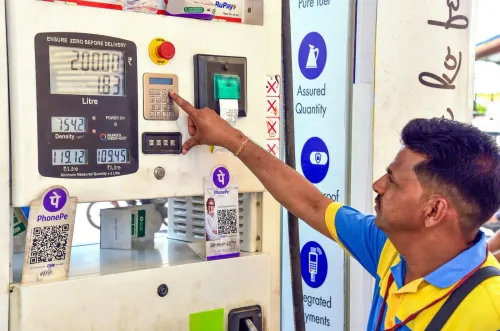
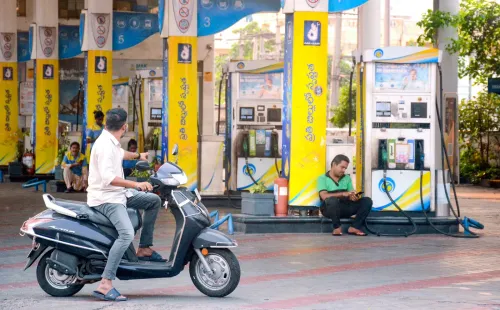
Delhi CNG price hiked ₹1 to ₹81.09/kg, third revision in 10 days
Synopsis
Delhi's CNG price has jumped ₹4 per kg in just 10 days — an unusually rapid sequence of revisions by IGL. With petrol nearing ₹100 per litre in the capital and global crude staying elevated, commuters and transport operators face a sustained cost squeeze, and fare hikes from auto and cab operators could follow soon.
Key Takeaways
CNG price in Delhi raised by ₹1 per kg on 23 May to ₹81.09 per kg , per Indraprastha Gas Limited (IGL) .
This is the third CNG revision in 10 days ; cumulative hike stands at ₹4 per kg since 15 May .
CNG in Noida, Greater Noida, Ghaziabad now at ₹89.70 per kg ; Gurugram at ₹86.12 per kg .
Petrol in Delhi rose to ₹99.51/litre ; diesel to ₹92.49/litre after a ₹0.87 and ₹0.91 per litre hike respectively.
Rising global crude prices and West Asia geopolitical tensions cited as key drivers.
Transport operators and daily commuters face higher costs; logistics charges may follow.
Compressed natural gas (CNG) prices in New Delhi were raised by ₹1 per kg on Saturday, 23 May, pushing the retail rate to ₹81.09 per kg from ₹80.09 per kg, according to Indraprastha Gas Limited (IGL). The revision marks the third CNG price hike in 10 days in the national capital, compounding pressure on commuters and transport operators dependent on gas-powered vehicles.
A Pattern of Rapid Revisions
The latest ₹1 hike follows a ₹2 per kg increase announced on 15 May and a ₹1 per kg rise on 17 May. Cumulatively, CNG prices in Delhi have risen by ₹4 per kg within a span of 10 days — a pace of revision that is unusual and signals sustained upstream cost pressure. IGL, which supplies CNG across the Delhi-NCR network, has not separately announced a cap or relief measure for this period.
NCR Cities Also Hit
Neighbouring cities have seen steeper absolute rates. CNG in Noida, Greater Noida, and Ghaziabad has risen to ₹89.70 per kg, while Gurugram now stands at ₹86.12 per kg. The differential reflects varying state-level taxes and distribution costs layered on top of the base gas price.
Petrol and Diesel Prices Rise Simultaneously
State-owned oil marketing companies also raised petrol and diesel prices on the same day — the third such increase in roughly 10 days. Petrol became costlier by ₹0.87 per litre and diesel by ₹0.91 per litre in a uniform nationwide revision. In Delhi, petrol now costs ₹99.51 per litre (up from ₹98.64) and diesel ₹92.49 per litre (up from ₹91.58), according to multiple reports.
The increase is sharper in other metros. In Kolkata, petrol has touched ₹110.64 per litre and diesel ₹97.02 per litre. In Mumbai, petrol has climbed to ₹108.49 per litre and diesel to ₹95.02 per litre.
Global Crude and Geopolitical Pressures Drive Hikes
The fuel price surge is attributed to sustained pressure from rising global crude oil prices, compounded by ongoing geopolitical tensions in West Asia that continue to roil international energy markets. Union Minister Kiren Rijiju had earlier this month defended the government's record, stating that India had managed to limit the increase in petrol and diesel prices despite a sharp spike in global crude costs.
Impact on Households and Logistics
The back-to-back revisions are expected to translate into rising household expenditure for Delhi-NCR residents who rely on CNG-powered vehicles — including auto-rickshaws, cabs, and buses — as well as higher logistics charges that could feed into broader consumer prices. Transport operators are likely to seek fare revisions in the coming weeks if the trend persists.
Point of View
Or a failure to absorb upstream costs gradually. Either way, the burden lands disproportionately on Delhi-NCR's lower-income commuters who depend on CNG-powered autos and shared cabs. With petrol approaching the psychologically sensitive ₹100 mark in the capital, the political optics are worsening even as the government argues it has cushioned consumers from global crude spikes. The real test will come if crude stays elevated: another round of hikes before elections would be difficult to defend.
NationPress
7 Oct 2026
Frequently Asked Questions
What is the new CNG price in Delhi after the latest hike?
CNG in Delhi now costs ₹81.09 per kg following a ₹1 per kg revision on 23 May 2025, as announced by Indraprastha Gas Limited (IGL). This is the third price increase in 10 days.
Why have CNG and fuel prices been hiked repeatedly in May 2025?
The hikes are attributed to rising global crude oil prices and ongoing geopolitical tensions in West Asia, which have driven up international energy costs. Oil marketing companies have passed on a portion of these costs through successive revisions.
What are the current CNG prices in Noida, Ghaziabad, and Gurugram?
After the latest revision, CNG in Noida, Greater Noida, and Ghaziabad stands at ₹89.70 per kg, while Gurugram is at ₹86.12 per kg — both higher than Delhi's rate due to state-level taxes and distribution costs.
How much have petrol and diesel prices increased in Delhi?
Petrol in Delhi rose by ₹0.87 per litre to ₹99.51 per litre, and diesel increased by ₹0.91 per litre to ₹92.49 per litre on 23 May — the third such revision in about 10 days.
Who is affected by the CNG price hike in Delhi?
Commuters using CNG-powered autos, cabs, and buses are directly affected, as are transport operators who may seek fare revisions. The hikes are also expected to push up logistics costs, potentially feeding into broader consumer prices across Delhi-NCR.