How Has the Digital Life Certificate Campaign Transformed Pension Disbursal?
Synopsis
Discover how the Digital Life Certificate Campaign is reshaping pension disbursal in India. Union Minister Jitendra Singh reveals groundbreaking reforms aimed at enhancing accessibility and efficiency for senior citizens.
Key Takeaways
Digital Life Certificate Campaign simplifies pension access for the elderly.
Facial recognition technology eliminates the need for bank visits.
Over 1,600 outdated regulations have been abolished.
Government exams are now available in 13 regional languages .
Rozgar Melas aim to provide job opportunities for the youth.
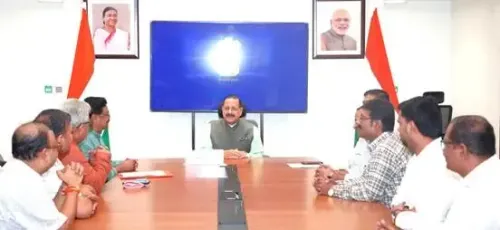
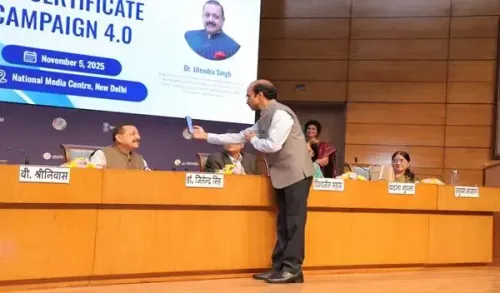
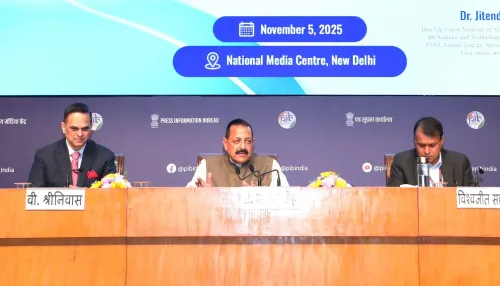
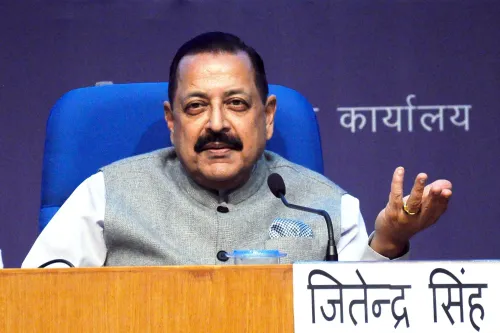
New Delhi, May 17 (NationPress) The Digital Life Certificate Campaign has significantly transformed the process of pension disbursal, stated Jitendra Singh, the Union Minister of State (Independent Charge) for Science and Technology.
Singh emphasized that the initiative utilized modern technology to facilitate pension access for the elderly. Additionally, it eliminated numerous obsolete regulations that were obstructing the process.
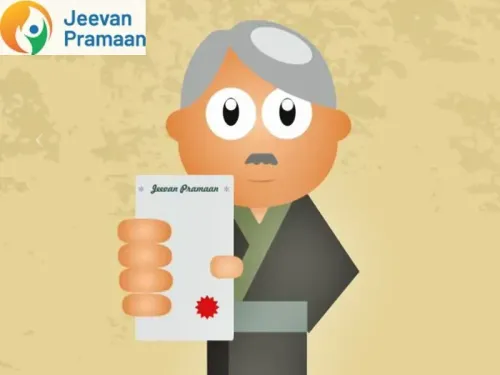
“The Digital Life Certificate Campaign has redefined pension disbursal by allowing senior pensioners to confirm their identity through facial recognition technology, thus removing the requirement for in-person visits to bank branches,” Singh remarked.
“Considerable advancements have also been achieved in streamlining administrative operations, including the launch of a single pension application form, a consolidated fellowship application platform, and the removal of over 1,600 outdated regulations,” he continued.
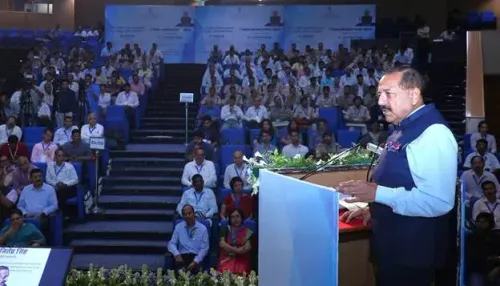
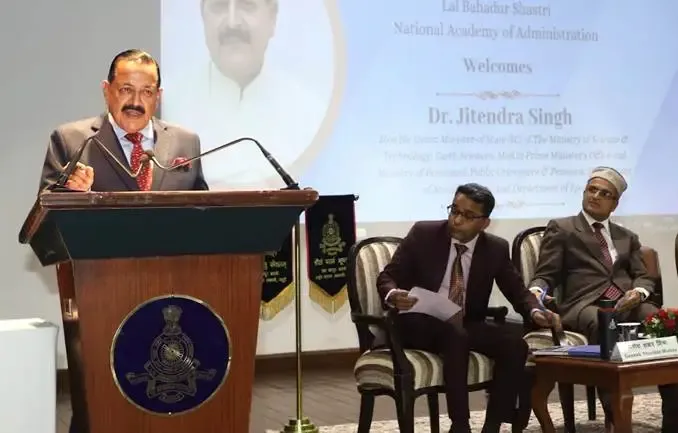
While addressing IAS trainees and civil servants at the Lal Bahadur Shastri National Academy of Administration (LBSNAA) in Mussoorie, Singh also pointed out several innovative reforms aimed at improving transparency, accessibility, and efficiency in public service.
He mentioned that to foster inclusivity, government recruitment exams are now being organized in 13 regional languages. The Union Minister also disclosed plans to extend this initiative to all 22 scheduled languages recognized by the Constitution.
To ensure fairness, interviews for certain Group B and C positions have been eliminated, thereby promoting merit-based selection.
Moreover, Rozgar Melas—large-scale employment fairs—have been initiated to create job opportunities and inspire the youth, Singh noted.
Additionally, Singh highlighted the importance of the Swachhata Campaign, which not only optimized office space but also generated over Rs 250 crore in revenue from the disposal of scrap materials.
Focusing on initiatives for young officers, Singh discussed the Assistant Secretaryship Programme, where IAS officers serve in central ministries for two months.
“During the Covid-19 pandemic, officers who participated in this programme exhibited enhanced confidence and adaptability,” he mentioned.
The MoS also referenced the Prime Minister’s Awards for Excellence in Public Administration, which now prioritize initiative and impact over individual recognition. More than two dozen regional conferences have been held by the ministry nationwide—from Leh to Kanyakumari—emphasizing decentralized governance and participatory development.
Point of View
It is essential to recognize the profound impact of the Digital Life Certificate Campaign. This initiative not only streamlines pension disbursal but also demonstrates the government's commitment to utilizing technology for better governance. With the focus on inclusivity and transparency, the campaign sets a benchmark for future reforms in public service.
NationPress
19 Sept 2026
Frequently Asked Questions
What is the Digital Life Certificate Campaign?
The Digital Life Certificate Campaign is an initiative aimed at simplifying the process of pension disbursal for elderly citizens through the use of technology.
How does the campaign benefit senior citizens?
The campaign allows elderly pensioners to verify their identity using facial recognition technology, eliminating the need for physical bank visits.
What changes have been made in government recruitment exams?
Government recruitment exams are now conducted in 13 regional languages, with plans to extend this to all 22 scheduled languages recognized by the Constitution.
What is the significance of the Rozgar Melas?
Rozgar Melas are employment fairs launched to provide job opportunities and inspire the youth.
How has the campaign improved transparency in public services?
The campaign has introduced reforms that enhance transparency, accessibility, and efficiency in public service delivery.