Will Robust GST Reforms Positively Impact the Economy and Boost Consumption?
Synopsis
The recent GST reforms in India promise to reshape economic landscapes by reducing tax burdens and stimulating consumption. With significant impacts already observable in various sectors, these changes represent a pivotal moment in the government’s ongoing efforts to bolster economic growth.
Key Takeaways
GST rate rationalisation aims to reduce tax burdens.
Positive impacts on consumption and retail sales.
Increased state revenues from GST adjustments.
Focus on simplifying customs tax system next.
High-frequency indicators show economic momentum.
New Delhi, Dec 25 (NationPress) In recent years, the government has initiated a remarkable series of reforms, eliminating over 40,000 redundant compliances and rescinding more than 1,500 obsolete laws, thereby fostering a modern, efficient, and citizen-centric framework. The GST rate rationalisation, effective from September 22 this year, represents a significant 'Big Bang reform' aimed at constructing a 'Viksit Bharat'.
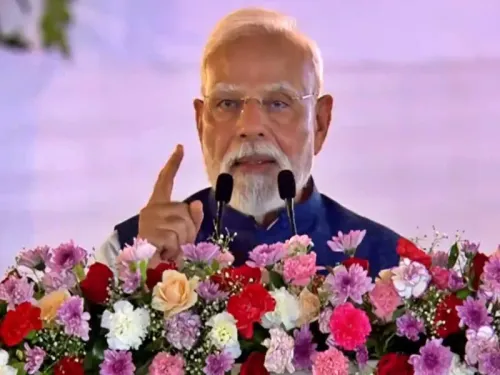
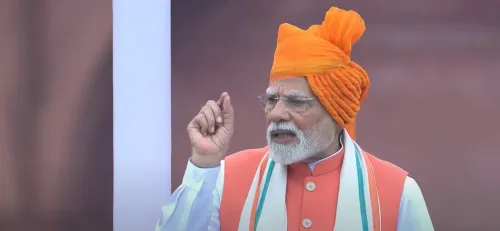
On the occasion of the 79th Independence Day, Prime Minister Narendra Modi communicated to the nation the forthcoming introduction of next-generation GST reforms by Diwali, designed to lower taxes on essential goods. He stated, “The government will implement Next Generation GST reforms, which will alleviate the tax burden on the everyday citizen. This will serve as a Diwali gift for you,” assuring that these reforms will directly benefit the populace and invigorate economic activities.
Per the Finance Ministry, the launch of GST 2.0 has begun to yield a favorable impact on India’s economy, marked by enhanced consumption patterns, increased sales in vital sectors such as automobiles, and elevated consumer confidence.
The passenger vehicle market exhibited robust year-on-year increases in wholesale and retail figures for November, fueled by persistent demand post-festivities, recent GST reductions, and the winter wedding season. According to a report from ICRA, retail sales surged by 22 percent year-on-year in November. Meanwhile, wholesale volumes climbed 19 percent YoY to 4.1 lakh units as original equipment manufacturers (OEMs) sustained production to satisfy demand.
Moreover, the adjustment in GST rates has led to a 5 percent rise in state revenues (Gross SGST+IGST allocated to States) from September to November of the current fiscal year in comparison to the same timeframe last year.
In response to a query in the Rajya Sabha during the recently concluded Winter Session, Minister of State for Finance Pankaj Chaudhary reported that GST collections from September to November of the current fiscal year (2025-26) increased to Rs 2,59,202 crore from Rs 2,46,197 crore during the corresponding period of 2024-25.
The recent GST rate adjustments alongside the government’s persistent focus on facilitating business operations form part of a comprehensive strategy to enhance consumption growth within the economy. The bolstering of consumption demand is anticipated to positively influence GST revenue.
The rate rationalisation has stimulated the retail credit sector due to improved affordability, as indicated by a Credit Market Indicator (CMI) that increased to 99 in Q2 FY25 from 98 in the previous quarter. The uptick in retail loan demand reflects renewed consumer confidence and market optimism, according to a report from TransUnion CIBIL.
Notably, various high-frequency indicators signify that India’s economic activities have gained traction following the GST reforms.
During September and October 2025, e-way bill generation expanded by 14.4 percent year-on-year. Concurrently, cumulative GST collection growth of 9 percent for April–October 2025 illustrates that the underlying revenue stream has remained resilient, supported by robust consumption and enhanced compliance, according to government statistics.
Finance Minister Nirmala Sitharaman noted that following income tax and GST reforms, the government’s next priority is to simplify the customs tax structure.
Point of View
It's evident that the ongoing GST reforms signify a pivotal transition towards a more efficient economic model in India. The government's commitment to reducing tax burdens while enhancing compliance reflects an understanding of market dynamics and consumer needs. Such reforms, if implemented effectively, could not only uplift the economy but also significantly improve the lives of ordinary citizens.
NationPress
27 Sept 2026
Frequently Asked Questions
What are the recent GST reforms in India?
The recent GST reforms include rate rationalisation aimed at reducing taxes on essential goods and improving compliance, which is expected to boost consumption and economic growth.
How have these reforms impacted the economy?
The reforms have led to increased retail sales, improved consumer sentiment, and higher GST collections, indicating a positive trajectory for the economy.
What sectors are benefiting from the GST reforms?
Key sectors such as automobiles and retail have shown significant growth in sales and consumer demand following the GST rate adjustments.
How does the government plan to further simplify tax structures?
Following GST reforms, the government aims to focus on simplifying the customs tax system as part of its broader strategy to enhance business operations.
What indicators show the effectiveness of the GST reforms?
Indicators such as e-way bill generation, retail credit market growth, and cumulative GST collection growth are demonstrating the effectiveness of the recent reforms.