China extracts rubber from Xinjiang dandelion weed in supply chain test
Synopsis
Chinese scientists extracted 40 kg of natural rubber from just 1.3 hectares of a dandelion-like weed in Xinjiang — a plant that thrives in the alkaline terrain where tropical rubber trees cannot grow, potentially cracking open a new domestic supply route.
Key Takeaways
Chinese scientists harvested one tonne of dried roots from a 20-mu (1.3-hectare) test field in Xinjiang in July 2026 , extracting 40 kg (88 lbs) of natural rubber .
The source plant, Taraxacum kok-saghyz (rubber dandelion), grows in the salty, alkaline soils at the foot of the Tianshan Mountains — terrain unsuitable for the dominant Brazilian rubber tree .
China depends heavily on Indonesia , Malaysia , and other Southeast Asian nations for natural rubber imports, making domestic alternatives strategically significant.
Research institutions including the Chinese Academy of Sciences and Beijing University of Chemical Technology are involved in developing the crop.
Potential cultivation zones identified include areas near Kashgar , Zhaosu , and the Altay region of Xinjiang .
Chinese scientists have successfully extracted natural rubber from a dandelion-like weed native to Xinjiang Uygur Autonomous Region, marking a significant step toward reducing China's dependence on imported rubber from Southeast Asia. The breakthrough, announced in early August 2026, involved harvesting and processing the plant known as the rubber dandelion, or Taraxacum kok-saghyz, from a trial cultivation site in the region.
The plant and the harvest
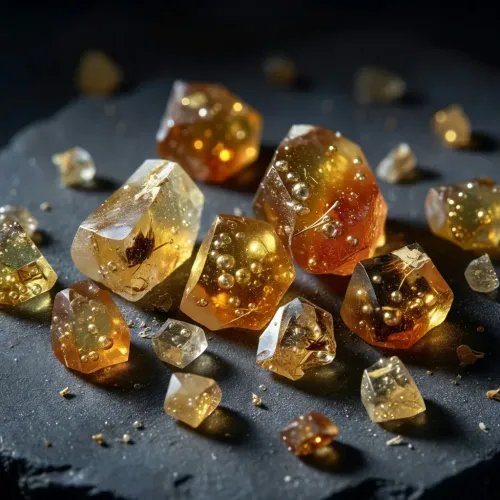
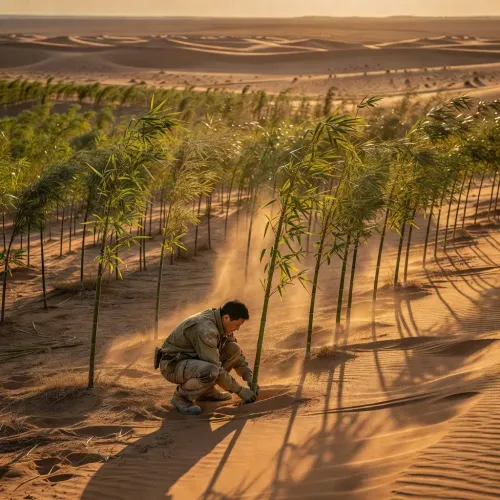
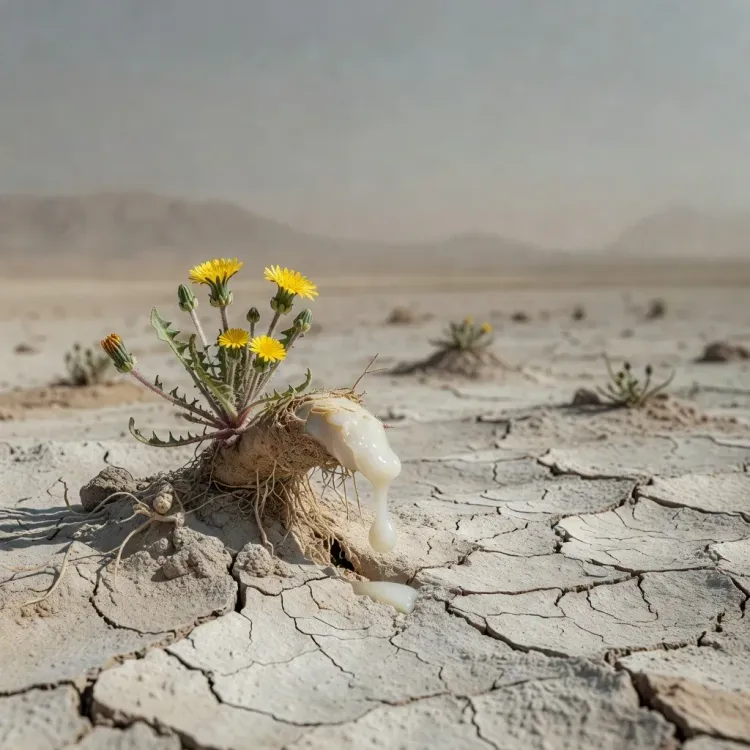
The rubber dandelion grows on the salty, alkaline shores at the foot of the Tianshan Mountains in Xinjiang. Visually unremarkable — bearing small yellow flowers and fluffy seeds — the plant reveals its value only when its root is broken, oozing a milky fluid that is natural rubber. Last month, researchers harvested one tonne of dried roots from a 20-mu (approximately 1.3-hectare) test field and extracted 40 kg (88 lbs) of natural rubber from that yield.
Why it matters
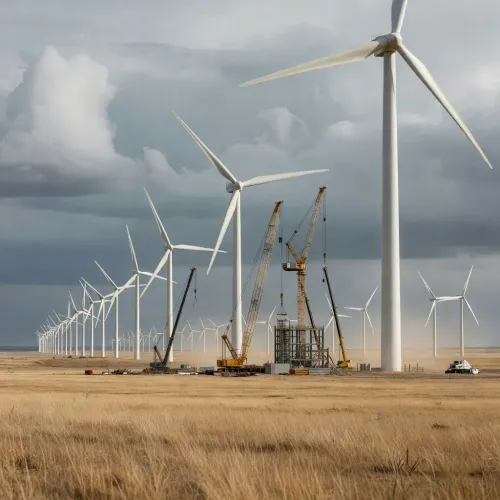
China is the world's largest consumer of natural rubber, yet it relies heavily on imports from Indonesia, Malaysia, and other Southeast Asian producers, as well as domestic supply from Hainan and Guangdong provinces — regions where the dominant Brazilian rubber tree thrives in tropical climates. The rubber dandelion, by contrast, is suited to temperate and arid zones, opening vast swaths of land in Xinjiang — including areas near Kashgar, Zhaosu, and the Altay region — to potential rubber cultivation.
The science behind the weed
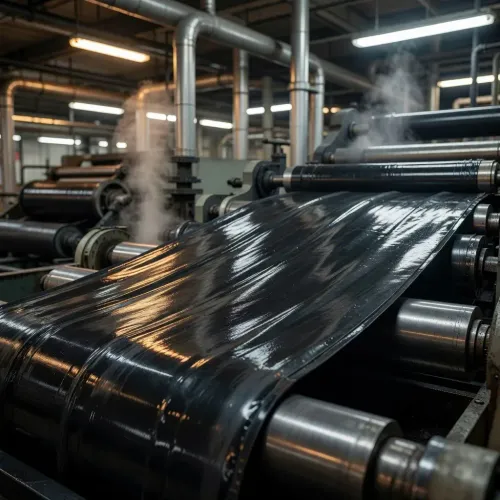
Research into Taraxacum kok-saghyz has been ongoing at institutions including the Chinese Academy of Sciences and the Beijing University of Chemical Technology. Scientists have worked to improve root biomass and rubber content through selective breeding and optimised agronomic practices. The current extraction rate of 40 kg per tonne of dried root is considered a proof-of-concept figure, with researchers targeting higher yields as cultivation scales up.
Competitive backdrop
Global natural rubber supply chains remain concentrated in a handful of tropical nations, making importing countries vulnerable to weather disruptions, disease outbreaks affecting Brazilian rubber tree plantations, and geopolitical friction. China's push to develop an alternative domestic source mirrors efforts in Europe and the United States, where dandelion-derived rubber programmes have also attracted research funding. The difference in China's case is the scale of available arid land in Xinjiang and the state-backed research infrastructure behind the effort.
What's next
Researchers are expected to expand the test field area and refine extraction efficiency before any commercial-scale rollout can be considered. The viability of rubber dandelion as a meaningful supplement — let alone a substitute — for imported natural rubber will depend on achieving competitive per-kilogram production costs. If yield improvements hold at scale, Xinjiang's alkaline terrain could eventually become a strategic rubber-producing zone, reshaping a supply chain that has remained largely unchanged for decades.
Point of View
Rare earths, and now agricultural inputs. Natural rubber is rarely discussed in the same breath as chips, yet it is equally non-negotiable for tyre manufacturing, aerospace, and defence applications, and China's tropical cultivation zones in Hainan and Guangdong fall far short of domestic demand. What mainstream coverage misses is the land-use calculus: Xinjiang's vast alkaline flats are currently low-value agriculturally, meaning rubber dandelion cultivation would not compete with food crops — a political and economic advantage that tropical rubber expansion cannot claim. The real test will be cost competitiveness; at 40 kg per tonne of dried root, extraction efficiency must improve substantially before this becomes more than a strategic hedge.
NationPress
3 Aug 2026
Frequently Asked Questions
What is the rubber dandelion and why is China researching it?
The rubber dandelion, scientifically known as Taraxacum kok-saghyz , is a weed whose roots produce natural rubber when broken. China is researching it as a potential domestic rubber source to reduce its heavy dependence on imports from Southeast Asian countries such as Indonesia and Malaysia .
How much rubber was extracted in the Xinjiang trial?
Researchers extracted 40 kg (88 lbs) of natural rubber from one tonne of dried roots harvested from a 20-mu (approximately 1.3-hectare) test field in Xinjiang . The harvest took place in July 2026 .
Why can't China simply grow more rubber trees domestically?
The Brazilian rubber tree , the primary global source of natural rubber, requires tropical climates and is confined in China to Hainan and Guangdong provinces. The rubber dandelion, by contrast, thrives in the temperate, alkaline soils of Xinjiang , unlocking land that is otherwise unsuitable for conventional rubber cultivation.
Which institutions are leading China's rubber dandelion research?
The Chinese Academy of Sciences and the Beijing University of Chemical Technology are among the key institutions involved in researching and developing Taraxacum kok-saghyz as a commercial rubber crop.
When could rubber dandelion become a commercial rubber source in China?
No commercial timeline has been announced. Researchers must first scale up test fields, improve extraction efficiency beyond the current 40 kg per tonne of dried root, and demonstrate cost competitiveness with imported natural rubber before large-scale production becomes viable.