UCIL at 60: Powering India's nuclear energy mission for six decades
Synopsis
UCIL has quietly powered India's nuclear reactors for 60 years — mining uranium from the earth up to reactor fuel. As India accelerates its Nuclear Energy Mission and pushes for a larger clean-energy nuclear share, this Diamond Jubilee is less a ceremonial moment and more a reminder of how much the country's low-carbon future depends on a single PSU most Indians have never heard of.
Key Takeaways
Uranium Corporation of India Limited (UCIL) celebrated its Diamond Jubilee Year , marking 60 years since incorporation on 4 October 1967 .
Dr Ajit Kumar Mohanty , Secretary, Department of Atomic Energy , stressed continued innovation as India advances its Nuclear Energy Mission .
Seema Jain , Member-Finance, Atomic Energy Commission , paid tribute to Dr Homi Jehangir Bhabha and UCIL's founding pioneers.
Dr Kacham Anand Rao , CMD of UCIL, highlighted six decades of expertise in uranium mining, processing, safety, and environmental management.
UCIL provides the essential indigenous uranium resource base that underpins India's entire nuclear power programme.
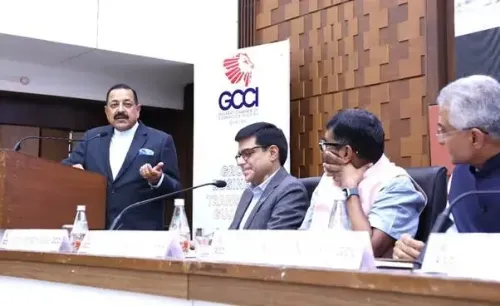
The Uranium Corporation of India Limited (UCIL), a public sector undertaking under the Department of Atomic Energy (DAE), marked its Diamond Jubilee Year on 4 October 2025, celebrating six decades since its incorporation in 1967 and its sustained contribution to India's nuclear power programme. Senior officials, scientists, engineers, and employees gathered to commemorate the milestone and chart the path ahead.
A Foundation Built Over Six Decades
Dr Ajit Kumar Mohanty, Secretary of the Department of Atomic Energy and Chairman of the Atomic Energy Commission, described the Diamond Jubilee Year as 'an occasion to recognise the contributions of UCIL and to reaffirm the importance of continued innovation and capability building as India advances on the Nuclear Energy Mission,' according to an official statement. Established on 4 October 1967, UCIL has been central to developing India's indigenous uranium mining and processing capabilities, providing the essential resource base that underpins the country's nuclear power infrastructure.
What Officials Said
Seema Jain, Member-Finance of the Atomic Energy Commission, called the occasion 'a celebration of six decades of scientific capability, institutional experience and dedicated service to the nation.' She also paid homage to Dr Homi Jehangir Bhabha and other pioneers who laid the foundations of India's uranium mining and processing capabilities. 'From the depths of the earth to the larger nuclear energy programme, UCIL has played an important and responsible role in building indigenous capability in uranium mining and processing,' Jain said.
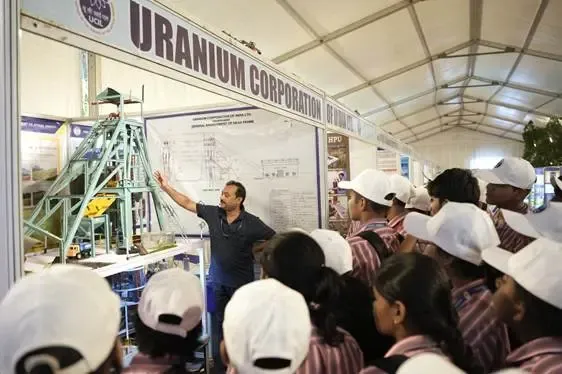
Dr Kacham Anand Rao, Chairman and Managing Director of UCIL, called the Diamond Jubilee 'a proud milestone for every member of the UCIL family.' He noted that over six decades, the organisation had 'steadily built expertise and infrastructure in uranium mining and processing, while strengthening its capabilities in technology, safety and environmental management.' Rao also highlighted that operations and facilities were opened to the media on the occasion — a notable gesture of institutional transparency.
Why This Milestone Matters
India's nuclear energy ambitions have grown considerably in recent years, with the government pushing for a significant expansion of nuclear capacity as part of its long-term clean energy strategy. UCIL's role as the sole domestic supplier of uranium ore concentrate makes it a linchpin in that programme. Without a reliable indigenous uranium supply chain, India's nuclear reactors — and by extension its carbon reduction targets — would remain exposed to import dependency and geopolitical supply risks.
This comes amid broader policy momentum: the Centre has signalled an accelerated push for nuclear power under its Nuclear Energy Mission, and UCIL's capacity and technological readiness will be critical to meeting those targets. Notably, generations of UCIL personnel have worked in challenging underground and surface mining environments to keep this supply chain intact — a dimension of the nuclear programme that rarely receives public attention.
The Road Ahead
Officials used the Diamond Jubilee as an opportunity not just to reflect but to look forward, stressing shared responsibilities and the need for continued innovation. With India targeting a substantially larger share of nuclear power in its energy mix over the coming decades, UCIL's ability to scale up uranium mining and processing capacity will be tested. The organisation's six-decade institutional record provides a base, but execution at the pace the Nuclear Energy Mission demands will require fresh investment, technology upgrades, and workforce expansion.
Point of View
And UCIL deserves more public recognition than it typically receives. Yet the Diamond Jubilee also raises a pointed question: as India commits to a far larger nuclear energy footprint, can a single PSU, however experienced, scale fast enough? The Nuclear Energy Mission's credibility rests partly on domestic uranium availability — and UCIL's production capacity, workforce pipeline, and technology modernisation have not been stress-tested against the ambitious reactor targets the Centre has announced. Institutional longevity is not the same as institutional readiness for step-change growth.
NationPress
5 Oct 2026
Frequently Asked Questions
What is the Uranium Corporation of India Limited (UCIL)?
UCIL is a public sector undertaking under India's Department of Atomic Energy, established on 4 October 1967. It is responsible for uranium mining and processing, providing the essential domestic uranium resource base for India's nuclear power programme.
Why is UCIL's Diamond Jubilee significant?
The Diamond Jubilee marks 60 years of UCIL's operation as the backbone of India's indigenous uranium supply chain. It comes at a critical time as the Centre accelerates its Nuclear Energy Mission, making UCIL's capacity and capability more strategically important than ever.
What is India's Nuclear Energy Mission?
India's Nuclear Energy Mission is a government initiative to significantly expand the country's nuclear power capacity as part of its long-term clean and low-carbon energy strategy. UCIL's uranium mining and processing output is central to fuelling that expansion.
Who are the key officials associated with UCIL's Diamond Jubilee celebrations?
The celebrations featured Dr Ajit Kumar Mohanty, Secretary of the Department of Atomic Energy and Chairman of the Atomic Energy Commission; Seema Jain, Member-Finance of the Atomic Energy Commission; and Dr Kacham Anand Rao, Chairman and Managing Director of UCIL.
What challenges does UCIL face going forward?
As India targets a larger share of nuclear power in its energy mix, UCIL will need to scale up uranium mining and processing capacity, upgrade technology, and expand its workforce. Officials at the Diamond Jubilee event acknowledged the need for continued innovation and capability building to meet future demand.