Xi Jinping keynotes WAIC 2026 as Shanghai AI fever hits record high
Synopsis
President Xi Jinping made his WAIC debut on 22 July 2026, calling for open-source AI collaboration as exhibition tickets scalped for six times face value — a sign of how dramatically China’s AI ambitions have intensified in a single year.
Key Takeaways
President Xi Jinping delivered his first keynote at WAIC on 22 July 2026 at the Shanghai Expo Centre , urging China to seize the “rare historic opportunity” of AI-driven growth.
Xi called for “encouraging open source, openness, collaboration and sharing”, framing AI as a vehicle for global influence.
The Hong Kong Generative AI Research and Development Centre announced an “LLM Going Global Strategy” to channel mainland China’s AI to international markets.
Exhibition tickets priced at 168 yuan (US$24.82) were resold for over 1,000 yuan , reflecting unprecedented public demand.
Major exhibitors included Tencent Holdings , Alibaba Group Holding , Huawei Technologies , Moore Threads , Enflame , Kunlunxin , and MetaX .
WAIC has been held annually since 2018 ; this edition was described as the most vibrant in the conference’s history.
Chinese President Xi Jinping delivered his first-ever keynote address at the World Artificial Intelligence Conference (WAIC) on 22 July 2026 at the Shanghai Expo Centre, declaring that China would seize the “rare historic opportunity” of AI-driven growth by “encouraging open source, openness, collaboration and sharing.” The speech elevated what was already the most heavily attended WAIC since the event’s founding in 2018, with traffic grinding to a halt 2 km from the venue as temperatures climbed to nearly 40 degrees Celsius (104 degrees Fahrenheit).
Xi’s Keynote Sets the Tone
The presence of President Xi Jinping was the defining moment of this year’s conference, marking a significant elevation in the political weight attached to artificial intelligence development in China. His call for open-source collaboration and global sharing of AI capabilities signals that Beijing views AI not merely as a domestic industrial priority but as a vehicle for international influence. The address drew immediate responses from research institutions across the globe.
Hong Kong as AI Superconnector
Responding directly to the president’s call, the Hong Kong Generative AI Research and Development Centre announced the launch of an “LLM Going Global Strategy” at the conference. The centre said it intends to leverage Hong Kong’s unique position as a “superconnector” to channel mainland China’s AI technologies to the rest of the world. The move underscores Hong Kong’s evolving role as a bridge between China’s AI ecosystem and international markets.
Unprecedented Crowd Frenzy
The combination of top-level political endorsement and global excitement around agentic AI pushed attendee enthusiasm to levels organisers had not previously seen. Exhibition tickets officially priced at 168 yuan (US$24.82) were resold on the secondary market for upwards of 1,000 yuan, with demand coming not only from industry professionals tracking the latest AI trends but also from parents and young graduates seeking a foothold in the rapidly expanding sector. Scores of attendees abandoned their taxis and walked the final stretch to the venue under the scorching sun.
Industry Giants on Display
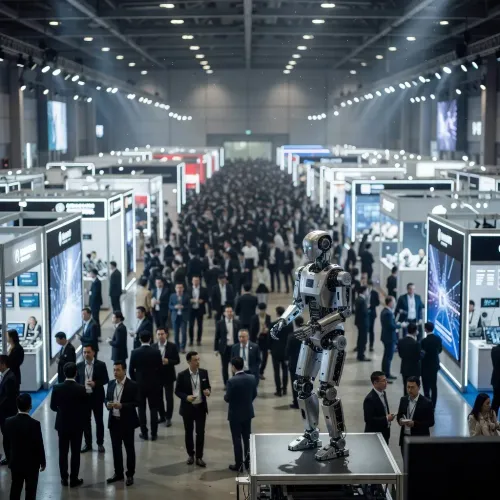
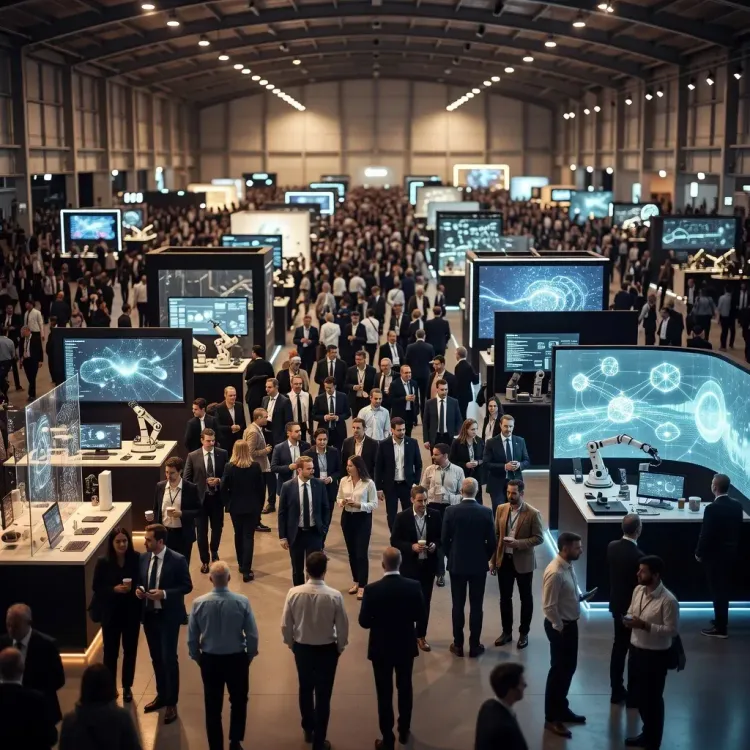
The exhibition floor featured prominent representation from China’s leading technology companies, including Tencent Holdings, Alibaba Group Holding, Huawei Technologies, Moore Threads, Enflame, Kunlunxin, and MetaX, alongside hardware showcases such as the Altas SuperPod. Luckin Coffee also maintained a visible presence, reflecting the conference’s sprawling commercial ecosystem. The gathering illustrated the depth of China’s domestic AI supply chain, from chip design to large language model deployment.
What’s Next
With Xi Jinping’s personal imprimatur now attached to the open-source AI agenda, expect accelerated policy support for cross-border AI collaboration and a sharper push by Chinese firms to internationalise their models and infrastructure. The Hong Kong Generative AI Research and Development Centre’s global LLM strategy will be one of the earliest concrete tests of whether that political ambition translates into measurable technology transfer. Observers will be watching whether Western AI labs and governments treat the overture as an opportunity or a strategic risk.
Point of View
Enflame, and Kunlunxin quietly reduce dependence on U.S. silicon. Mainstream coverage tends to focus on the spectacle; what it misses is that the Hong Kong Generative AI Research and Development Centre’s “superconnector” mandate effectively turns the city into a regulatory arbitrage layer for technology that Western governments are still debating how to restrict. The ticket-scalping frenzy is a leading indicator: retail-level AI enthusiasm in China is now running ahead of equivalent sentiment in the U.S., which has compounding implications for talent pipelines and consumer adoption curves.
NationPress
21 Oct 2026
Frequently Asked Questions
What happened at WAIC 2026 in Shanghai?
The World Artificial Intelligence Conference 2026 opened on 22 July 2026 at the Shanghai Expo Centre , with President Xi Jinping delivering the keynote address for the first time. It was described as the most crowded and vibrant edition since the conference began in 2018 , with near-gridlock traffic and temperatures approaching 40°C .
What did Xi Jinping say at WAIC 2026?
President Xi Jinping said China would seize the “rare historic opportunity” of AI-driven growth by “encouraging open source, openness, collaboration and sharing.” It was his first keynote speech at the annual conference.
What is the Hong Kong LLM Going Global Strategy announced at WAIC?
The Hong Kong Generative AI Research and Development Centre announced the “LLM Going Global Strategy” at WAIC 2026 , aiming to use Hong Kong ’s role as a “superconnector” to distribute mainland China’s AI technologies to international markets.
Why were WAIC 2026 tickets being scalped?
Exhibition tickets officially priced at 168 yuan (US$24.82) were resold for over 1,000 yuan due to extraordinary demand from industry professionals, parents, and job-seeking graduates, all drawn by the global surge of interest in agentic AI and the conference’s heightened political profile.
Which companies exhibited at WAIC 2026?
Major exhibitors at WAIC 2026 included Tencent Holdings , Alibaba Group Holding , Huawei Technologies , Moore Threads , Enflame , Kunlunxin , and MetaX , with hardware showcases such as the Altas SuperPod also on display.