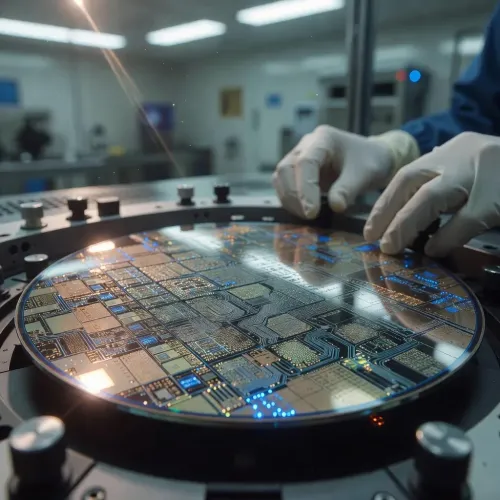
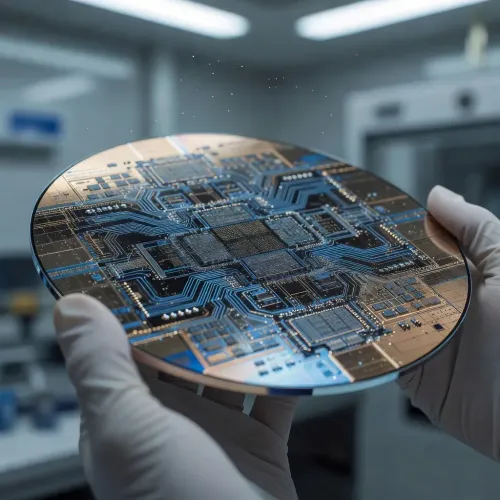
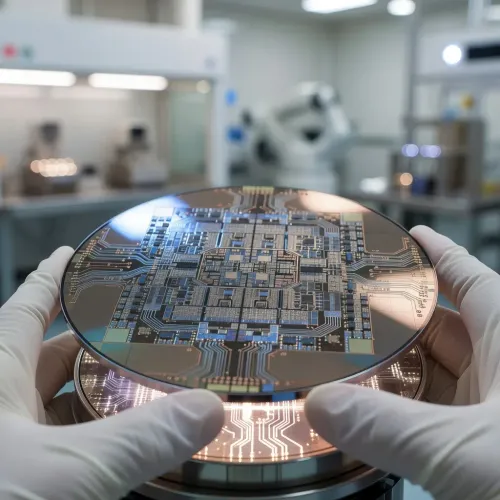
Yuanjiwei targets 5nm-equivalent chips without EUV by 2029
Synopsis
Shanghai start-up Yuanjiwei has launched what it calls the world's first 8-inch 2D semiconductor production line, targeting 5nm-equivalent chips without EUV machines by 2029 — a direct response to US export controls that block China's access to advanced lithography equipment.
Key Takeaways
Yuanjiwei , a Shanghai -based chip start-up, unveiled the world's first claimed 8-inch production line for two-dimensional (2D) semiconductors on 11 July 2026 .
The line supports full-cycle manufacturing from 2D material preparation to chip integration, including tape-out capability.
The company targets 5-nanometre equivalent chips produced without EUV lithography by 2029 .
Fan Hao , director of advanced materials at the Shanghai Municipal Commission of Science and Technology , said 2D chips are attracting growing global competition.
The development is part of China's broader effort to achieve semiconductor self-sufficiency amid sustained US export controls on advanced chipmaking tools.
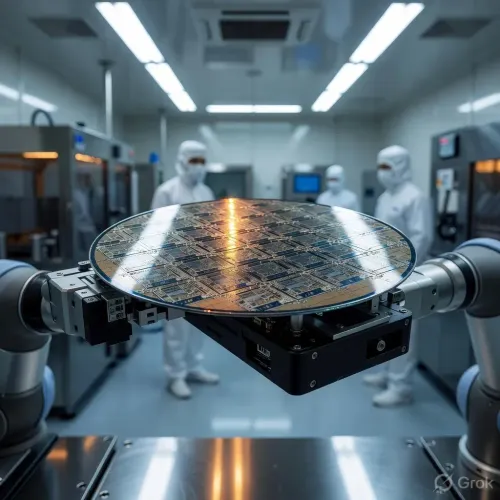
Shanghai-based chip start-up Yuanjiwei has launched what it claims is the world's first 8-inch production line for two-dimensional (2D) semiconductors, marking a significant step in China's push to develop alternative chipmaking technologies as US export controls continue to restrict access to advanced equipment. The company unveiled the pilot line on Thursday, 11 July 2026, signalling a shift from laboratory research to industrial-scale validation.
What Yuanjiwei announced
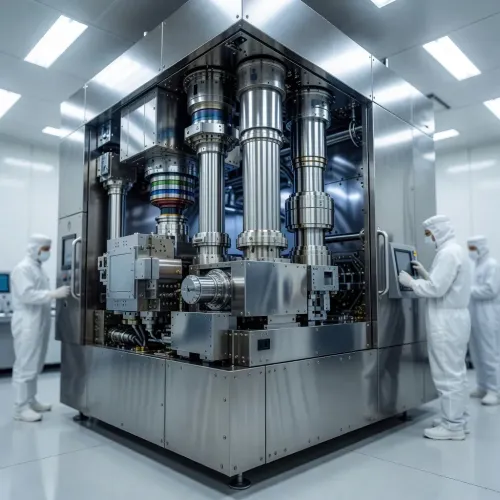
Yuanjiwei said the new production line supports tape-out — the final stage of chip design — and covers the full manufacturing workflow, from 2D material preparation to chip integration, according to a company statement. A company executive said the firm expects to use the line to develop 5-nanometre equivalent chips without relying on extreme ultraviolet (EUV) lithography machines by 2029. EUV tools, manufactured primarily by ASML of the Netherlands, remain off-limits to Chinese chipmakers under current US-led export restrictions.Why it matters
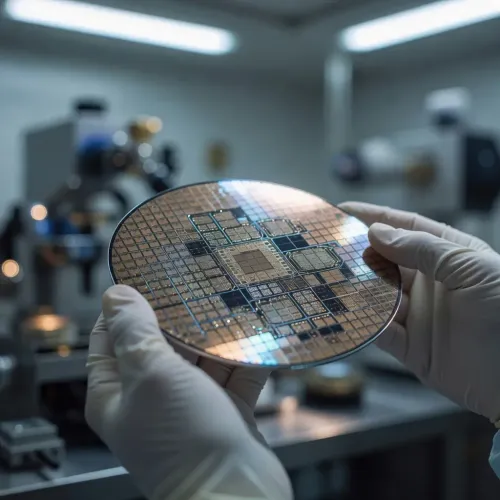
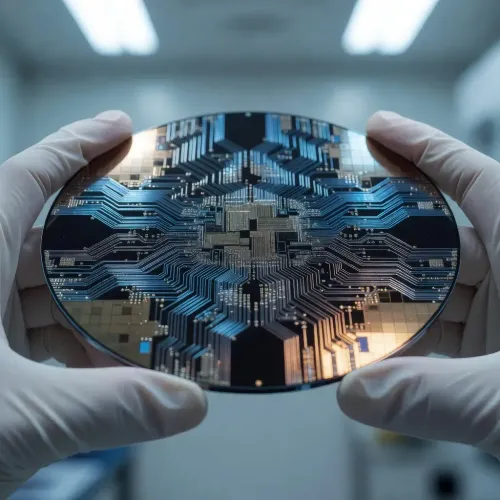
2D semiconductors are widely regarded as one of the most promising pathways for next-generation chips, as conventional silicon-based three-dimensional transistor scaling approaches its physical limits. Fan Hao, director of advanced materials at the Shanghai Municipal Commission of Science and Technology, said at the unveiling that 2D chip technology has attracted growing international competition. The company described the production line as a critical milestone in China's drive toward self-sufficiency in core semiconductor technologies.The competitive backdrop
For decades, the semiconductor industry has relied on shrinking transistors to improve chip performance — a process that has grown exponentially more difficult and expensive. The global industry, not just China, is actively exploring alternatives to traditional scaling. 2D materials, which are atomically thin and can theoretically enable transistor designs beyond silicon's constraints, have drawn investment from major research institutions and chipmakers worldwide. China's accelerated focus on this space is directly tied to its inability to procure leading-edge EUV equipment.What's next
The 2029 target for 5nm-equivalent chips without EUV remains an engineering ambition, and significant materials science and process-integration challenges lie ahead. Whether Yuanjiwei can achieve production-grade yields at that node will be closely watched by semiconductor analysts and policymakers. The broader question is whether China's 2D semiconductor push can close the gap with leading-edge foundries before the next wave of global chip architecture transitions.Point of View
Not a near-term production breakthrough — the gap between a pilot tape-out line and volume manufacturing at 5nm-equivalent yields is enormous. What mainstream coverage often underweights is that 2D semiconductor research is genuinely global: IBM, TSMC, and European research consortia are all pursuing similar material stacks, meaning China is competing on a technology frontier rather than simply reverse-engineering an established process. The 2029 target also coincides with a window when leading foundries may themselves be struggling with 2nm and below, potentially compressing the performance gap. If Yuanjiwei or peers can demonstrate even modest yield improvements, it reframes the export-control calculus — restricting EUV may matter less if the industry migrates to architectures that never needed it.
NationPress
10 Oct 2026
Frequently Asked Questions
What has Yuanjiwei launched?
Yuanjiwei has launched what it claims is the world's first 8-inch production line for two-dimensional (2D) semiconductors , unveiled on 11 July 2026 in Shanghai . The line covers the full manufacturing process from material preparation to chip integration and supports tape-out.
What is a 2D semiconductor and why does it matter?
Two-dimensional (2D) semiconductors are atomically thin materials that can enable transistor designs beyond the physical limits of conventional silicon-based chips. They are widely seen as one of the most promising pathways for next-generation chip performance as traditional transistor scaling becomes increasingly difficult and expensive.
Why is Yuanjiwei developing chips without EUV lithography?
Yuanjiwei is pursuing a non- EUV route because US export controls prevent Chinese chipmakers from acquiring extreme ultraviolet lithography machines , which are essential for producing leading-edge chips through conventional methods. Developing 5nm-equivalent chips via 2D semiconductor technology offers an alternative path to advanced performance.
When does Yuanjiwei expect to produce 5nm-equivalent chips?
A company executive said Yuanjiwei expects to develop 5-nanometre equivalent chips without EUV lithography by 2029 . The current production line represents a pilot and engineering validation stage, with significant process-integration work still ahead.
How does this fit into China's broader chip strategy?
China has been intensifying efforts to develop alternative chipmaking technologies as US export controls restrict access to advanced equipment. The Yuanjiwei production line is part of a national drive toward semiconductor self-sufficiency, with Fan Hao of the Shanghai Municipal Commission of Science and Technology noting that 2D chip technology is now drawing growing international competition.