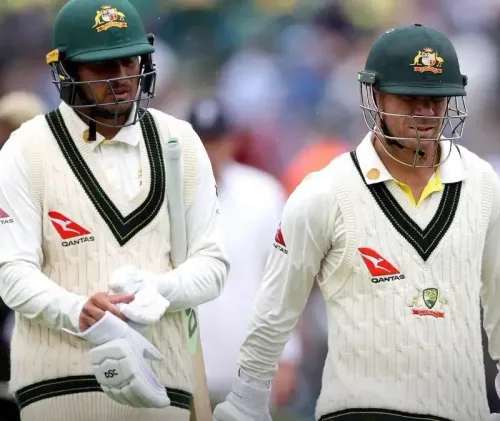
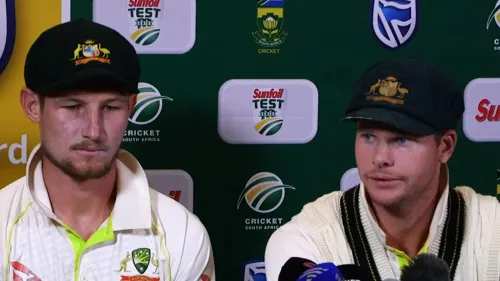
Bancroft breaks silence: 'We all knew, I was the scapegoat' in 2018 sandpaper scandal
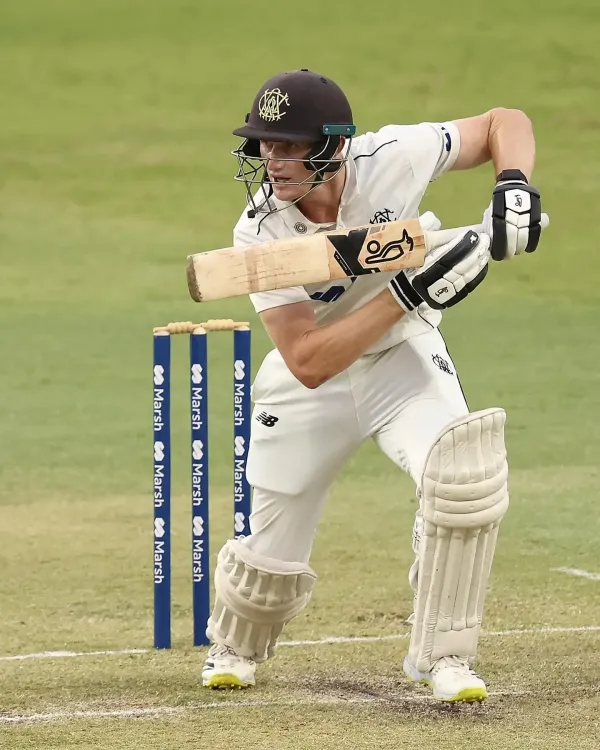
Synopsis
Eight years after the Cape Town sandpaper scandal, Cameron Bancroft has named names, admitted he lied to investigators, and alleged the entire Australian dressing room knew — detonating one of cricket's most carefully managed cover-ups and potentially forcing Cricket Australia to revisit punishments it considered settled.
Key Takeaways
Cameron Bancroft alleged in a 4,000-word column on 18 November 2026 that the entire 2018 Australian Test squad knew about the sandpaper operation.
He admitted withholding key details from Cricket Australia 's investigation, including when the tampering began and who else was involved.
Peter Handscomb , acting on a walkie-talkie instruction attributed to coach Darren Lehmann , is alleged to have removed the sandpaper from the field.
Bancroft alleged sandpaper use began in the second Test in Port Elizabeth , not Cape Town, and that bowling coach David Saker was involved in discussions.
He received a nine-month ban and has not played for Australia since 2019 ; Smith and Warner received 12-month suspensions .
A 2021 joint statement by Pat Cummins, Mitchell Starc, Josh Hazlewood and Nathan Lyon denying knowledge is described by Bancroft as making him feel 'angry, betrayed and alone.'
Cameron Bancroft, the former Australian opener at the centre of the 2018 ball-tampering scandal in South Africa, has alleged that the entire Australian team was aware of the sandpaper operation — not just the three players who were punished — and that he was made the 'scapegoat' for a collective act. Breaking an eight-year silence in an explosive 4,000-word column published in The West Australian on Wednesday, 18 November 2026, Bancroft also admitted that his account to Cricket Australia's investigators at the time was deliberately incomplete.
What Bancroft Revealed
At the heart of Bancroft's account is a stark claim: that in a team meeting after the incident came to light, not a single player stood up to deny knowing about the sandpaper. He also pointed to wicketkeeper Peter Handscomb's actions on the field as proof that awareness extended well beyond the trio of Steve Smith, David Warner, and himself.
'Peter Handscomb ran out at the drinks break after I'd been caught and shoved the sandpaper down my pants. He said to me: 'I think it's time I take that off you now'. And Pete was doing his job after Boof shouted to him on the walkie-talkie, 'get the f***ing sandpaper off Bangers now',' Bancroft wrote.
'In my opinion, if he didn't know he wouldn't have said that. And if it wasn't clear enough before, then it was obvious now. Once again. WE ALL KNEW,' he added.
The Full Chain: Saker, Lehmann, and the Port Elizabeth Origins
Bancroft alleged that the use of sandpaper did not begin at the Cape Town Test — the match that became globally infamous — but as far back as the second Test in Port Elizabeth. He claimed that discussions about generating reverse swing involved bowling coach David Saker and head coach Darren Lehmann, also known as 'Boof'.
According to Bancroft, it was David Warner who suggested using sandpaper but was unable to carry it out himself due to the scrutiny he attracted from television cameras. Steve Smith, he alleged, made it clear he wanted no part in executing the plan. Bancroft said he saw it as an opportunity to contribute as a young player in the side, even though he knew it was cheating.
He further alleged that the practice continued into the Cape Town Test, with Saker again approaching him about using sandpaper — and that the bowlers consistently told him his efforts were insufficient. 'They all told me what I was doing wasn't enough,' he said.
The Confession He Withheld — and Why He Is Speaking Now
Bancroft admitted that when questioned during Cricket Australia's investigation, he 'did not give a complete and truthful account,' withholding details about when the sandpaper use began, how long it continued, and who else knew. 'It was not just the three of us — Steve Smith, David Warner and I — who knew about me using sandpaper on the ball in South Africa. It was the whole team,' he wrote.
He identified Pat Cummins's recent media conference, alongside remarks by Usman Khawaja that re-ignited public discussion of the episode, as the immediate trigger for his decision to go public. He also singled out a 2021 joint statement by Cummins, Mitchell Starc, Josh Hazlewood, and Nathan Lyon — in which the bowlers said they had no knowledge of sandpaper being brought onto the field — as deeply painful.
'It made me feel angry, betrayed and alone,' he wrote.
Career Destroyed, Burden Carried Alone
Bancroft received a nine-month ban from cricket for his role in the incident, while Smith and Warner each received 12-month suspensions. He has not represented Australia since 2019, when Justin Langer was coach. He also expressed regret over the post-match press conference in Cape Town, alleging that he and Smith were frightened and had been instructed by Saker and other staff not to identify the foreign object as sandpaper.
'My cricket career has been destroyed and I have never been able to play for my country since Justin Langer was coach in 2019,' the now 33-year-old wrote. 'But I have reached a point where continuing to protect an incomplete account of events feels more damaging than the truth.'
The revelations are likely to reignite calls for a fresh inquiry into one of cricket's most damaging scandals, with the Australian cricketing establishment — including current figures named in the account — yet to formally respond.
Point of View
Since the central witness was, by his own admission, lying. If his version holds — that coaches and senior players were active participants rather than passive bystanders — the selective punishment of three players looks less like justice and more like institutional damage control. The timing is also telling: eight years of silence broke only after current captain Pat Cummins made public remarks that Bancroft evidently found intolerable. That sequence suggests the cricketing establishment's preferred narrative has always been fragile, held together by the cooperation of the one man who had most to lose from the truth.
NationPress
18 Nov 2026
Frequently Asked Questions
What did Cameron Bancroft reveal about the 2018 sandpaper scandal?
Bancroft alleged that the entire Australian Test team was aware of the sandpaper ball-tampering operation in South Africa, not just the three players — himself, Steve Smith and David Warner — who were punished. He also admitted he withheld key details from Cricket Australia's official investigation, including when the practice started and who else knew.
Who else does Bancroft implicate in the sandpaper plot?
Bancroft names bowling coach David Saker and head coach Darren Lehmann as being involved in discussions about generating reverse swing using sandpaper. He also alleges that wicketkeeper Peter Handscomb removed the sandpaper from the field on Lehmann's instruction via walkie-talkie, and that David Warner proposed the scheme. He says Steve Smith wanted no part in executing it.
Why has Cameron Bancroft spoken out now, eight years later?
Bancroft said a media conference by current Australian captain Pat Cummins and comments from Usman Khawaja that revived the episode were the immediate triggers. He also cited a painful 2021 joint statement by Cummins, Mitchell Starc, Josh Hazlewood and Nathan Lyon denying knowledge of the sandpaper, saying it left him feeling 'angry, betrayed and alone.'
What punishment did Bancroft receive for ball-tampering in 2018?
Bancroft was banned from cricket for nine months following Cricket Australia's investigation. Steve Smith and David Warner each received 12-month bans. Bancroft has not played for Australia since 2019 and says the incident effectively ended his international career.
Could Cricket Australia reopen the sandpaper investigation following Bancroft's claims?
Bancroft's public admission that he gave an incomplete account to investigators creates grounds for Cricket Australia to revisit the case, though no formal announcement of a new inquiry has been made. His column is likely to increase pressure on the governing body and on current players named in the account to respond publicly.