Kapil Dev as PGTI president a game-changer for Indian golf, says CEO Johl
Synopsis
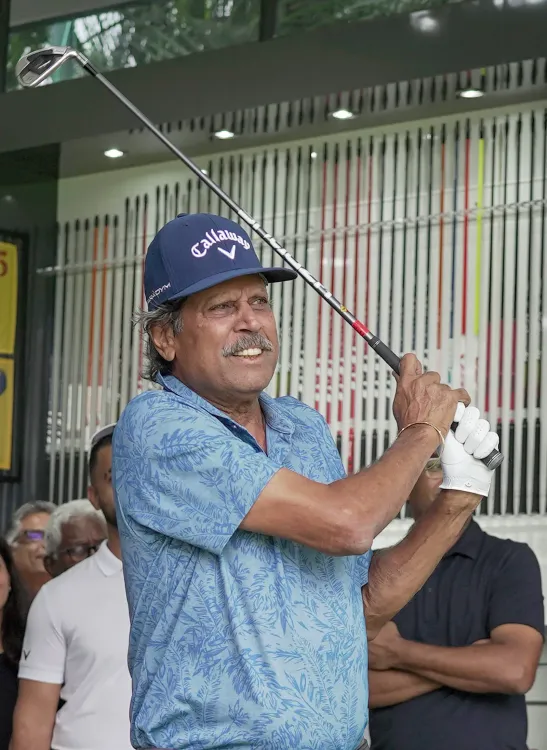
Cricket legend Kapil Dev's move to the PGTI presidency is more than a ceremonial appointment — it is, according to PGTI CEO Amandeep Singh Johl, the single most credibility-boosting moment in Indian professional golf's history. Backed by a $4 million DP World championship and potential 10-year sponsorship extension, Indian golf is making its most ambitious push yet for mainstream recognition.
Key Takeaways
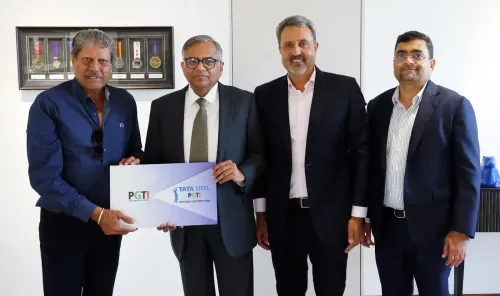
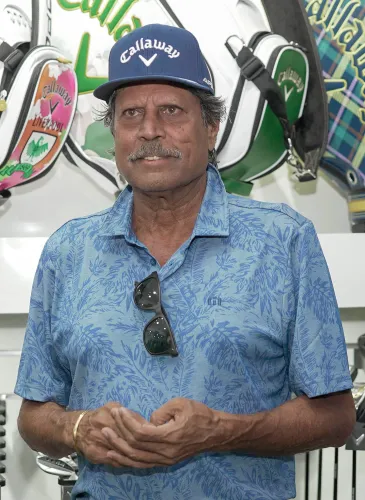
Kapil Dev has been named president of the Professional Golf Tour of India (PGTI) , having previously served as board member and vice president.
PGTI CEO Amandeep Singh Johl called Dev's involvement 'a powerful statement' that Indian golf can produce world-class champions.
The DP World India Championship — a $4 million event — is scheduled at Delhi Golf Club in October , with Rory McIlroy , Tommy Fleetwood , and Justin Rose among expected participants.
Johl cited sponsorship perception and inadequate golf course infrastructure as the two biggest barriers to the sport's growth in India.
DP World is reportedly keen to extend its tour sponsorship for the next five to ten years .
The late Vijay Kumar from Lucknow , who won the Indian Open from a humble background, was cited as emblematic of golf's grassroots potential in India.
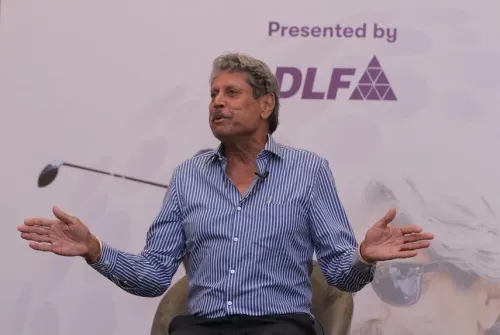
Professional Golf Tour of India (PGTI) CEO Amandeep Singh Johl says cricket legend Kapil Dev's elevation to the presidency of the tour marks a watershed moment for the sport in India, lending it credibility and national confidence that no other sporting association has managed to generate. Speaking on 30 May, Johl described Dev's commitment as a rare and powerful endorsement from a sporting icon.
Kapil Dev's Role and What It Signals
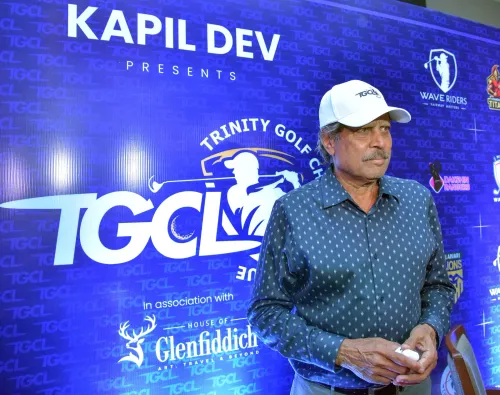
'I think that Mr Kapil Dev becoming president of PGTI is a powerful statement from a legendary sportsman that the game of golf has huge potential,' Johl said. He noted that Dev's journey within the PGTI — from board member to vice president and now to the presidency of DP World PGTI — reflects a deepening personal conviction in the sport's future.
Johl pointed out that it is rare for a sporting icon of Dev's stature to actively champion a discipline outside his own. 'There are so many people supporting cricket, yet no sportsman has supported another game,' he said, adding that Dev's endorsement signals to the country that Indian golfers can compete at the highest level globally.
Sponsorship and the 'Elite Sport' Perception Problem
Johl was candid about the structural challenges confronting Indian golf, chief among them being the difficulty of attracting corporate sponsorship. 'Whenever I go to any organisation, any corporate, they always think that golf is already an elite sport, an elite game. Why do you need money? You are already rich people,' he said. He argued that this perception is fundamentally mistaken, pointing to golfers who rose from modest, lower-middle-class backgrounds to win on the biggest stages.
Johl cited the late Vijay Kumar from Lucknow — who passed away recently and who won the Indian Open despite coming from a humble background — as well as players like Ali Sher and Rashid Khan as examples of golf's grassroots depth in India.
Infrastructure: Golf's Golden Quadrilateral Moment
The second major challenge Johl identified is infrastructure. Drawing an analogy with India's highways before former Prime Minister Atal Bihari Vajpayee launched the Golden Quadrilateral Project, he argued that golf courses across the country are at a similar inflection point. 'Infrastructure in golf was what we had in highways before Vajpayeeji started the Golden Quadrilateral Project. Our infrastructure needs to improve in golf,' he said.
Johl urged state governments to view golf investment as a triple benefit — economic development, tourism, and Olympic sport representation. 'It's a triple whammy, not a double whammy,' he said, calling on states to step forward given that sports is a state subject under the Indian Constitution.
DP World India Championship and the Asian Games
On the competitive calendar, Johl highlighted two marquee events: the upcoming DP World India Championship at the Delhi Golf Club in October and the Asian Games taking place in the coming months. The $4 million championship is expected to draw global stars including Rory McIlroy, Tommy Fleetwood, and Justin Rose, among others.
'That is very good for India. That is very good for Indian golf because people start taking notice of India when such huge, big champions are coming into India,' Johl said. He also confirmed that DP World and the DP World Tour are keen to extend their sponsorship for the next five to ten years, signalling long-term institutional confidence in the event.
A Word on Cricket — and the IPL
Johl acknowledged following the Indian Premier League (IPL) closely and singled out Rajasthan Royals teenager Vaibhav Sooryavanshi as 'a child prodigy' and 'a future star of India', noting his back-to-back scores of 97 and 96. On the IPL final between Gujarat Titans and Royal Challengers Bengaluru, he said: 'I think the entire country is rooting for Virat Kohli before he retires to win the IPL again.'
With elite international golfers set to descend on New Delhi and a cricket icon now steering the PGTI, Indian golf appears to be entering one of its most consequential phases.
Point of View
But the real test lies in whether his star power translates into state government action on golf infrastructure — the single biggest structural bottleneck Johl identified. The sponsorship perception problem Johl describes is not unique to golf; it mirrors the early struggles of kabaddi and wrestling before media rights money changed the conversation. What Indian golf lacks is not a figurehead but a broadcast deal that puts club-swinging on prime-time screens. The $4 million DP World championship is a step, but until golf has a domestic league format with mass viewership, Dev's endorsement risks being inspirational without being transformational.
NationPress
14 Oct 2026
Frequently Asked Questions
Why is Kapil Dev's PGTI presidency significant for Indian golf?
Kapil Dev is the first Indian sporting icon of his stature to formally lead a professional golf body, lending the sport credibility it has historically struggled to attract. PGTI CEO Amandeep Singh Johl says Dev's involvement — progressing from board member to president — signals to the country and to corporates that professional golf has serious growth potential in India.
What is the DP World India Championship and when is it scheduled?
The DP World India Championship is a $4 million professional golf tournament to be held at Delhi Golf Club in October. It is expected to feature world-ranked players including Rory McIlroy, Tommy Fleetwood, and Justin Rose, and DP World is reportedly in discussions to extend its sponsorship for five to ten years.
What are the biggest challenges facing Indian golf, according to PGTI CEO Johl?
Johl cited two primary challenges: first, the corporate perception that golf is an elite, already-wealthy sport that does not need sponsorship; and second, inadequate golf course infrastructure across India. He compared the infrastructure gap to India's highway network before the Golden Quadrilateral Project and called on state governments to invest, given golf's potential as an economic, tourism, and Olympic driver.
Who are some of the grassroots golfers Johl highlighted as examples?
Johl cited the late Vijay Kumar from Lucknow — who won the Indian Open despite coming from a humble background — and players like Ali Sher and Rashid Khan as examples of golf's lower-middle-class roots in India. He used these examples to counter the narrative that golf is exclusively an elite sport.
What upcoming events is the PGTI focused on?
The PGTI is currently focused on the DP World India Championship in October and the Asian Games, which are scheduled in the coming months. Johl said the priority is ensuring India's best players receive adequate exposure and preparation for both tournaments.