Khelo India boosts Jharkhand hockey: 5,000 athletes, 34 medals, one pipeline
Synopsis
Three tribal districts in Jharkhand have quietly built India's deepest hockey pipeline — 5,000 athletes in training, 34 national medals in 16 years, and legends from Jaipal Singh Munda to Salima Tete. Now, the ₹36,441 crore Khelo India Scheme 2026–31 is set to multiply that output eightfold, making Jharkhand the template for grassroots sports development in India.
Key Takeaways
5,000+ boys and girls are currently training through residential and non-residential hockey programmes across Jharkhand .
Simdega , Khunti , and Gumla are the state's primary hockey hubs, with centres also in Ranchi , Hazaribagh , Gumla , and Jamshedpur .
Jharkhand has won 34 medals — 10 Gold, 11 Silver, 13 Bronze — in women's categories at the Hockey India National Championships over 16 years .
The Khelo India Scheme 2026–31 allocates ₹36,441 crore , an 8X increase , targeting a 10X rise in athletes supported.
Funding follows a 60:40 Centre-State cost-sharing model tied to talent progression and grassroots-to-elite transition milestones.
Current Indian women's captain Salima Tete and stars like Nikki Pradhan , Sweety Dung Dung , and Deepika Soreng are products of this ecosystem.
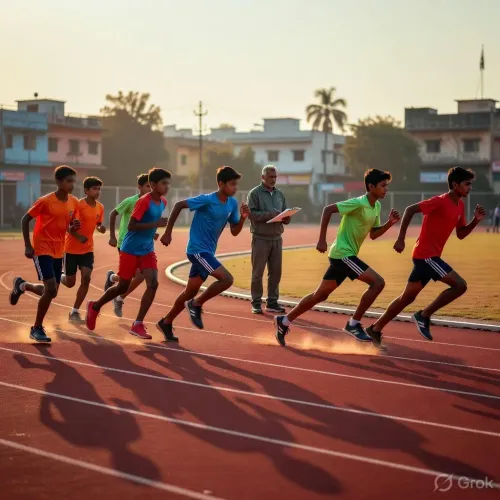
As the senior Indian women's hockey team competes at the ongoing FIH World Cup Hockey Championships in the Netherlands and Belgium, three districts in Jharkhand — Simdega, Khunti, and Gumla — are quietly reinforcing a tradition built over decades. Today, more than 5,000 boys and girls train through residential and non-residential programmes across the state, making Jharkhand one of India's most productive hockey nurseries.
A Legacy Rooted in Tribal Heritage
Jharkhand's relationship with hockey stretches back to the early decades of the 20th century. For many tribal communities across the Chotanagpur Plateau, the sport evolved from recreation into cultural identity. The state's hockey lineage traces directly to Jaipal Singh Munda, captain of India's gold medal-winning team at the 1928 Amsterdam Olympics — an achievement that inspired generations of youngsters across the region.
That legacy was carried forward by icons including Michael Kindo, Sylvanus Dung Dung, Manohar Topno, Ajit Lakra, Bimal Lakra, Birender Lakra, Asunta Lakra, and Sumrai Tete — former India captain, Commonwealth Games medallist, and Dhyan Chand Award recipient. Current Indian women's captain Salima Tete, herself from Jharkhand, is the latest in this unbroken line.
'Every child in every home across three districts of Jharkhand — Khunti, Simdega and Gumla — plays hockey. Early in the morning and in the evening, you will find village kids playing hockey in the fields all across Jharkhand. Hockey is an important part of our culture,' said veteran coach Jagan Topno, who serves as a senior coach at the SAI centre in Ranchi.
Simdega, Khunti and the Expanding Hub Network
If one district symbolises Jharkhand's hockey culture, it is Simdega — often called India's 'hockey nursery'. The district now hosts a State Government Hockey Residential Centre catering to boys and girls in the Under-12 to Under-16 age groups, a Centre of Excellence, and multiple non-residential coaching centres across Rengari, Jaldega, and Kurdeg.
Neighbouring Khunti has emerged as another significant hub, with residential facilities for boys and girls, a dedicated 40-bed girls' hostel, and non-residential coaching centres in Govindpur, Torta, Murhu, Khunti, and Maranhada. Residential and non-residential centres now also operate in Gumla, Kamdara, Konbir, Ranchi, Latehar, Hulhundu, and Hazaribagh, while East Singhbhum hosts the Tata Academy and Jamshedpur houses the National Hockey Academy.
'While SAI has taken a lead in developing hockey in Jharkhand, the Tatas have also played a key role. The steelmakers have set up several rural training centres and pay around ₹10,000 to coaches for training young players. There are also training centres that offer boarding facilities for young talent,' Topno said.
SAI's Role: Science, Selection and Long-Term Development
At the centre of this expanding ecosystem is the Sports Authority of India (SAI). SAI's campuses in Ranchi and Hazaribagh, along with the Morabadi Centre of Excellence, have become key destinations for promising players identified through district-level trials. Young athletes receive scientific training, sports science support, strength and conditioning, physiotherapy, nutrition guidance, and psychological preparation.
'SAI conducts selection trials for players aged 10–14 years at several locations across Jharkhand. Those selected are admitted to SAI centres at Ranchi and Hazaribagh and provided top-quality training,' Topno noted. For children from remote tribal villages, these centres represent their first access to world-class sporting infrastructure.
National Stars from Jharkhand's Fields
The results are increasingly visible at the national level. Players such as Nikki Pradhan, Salima Tete, Sweety Dung Dung, and Deepika Soreng are now established names in the senior Indian women's team. The junior women's programme continues to produce talent including Parvati Topno, Binima Dhan, Sugna Sanga, Nilam Topno, Shruti Kumari — a product of SAI Hazaribagh — and Khilli Kumari. On the men's side, Ashis Tanipurty has emerged as one of the promising names in the junior Indian setup.
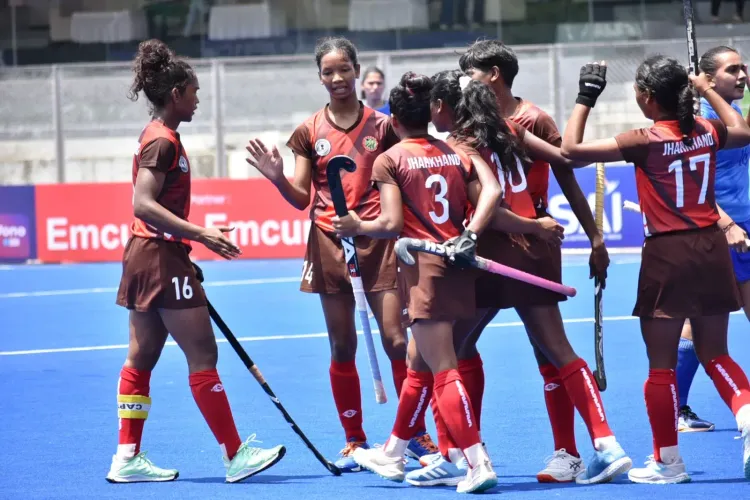
Over the last 16 years, Jharkhand's structured youth development system has translated into 34 medals in women's categories at the Hockey India National Championships — including 10 Gold, 11 Silver, and 13 Bronze — underscoring the depth and consistency of its grassroots programme.
Khelo India Scheme 2026–31: What Changes Next
The Union sports ministry's newly announced Khelo India Scheme 2026–31 is set to significantly amplify this momentum. The revised scheme carries an outlay of ₹36,441 crore — an 8X increase over the previous allocation — and aims at a 10X increase in the number of athletes supported. Among its nine key elements are talent identification, infrastructure development, and sports technology integration.
Jharkhand's hockey ecosystem stands to benefit directly through a 60:40 Centre-State cost-sharing model under the State Action Plan, with funding linked to talent progression, athlete retention, grassroots-to-elite transition, and reform-based milestones. The partnership between local communities, the Government of Jharkhand, and SAI has created a development model that other states are beginning to emulate. Every morning, fresh batches of children report for training in Simdega, Khunti, Ranchi, Hazaribagh, Gumla, and beyond — and if history is any guide, the country's next international hockey star is almost certainly among them.
Point of View
Corporate investment from Tata, and state infrastructure have aligned — not by design, but by decades of compounding. The Khelo India Scheme's 8X funding increase is substantial, but the 60:40 cost-sharing model puts pressure on state budgets that have historically been thin on sports spending. The real risk is that the pipeline produces talent faster than elite pathways can absorb it — a structural gap no scheme has yet addressed. India's FIH World Cup ambitions will ultimately be tested not in the Netherlands, but in how many Simdegas the country can build before 2031.
NationPress
2 Oct 2026
Frequently Asked Questions
Why is Jharkhand considered India's hockey nursery?
Jharkhand, particularly the district of Simdega, has produced a disproportionate number of Indian hockey internationals over decades, rooted in tribal community culture where hockey is part of everyday life. The state's legacy dates to Jaipal Singh Munda, captain of India's 1928 Olympic gold-winning team, and continues through current women's captain Salima Tete.
How many athletes does Jharkhand's hockey programme currently train?
More than 5,000 boys and girls are currently training through residential and non-residential hockey programmes across Jharkhand. Centres operate in Simdega, Khunti, Gumla, Ranchi, Hazaribagh, and several other districts.
What is the Khelo India Scheme 2026–31 and how does it affect Jharkhand?
The Khelo India Scheme 2026–31 is a Union government sports development programme with an outlay of ₹36,441 crore — an 8X increase over the previous scheme — targeting a 10X rise in athletes supported. Jharkhand's hockey ecosystem will benefit through a 60:40 Centre-State cost-sharing model tied to talent progression and grassroots-to-elite transition milestones.
Which Jharkhand players are currently in the Indian hockey team?
Salima Tete currently captains the senior Indian women's team and is among the most prominent Jharkhand players at the international level. Others include Nikki Pradhan, Sweety Dung Dung, and Deepika Soreng in the senior women's setup, and Ashis Tanipurty in the junior men's programme.
What role does the Sports Authority of India play in Jharkhand hockey?
SAI runs residential training centres in Ranchi and Hazaribagh, as well as the Morabadi Centre of Excellence, providing scientific training, sports science support, physiotherapy, nutrition guidance, and competitive exposure. SAI conducts selection trials for players aged 10–14 years at multiple locations across the state.