Sandpapergate: Chadd Sayers says entire Australia squad knew in 2018
Synopsis
Eight years after Sandpapergate, Chadd Sayers is saying out loud what many suspected: the entire Australian squad in South Africa in 2018 knew the sandpaper plan was in motion. His account — including the detail that he personally carried the sandpaper off the field — and his revelation that Cricket Australia never interviewed him, adds a new and uncomfortable dimension to a scandal that Usman Khawaja's memoir has already re-opened.
Key Takeaways
Chadd Sayers told SEN Radio on 15 November 2026 that he is confident the entire 2018 Australian squad was aware of the sandpaper ball-tampering plan.
Sayers revealed he was the player who carried the sandpaper off the field after serving as drinks carrier — an unplanned hand-off.
The sandpaper was reportedly used in two Test matches during the South Africa tour, with dressing-room discussions preceding it.
David Warner avoided involvement because cameras were routinely focused on him, according to Sayers.
Sayers was never formally interviewed by Cricket Australia during its inquiry, despite being told an investigation was imminent.
The scandal has been reignited by Usman Khawaja's autobiography 'Sabr' ; Pat Cummins has called Khawaja's claims '100 percent wrong.'
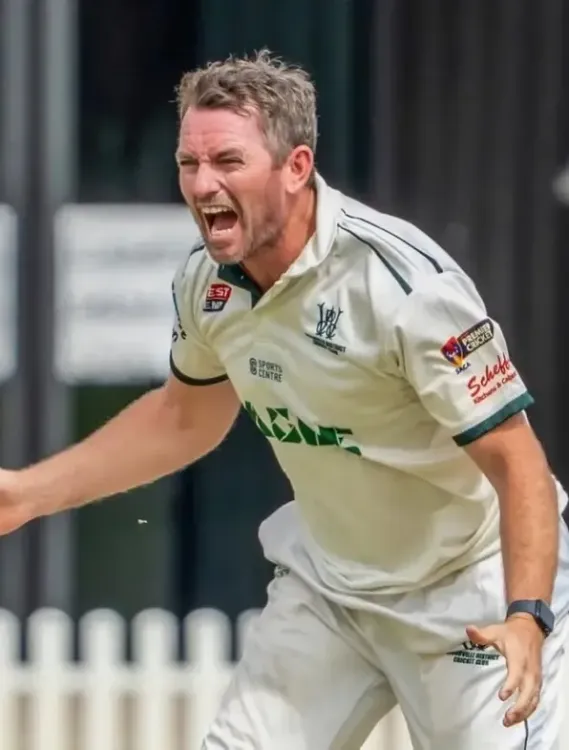
Former Australia fast bowler Chadd Sayers has claimed, with confidence, that every member of the Australian squad on the 2018 South Africa tour was aware of the plan to use sandpaper on the ball — and that he was the player who carried the sandpaper off the field after the scheme was enacted. Sayers made the remarks in an interview with SEN Radio on Sunday, 15 November 2026, adding fresh detail to one of cricket's most damaging scandals.
What Sayers Said
'I'm comfortable saying where I'm sitting now that everyone knew what was going on in South Africa in 2018,' Sayers told SEN Radio. He said the sandpaper was used across two Test matches and that discussions about how to get the ball reversing took place in the change rooms. He was careful to frame his account as personal recollection rather than an attack on any individual: 'There are no sides; they've both been great to me throughout my time in the Test squad so I'm not taking sides, I'm neutral in all this.'
Sayers, who played only one Test match for Australia and served as the 12th man during the South Africa series, explained why a collective decision would have been necessary. 'I would have thought as a team, when you're trying to get the ball to reverse that everyone would buy in because if one little thing goes wrong in the field to the ball, it stops it from reversing straight away,' he said.
How the Sandpaper Left the Field
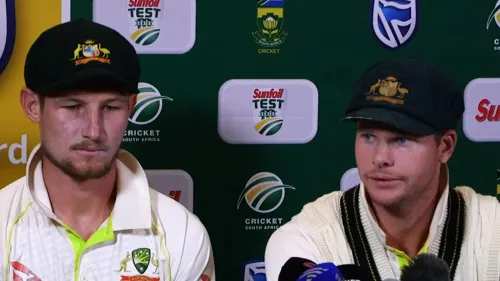
Sayers walked through the sequence of events on the day Cameron Bancroft was filmed using the sandpaper at Cape Town. The plan, he said, was for Bancroft to retrieve the ball after the umpires dropped it on the ground and proceed with the tampering. The sandpaper, however, was handed to Sayers — the drinks carrier — to remove. 'I was just the player who took the drinks out at the time. I recall it was a wicket or a drinks break after tea. Onto the field with drinks, and yeah, it was passed onto me,' he elaborated. He acknowledged that this hand-off was not part of the original plan.
Sayers also revealed that David Warner deliberately avoided involvement because cameras were routinely trained on him. 'I think we all know David Warner was seen as being the bad boy of the Australian cricket side at that stage and cameras were always going to be on him so he was not going to take part of it,' he said.
The Dressing Room Fallout
According to Sayers, the squad did not disperse after the incident came to light. The players gathered in the Cape Town dressing room after the day's play and spent between 60 to 90 minutes discussing what had happened and what came next. 'I guess it was always going to happen with this seriousness of what the allegations were,' he recalled, adding that at that point the squad did not fully appreciate how the story would detonate back home in Australia.
Cricket Australia Never Interviewed Sayers
Perhaps the most striking disclosure was that Sayers was never formally interviewed by Cricket Australia (CA) as part of its inquiry. He said the squad was told to remain close to the hotel and was informed interviews and an investigation were imminent — but the conversation never came. 'Obviously didn't go too far away, and was never interviewed. Not really, but maybe because we were 12th man and we didn't play in the game. Maybe because we knew too much information. I'm not too sure. I haven't spoken to Cricket Australia about that issue since leaving South Africa,' he said.
The Wider Context: Khawaja's Book Reignites the Scandal
The Sandpapergate controversy had appeared to settle after the original bans — Steve Smith and Warner each served 12-month suspensions, while Bancroft was banned for nine months. The affair has been thrust back into the spotlight following the release of Usman Khawaja's autobiography 'Sabr', in which Khawaja made claims about the broader awareness of the tampering plan. Warner has since backed Khawaja's account, while Test skipper Pat Cummins described those claims as '100 percent wrong and utter nonsense.' Sayers said he has been portrayed in the media as siding with Khawaja, but maintained he is simply recounting his own experience. The divergence in accounts among former and current players suggests the full picture of what happened in South Africa eight years ago remains contested.
Point of View
Carried the sandpaper off it, and sat through the dressing-room debrief. His account directly contradicts the official framing of Sandpapergate as a rogue act by a small group. The fact that Cricket Australia never interviewed him — despite knowing he was present — is a glaring institutional failure that the original inquiry never had to answer for. With Khawaja's memoir reopening the wound and Warner backing his version, the question is no longer whether more people knew; it is why the official record was allowed to remain so narrow for so long.
NationPress
15 Nov 2026
Frequently Asked Questions
What did Chadd Sayers say about Sandpapergate?
Chadd Sayers said he is confident the entire Australian squad on the 2018 South Africa tour was aware of the plan to use sandpaper on the ball. He also revealed that he was the player who physically carried the sandpaper off the field, as he was the drinks carrier at the time.
What was Chadd Sayers' role during the 2018 South Africa tour?
Sayers played only one Test match for Australia in his career and served as the 12th man during the 2018 South Africa series. As drinks carrier, he was on the field when the sandpaper was passed to him to remove after Cameron Bancroft used it.
Why was David Warner not involved in the actual tampering?
According to Sayers, Warner deliberately avoided handling the sandpaper because cameras were routinely trained on him, given his reputation as the team's high-profile provocateur. Bancroft stepped forward to carry out the plan instead.
Was Chadd Sayers interviewed by Cricket Australia during the inquiry?
No. Sayers said he was told to stay near the hotel and that interviews and an investigation were coming, but he was never formally interviewed by Cricket Australia. He has not spoken to the board about the matter since leaving South Africa.
Why has Sandpapergate resurfaced in 2026?
The scandal was reignited by Usman Khawaja's autobiography 'Sabr', in which he made claims about wider team awareness of the tampering. David Warner backed Khawaja's account, while Test captain Pat Cummins called the claims '100 percent wrong and utter nonsense,' prompting several players to speak publicly about what they witnessed.