Reservation must last as long as inequality exists: Mohan Bhagwat
Synopsis
RSS chief Mohan Bhagwat broke from the usual political hedging on reservation — firmly backing its continuation until social inequality ends, while squarely blaming politicians for turning a tool of social unity into a weapon of division. His call for voluntary restraint by better-off quota beneficiaries, and his endorsement of Supreme Court sub-classification logic, signals a more nuanced Sangh position than mainstream coverage typically captures.
Key Takeaways
RSS chief Mohan Bhagwat stated on 6 August that caste-based reservation must continue as long as social inequality persists in India.
He urged that the debate be guided by Dr B R Ambedkar's vision, not political agendas.
Bhagwat appealed to better-off members of reserved categories to voluntarily step aside for the most underprivileged.
He cited recent Supreme Court observations on sub-classification as a positive step toward equitable distribution of reservation benefits.
Bhagwat criticised the politicisation of reservation, saying honest implementation would reduce the need for quotas sooner.
He defended student protesters, stating that raising concerns does not make young people 'anti-national'.
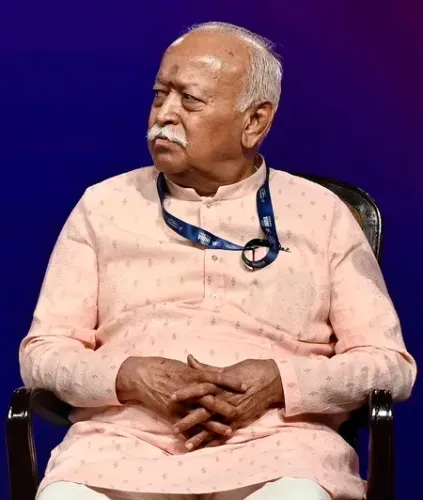
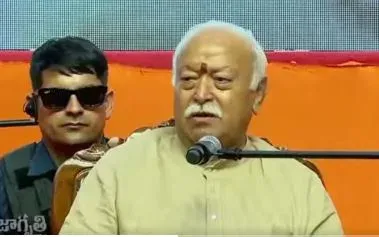
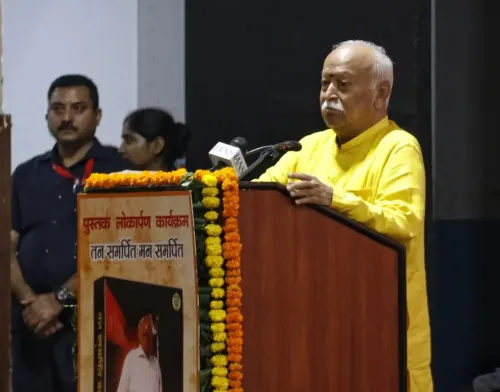
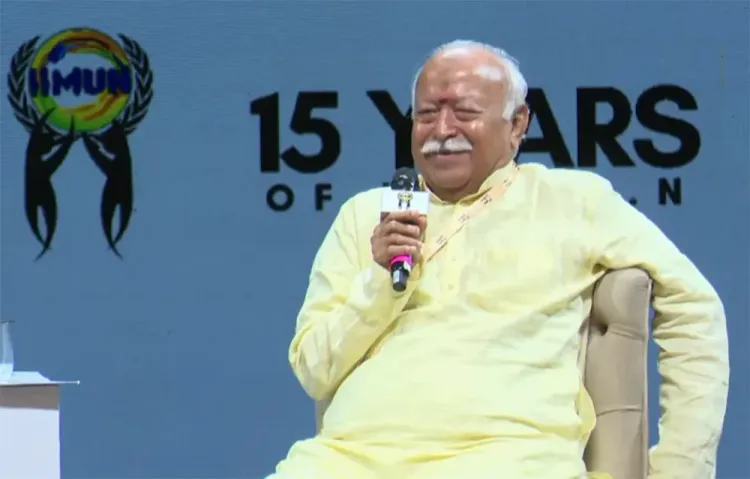
Rashtriya Swayamsevak Sangh (RSS) chief Mohan Bhagwat on Thursday, 6 August asserted that caste-based reservations in India should remain in place for as long as social discrimination and inequality persist in society. Speaking before an audience of over 2,000 young people in Mumbai, Bhagwat urged that the reservation debate be approached through the lens of Dr B R Ambedkar's vision to prevent friction and bitterness.
What Bhagwat Said on Quotas
Addressing the session, Bhagwat declined to give a binary answer when asked whether the time had come to scale back reservations in education and employment. 'Reservation exists due to social factors,' he said. 'As long as social inequality remains, reservation must continue.' He stressed that the framework envisioned by Dr Ambedkar must guide any reconsideration of the policy — not political convenience.
Bhagwat also appealed to better-off individuals within reserved categories to voluntarily step aside so that the most underprivileged members of those communities could benefit. He noted that a gradual shift in thinking along these lines is reportedly already emerging among quota beneficiaries themselves, pointing to recent Supreme Court observations on sub-classification as a mechanism for more equitable distribution of reservation benefits.
On Political Weaponisation of Reservation
The RSS chief expressed clear dissatisfaction over what he described as the deliberate politicisation of reservations. 'The concept itself is not wrong, but those holding the sword are wielding it intentionally in the wrong direction,' he remarked. He argued that reservation was originally conceived as a tool for achieving social harmony, and that political interference has distorted that objective. 'If the issue of reservation is implemented honestly, its necessity will end sooner, allowing for reconsideration. Unfortunately, because politics has entered the picture, it creates bitterness in society,' he said.
Bhagwat added that until this political mindset shifts, the situation will not meaningfully improve — though he noted that effective implementation of welfare schemes could, over time, reduce the structural need for quotas.
On Student Protests and Gen Z
Bhagwat also addressed recent student demonstrations, including protests over issues such as the NEET paper leak and demonstrations at Delhi's Jantar Mantar. He was unequivocal that young people raising concerns or participating in protests should not be labelled 'anti-national'. He expressed strong faith in Gen Z and emphasised the importance of maintaining open dialogue rather than suppressing student voices.
The Setting
Bhagwat's remarks came during an interactive session at an event marking the 15th anniversary of India's International Movement to Unite Nations (IIMUN). IIMUN founder Rishabh Shah posed questions to participants on reservation policy, student protests, and the key challenges confronting India's youth. The session drew over 2,000 participants from the Gen Z and Gen Alpha cohorts. Bhagwat's comments on reservation are among his most detailed public statements on the subject and are likely to reopen debate within and beyond the Sangh Parivar.
Point of View
So a sitting Sarsanghchalak explicitly endorsing the continuation of quotas — and invoking Ambedkar to do so — represents a significant public repositioning. The sub-classification reference is equally telling: it aligns the Sangh's stated position with the Supreme Court's direction, subtly distancing it from political actors who have resisted finer targeting of benefits. The call for voluntary restraint by better-off quota beneficiaries is unlikely to translate into policy, but it frames the RSS as a voice for reform-from-within rather than abolition — a distinction that matters in an election environment where reservation politics remains a live wire.
NationPress
21 Sept 2026
Frequently Asked Questions
What did Mohan Bhagwat say about reservation on 6 August?
RSS chief Mohan Bhagwat stated that caste-based reservations must continue for as long as social discrimination and inequality exist in India. He declined to say whether quotas should be reduced, instead urging that the issue be understood through Dr B R Ambedkar's original vision.
Why did Bhagwat invoke Dr Ambedkar in the reservation debate?
Bhagwat stressed that viewing reservation through Dr Ambedkar's perspective is essential to avoid friction and controversy. He argued that Ambedkar designed reservation as a tool for social harmony, not political mobilisation.
What is Bhagwat's view on the politicisation of reservation?
Bhagwat expressed dissatisfaction over what he called the deliberate weaponisation of reservation policy by political actors. He said honest implementation of reservation would accelerate its own redundancy, but political interference has instead deepened social bitterness.
What did Bhagwat say about sub-classification of reservations?
Bhagwat referenced recent Supreme Court observations on sub-classification — the idea of dividing reservation benefits more finely within a category — as a mechanism to ensure that the most underprivileged members of reserved communities actually benefit, rather than only the better-off among them.
Where did Bhagwat make these remarks?
Bhagwat spoke at an interactive session in Mumbai organised to mark the 15th anniversary of India's International Movement to Unite Nations (IIMUN), addressing over 2,000 participants from the Gen Z and Gen Alpha cohorts.