Madhya Pradesh High Court Starts Daily Hearings in Bhojshala-Kamal Maula Mosque Dispute
Synopsis
The Indore Bench of the Madhya Pradesh High Court has commenced ongoing hearings in the critical Bhojshala-Kamal Maula Mosque dispute, with the Hindu side asserting its identity as a temple. This decision may lead towards a pivotal judicial resolution.
Key Takeaways
The Madhya Pradesh High Court is holding daily hearings on the Bhojshala-Kamal Maula dispute.
The Hindu petitioners claim the site is a temple dedicated to Goddess Saraswati.
Historical evidence is being presented to support the Hindu claims.
Next hearing is scheduled for April 7, 2026.
This case may lead to important judicial conclusions soon.
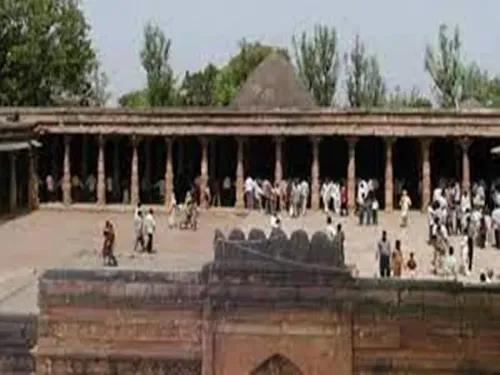
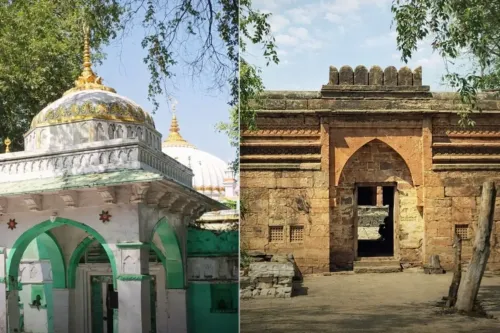
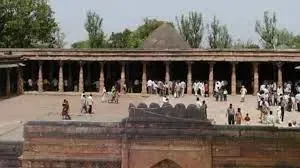
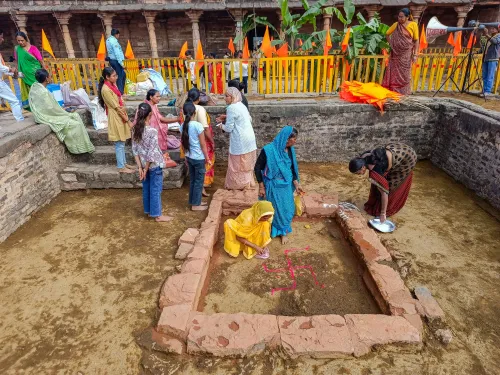
Indore, April 6 (NationPress) The Indore Bench of the Madhya Pradesh High Court has officially initiated ongoing hearings regarding the contentious and historically significant Bhojshala-Kamal Maula Mosque dispute in Dhar district.
The hearing, lasting nearly two hours, was overseen by a Division Bench that included Justice Vijay Kumar Shukla and Justice Alok Awasthi. Senior Advocate Vishnu Shankar Jain, representing the Hindu petitioners, including Ashish Goyal and the Hindu Front for Justice, presented comprehensive arguments.
The Hindu representatives contended that the disputed site is fundamentally a temple dedicated to Goddess Saraswati and should not be classified as a mosque.
Advocate Jain further stated that Bhojshala was erected by King Bhoj in the 10th-11th century as a pivotal center for Sanskrit learning and education.
He accentuated its profound connections to ancient Indian architectural and educational traditions, backed by historical documents and structures.
The petitioners referenced the scientific survey report by the Archaeological Survey of India (ASI), a substantial document exceeding 2,000 pages, provided following the court's 2024 directive. They underscored intricate carvings and sculptures on the pillars that signify the site’s ancient Hindu religious characteristics.
Additionally, they brought attention to a board installed in 1935, which outlines historical facts about Bhojshala, after which disputes reportedly escalated.
The legal team also noted the absence of historical evidence supporting the existence of a mosque at the location. They pointed out that even members of the Muslim community previously referred to it as King Bhoj’s Madrasa (school).
The Hindu petitioners called for the return of the Goddess Saraswati statue, currently housed in a museum in London, to be reinstated at the site, as well as demanding unrestricted rights for daily Hindu worship and a prohibition on Namaz being offered at the complex.
The Bench assured that all involved parties would be accorded a full and fair opportunity to present their arguments and evidence sequentially.
The next hearing is set for Tuesday (April 7, 2026), where the opposing parties are expected to present their submissions.
With the decision to conduct daily hearings, the protracted dispute, which has seen numerous petitions, appears to be moving toward a significant judicial resolution shortly.
Point of View
The Bhojshala-Kamal Maula dispute encapsulates a critical intersection of history, religion, and law, reflecting the broader societal tensions in India. It is essential to address the claims of both sides with impartiality while understanding the historical context and the implications of the court's decisions.
NationPress
16 Sept 2026
Frequently Asked Questions
What is the Bhojshala-Kamal Maula dispute about?
The dispute revolves around the Bhojshala complex in Dhar district, with claims from Hindu petitioners that the site is a temple dedicated to Goddess Saraswati, while others assert its identity as a mosque.
When did the hearings begin?
The hearings began on April 6, 2026, at the Madhya Pradesh High Court in Indore.
What evidence are the Hindu petitioners presenting?
The petitioners cite historical documents, architectural surveys, and carvings that they argue indicate the site's ancient Hindu religious significance.
What are the demands of the Hindu side?
The Hindu side demands the repatriation of a statue of Goddess Saraswati and seeks rights for daily worship at the site while prohibiting Namaz.
What is the significance of this case?
This case is significant as it touches on sensitive historical and religious sentiments in India, potentially influencing communal relations and legal precedents.