CII backs 57th GST Council reforms: lower penalties, faster refunds, ITC boost

Synopsis
The 57th GST Council has delivered one of its most wide-ranging reform packages in years — cutting penalties, automating refunds, expanding ITC, and easing export rules. CII's endorsement signals industry confidence, but the real test is execution: whether faster acknowledgement windows and automated cash-ledger refunds actually reach SMEs and exporters at scale.
Key Takeaways
CII on 9 October 2026 endorsed the 57th GST Council decisions as a major advance in India's GST reform journey.
Refund acknowledgement period cut from 15 days to 10 days ; excess electronic cash-ledger balances to be refunded automatically.
Prosecution threshold raised from ₹1 crore to ₹5 crore ; general penalty reduced from ₹25,000 to ₹10,000 ; arrest provisions proposed to be removed.
Input tax credit extended to employee insurance, telecom towers, pipelines, free samples, and goods destroyed on expiry.
Inverted duty structure refunds extended to input services and plant and machinery, improving manufacturing investment economics.
GST registration simplified for small e-commerce sellers ; physical transit inspections restricted to originating and destination states.
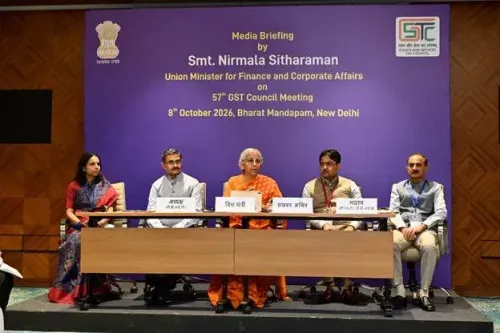
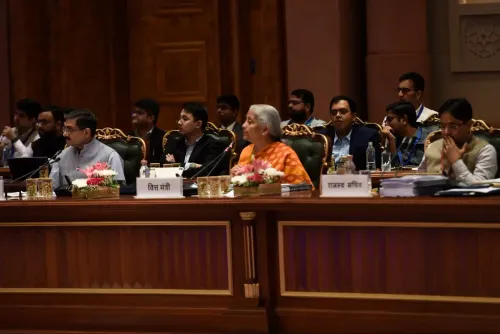
The Confederation of Indian Industry (CII) on Friday, 9 October 2026 welcomed the decisions taken at the 57th GST Council meeting, calling them a significant step toward simplifying the Goods and Services Tax (GST) framework, cutting compliance costs, improving working capital availability, and giving businesses greater regulatory certainty. The apex industry body praised the Council's moves on input tax credit, faster refunds, streamlined registration, rationalised penalties, export facilitation, and litigation reduction.
Key Reforms Welcomed by CII
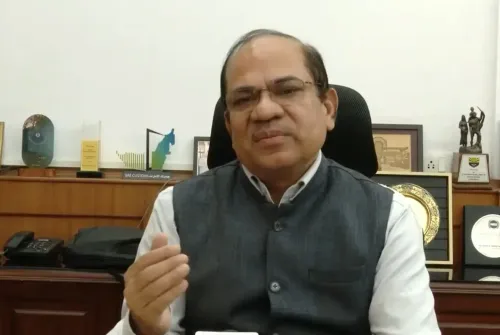
CII President R. Mukundan described the package as 'a significant advancement in India's GST reform journey,' adding that the announced measures 'should substantially improve the ease of doing business, reduce compliance costs and release working capital for productive use.' Among the most immediately impactful changes, the Council has reduced the refund acknowledgement period from 15 days to 10 days and decided to automate refunds of excess balances in the electronic cash ledger.
Mukundan noted that refund delays have a direct bearing on the working capital requirements of businesses, especially exporters and small and medium enterprises (SMEs). 'Greater automation and faster processing should improve liquidity, reduce financing costs and allow businesses to deploy their resources more productively,' he said.
Input Tax Credit Expanded, Inverted Duty Relief Extended
The Council proposed extending input tax credit (ITC) to employee health and life insurance, telecommunication towers, pipelines laid outside factories, free samples, and goods required by law to be destroyed upon expiry. According to CII, these moves should reduce the incidence of embedded taxes and address long-standing sector-specific difficulties.
Notably, the decision to extend refunds under the inverted duty structure to input services — and to permit refunds relating to plant and machinery — was described by CII as 'a major reform.' The industry body argues these changes will improve the economics of manufacturing investments, reduce the build-up of unutilised credit, and strengthen the competitiveness of Indian industry overall.
Decriminalisation and Litigation Relief
On the enforcement side, the GST Council proposed removing arrest provisions under GST and raising the prosecution threshold from ₹1 crore to ₹5 crore. The minimum punishment provision is set to be removed, and the general penalty has been cut from ₹25,000 to ₹10,000. The Council also decided not to issue notices involving amounts below ₹10,000, a move CII says should reduce avoidable disputes and administrative costs.
CII also welcomed proposed common standards for issuing notices, pre-notice intimation, fraud allegations, personal hearings, and passing of orders — steps that critics of the current system have long argued are necessary to reduce arbitrary enforcement and taxpayer harassment.
Relief for E-Commerce Sellers, Exporters, and Supply Chains
The simplification of GST registration requirements for small sellers on e-commerce platforms was flagged by CII as a measure that should enable greater participation in interstate markets, particularly by smaller enterprises. The Council's decision to rationalise physical inspections of goods in transit — restricting checks to originating and destination states — should reduce transportation delays and improve supply-chain efficiency, the industry body said.
For services exporters, the proposed changes concerning services supplied through overseas branches and services performed in India on goods belonging to foreign clients are 'especially significant,' according to CII, as they would remove key tax-related impediments. The proposed removal of double taxation on specified services supplied through intermediaries — including hotel accommodation, restaurant and catering services, and passenger transport — was also welcomed as providing greater consistency in tax treatment across business models.
A Committee of Officers is to be constituted to examine the protection of ITC for genuine purchasers — a measure CII has long advocated, arguing that bona fide buyers who have received goods or services and paid their suppliers should not be penalised for defaults by those suppliers. As implementation details are awaited, businesses and industry groups will be watching closely to see how swiftly these reforms translate into on-the-ground simplification.
Point of View
Leaving SMEs and exporters in the same liquidity crunch in the interim. The ITC protection committee for genuine purchasers is a long-overdue acknowledgement that the current reverse-charge and mismatch mechanism punishes compliant buyers for their suppliers' failures — a structural flaw that has quietly stifled formalisation. Whether a committee translates into a durable statutory safeguard, or merely another advisory layer, will determine whether this reform cycle is a turning point or a headline.
NationPress
9 Oct 2026
Frequently Asked Questions
What did the 57th GST Council decide?
The 57th GST Council announced a broad set of reforms covering faster refunds, expanded input tax credit, decriminalisation of certain offences, simplified registration for e-commerce sellers, and export facilitation measures. The refund acknowledgement period was cut from 15 days to 10 days, and automation of excess cash-ledger refunds was approved.
How does the GST decriminalisation affect businesses?
The Council proposed removing arrest provisions under GST and raising the prosecution threshold from ₹1 crore to ₹5 crore. Minimum punishment clauses are set to be removed and the general penalty is being reduced from ₹25,000 to ₹10,000, lowering litigation risk and compliance anxiety for businesses — especially smaller firms.
Which sectors benefit most from the ITC expansion?
Sectors that stand to benefit include insurance-providing employers, telecom companies with towers, manufacturers with pipelines laid outside factory premises, businesses that distribute free samples, and industries that legally destroy expired goods. All of these were previously unable to claim full input tax credit on these costs.
Why are faster GST refunds important for exporters and SMEs?
Delays in GST refunds tie up working capital, forcing businesses — particularly exporters and SMEs — to borrow at a cost to fund operations. Reducing the acknowledgement period and automating cash-ledger refunds should free up liquidity faster, cutting financing costs and allowing capital to be redeployed productively.
What is the Committee of Officers on ITC protection?
The Council has decided to constitute a Committee of Officers to examine how to protect input tax credit for genuine purchasers who have received goods or services and paid their suppliers but face ITC reversals due to supplier defaults. CII has consistently advocated for this safeguard, arguing bona fide buyers should not bear liability for their suppliers' compliance failures.