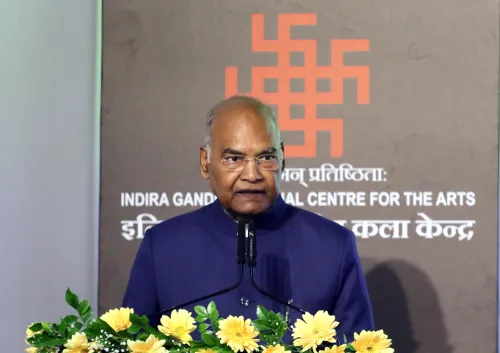
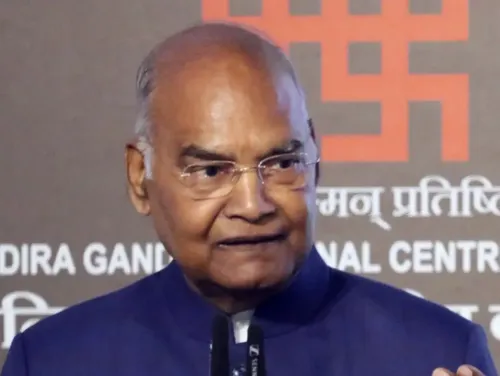
CJI Surya Kant at NHRC Foundation Day: Rights must reach the powerless, not just the powerful
Synopsis
At the NHRC's 33rd Foundation Day, Chief Justice Surya Kant delivered a pointed rebuke to any institution that measures success only in case numbers: a right that works for the powerful but not the powerless, he said, is merely 'a privilege with better branding.' With 24 lakh cases registered and a 98% disposal rate, the NHRC has scale — the CJI's challenge is for it to now prove last-mile reach.
Key Takeaways
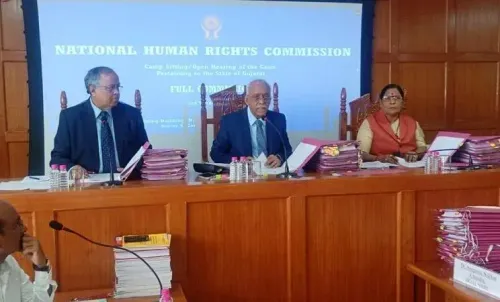
Chief Justice Surya Kant addressed the NHRC's 33rd Foundation Day at Vigyan Bhawan, New Delhi on 12 October 2025 .
The NHRC has registered over 24 lakh cases and disposed of more than 23 lakh , with a disposal rate exceeding 98% .
The CJI warned that a right serving only the powerful is 'a privilege with better branding,' calling for focus on undertrial prisoners, migrant workers, elderly, disabled persons and women.
State Human Rights Commissions were identified as critical for local-language outreach and community-level redressal.
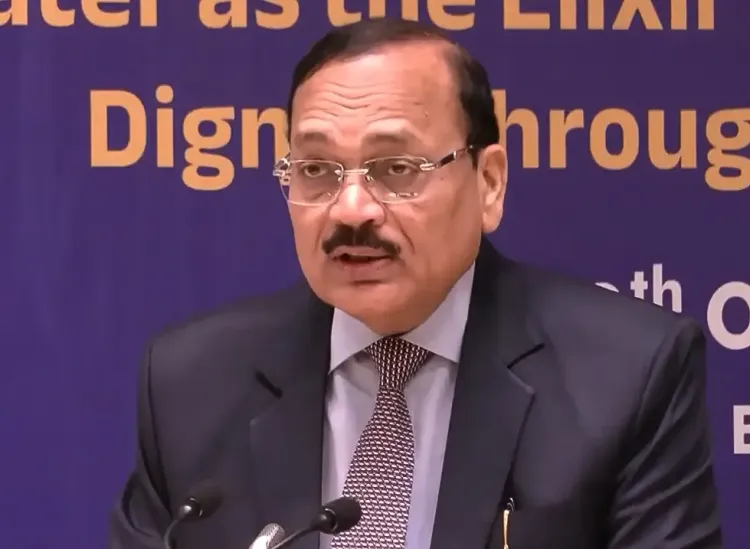
The Foundation Day conference was themed 'Water as the Elixir of Life: Advancing Human Dignity through the Right to Water.' NHRC Chairperson Justice V.
Ramasubramanian and Members Justice Bidyut Ranjan Sarangi , Vijaya Bharathi Sayani and Priyank Kanoongo were present.
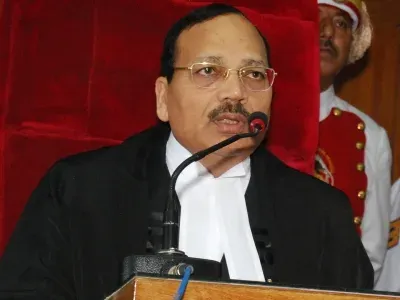
Chief Justice of India Justice Surya Kant on Monday, 12 October 2025, declared that the true measure of a human rights institution is not the volume of cases it processes but its ability to reach those least capable of making themselves heard. Addressing the 33rd Foundation Day of the National Human Rights Commission (NHRC) at Vigyan Bhawan, New Delhi, the CJI called on the Commission to ensure that constitutional guarantees of dignity, equality, liberty and justice translate into everyday realities for India's most vulnerable citizens.
NHRC's 33-Year Record
Recalling the Commission's journey since its founding, Justice Surya Kant noted that the NHRC had registered more than 24 lakh cases and disposed of over 23 lakh, achieving a disposal rate exceeding 98 per cent. He cautioned, however, against reading these figures as mere institutional output. 'These figures represent not merely institutional output, but the many instances in which a grave violation has been brought into the public eye,' he said.
The CJI framed the occasion itself as an opportunity for honest self-assessment. 'Institutions, like people, are best understood on their birthdays. We look back at where they began, we look around at where they stand, and we look ahead at what they owe the people they serve,' he remarked.
Rights for Those Who Cannot Speak for Themselves
Justice Surya Kant drew a sharp distinction between rights that protect the powerful and those that protect the powerless. A right that functions for those with resources but fails those without, he argued, is no right at all. 'It is a privilege with better branding,' he said pointedly.
He identified several groups as demanding urgent institutional attention: undertrial prisoners who had never met their advocates, migrant workers without documents, elderly persons abandoned by their families, persons with disabilities facing access barriers, and women whose concerns remain invisible to the systems designed to protect them. The CJI emphasised that the NHRC's mandate included not just identifying violations but ensuring accountability, meaningful relief, and systemic changes to prevent recurrence.
Specifically citing the Commission's past interventions in cases of custodial torture and deaths, bonded labour, industrial silicosis exposure and the rights of marginalised communities, he said such work underscored the value of institutional intervention where systemic failures persist.
The Role of State Human Rights Commissions
The CJI stressed that State Human Rights Commissions carry a particularly critical responsibility, given their proximity to affected communities. 'In a country as large and diverse as India, the experience of rights is often determined not in the capital, but in a remote village, a particular neighbourhood or even in the household,' he said.
While the National Commission can set standards and surface broader patterns, state bodies are, he argued, better placed to hear complaints in local languages, reach affected areas and contextualise the circumstances of violations. He described the relationship between the two tiers as complementary, not hierarchical.
Courts, Commissions and Complementary Mandates
Justice Surya Kant also mapped out the distinct but interlocking roles of courts and human rights bodies. Courts must intervene when constitutional rights are violated; Commissions must investigate complaints, identify systemic failures and bring otherwise overlooked concerns into institutional view. 'If the Constitution is the promise, the Commission is one of its keepers. It listens to those who cannot easily speak, and it can act on its own without waiting to be asked,' he said.
Foundation Day Theme: Water as a Human Right
The 33rd Foundation Day was marked by a national conference on the theme 'Water as the Elixir of Life: Advancing Human Dignity through the Right to Water', which featured discussions on the protection and restoration of water bodies and sustainable access to safe drinking water. Commending the choice of theme, the CJI said human rights were as concrete as a glass of clean water in a child's hands and as urgent as the thirst that child feels.
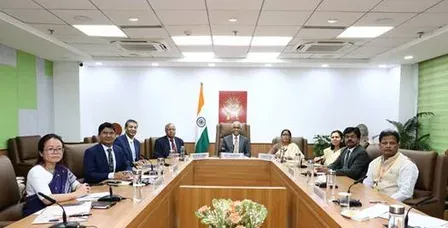
The event was attended by NHRC Chairperson Justice V. Ramasubramanian, Members Justice (Dr.) Bidyut Ranjan Sarangi, Vijaya Bharathi Sayani and Priyank Kanoongo, Secretary General Piyush Goyal, and senior officers. With the Commission entering its fourth decade, the CJI's address set a clear expectation: institutional scale must now translate into last-mile reach.
Point of View
Yet if the cases never reached the Commission in the first place — because the most vulnerable lack awareness, access or legal support — the metric flatters to deceive. The stress on State Commissions reflects a long-standing structural gap: national bodies set precedents, but enforcement and access fracture at the state and district level, where most violations actually occur. The choice of 'right to water' as the conference theme is also telling — it is a right that disproportionately affects rural, tribal and lower-income communities, precisely the constituencies the CJI argued the NHRC must prioritise. Whether this speech translates into outreach reform or remains an aspirational address will depend on what the Commission does in the months that follow.
NationPress
12 Oct 2026
Frequently Asked Questions
What did CJI Surya Kant say at the NHRC Foundation Day?
Chief Justice Surya Kant said the true measure of a human rights institution is whether it reaches those least able to make themselves heard, not the number of cases it decides. He also cautioned that a right serving only the powerful is 'a privilege with better branding.'
What is the NHRC's case disposal record after 33 years?
The NHRC has registered more than 24 lakh cases and disposed of over 23 lakh since its founding, achieving a disposal rate exceeding 98%. The CJI noted these figures represent many instances where grave violations were brought into public view.
What was the theme of the NHRC's 33rd Foundation Day conference?
The national conference was themed 'Water as the Elixir of Life: Advancing Human Dignity through the Right to Water.' Discussions covered the protection of water bodies, restoration of drinking water sources, and ensuring safe, sustainable water access for all.
Why did the CJI stress the role of State Human Rights Commissions?
The CJI argued that in a country as large and diverse as India, rights are experienced not in the capital but in remote villages and neighbourhoods. State Commissions are better positioned to hear complaints in local languages and understand ground-level circumstances of violations.
Who attended the NHRC 33rd Foundation Day event?
The event was attended by NHRC Chairperson Justice V. Ramasubramanian, Members Justice (Dr.) Bidyut Ranjan Sarangi, Vijaya Bharathi Sayani and Priyank Kanoongo, Secretary General Piyush Goyal, and other senior officers and dignitaries at Vigyan Bhawan, New Delhi.