Congress Protest March in Bhopal: Women's Reservation Fight Hits Streets
Synopsis
The Madhya Pradesh Congress Committee is marching through Bhopal demanding immediate enforcement of the Nari Shakti Vandan Adhiniyam — a law passed in 2023 that still has no implementation date. With women comprising just 15% of Lok Sabha members, Congress is turning a deferred constitutional promise into a street-level political campaign ahead of the MP Assembly's special session.
Key Takeaways
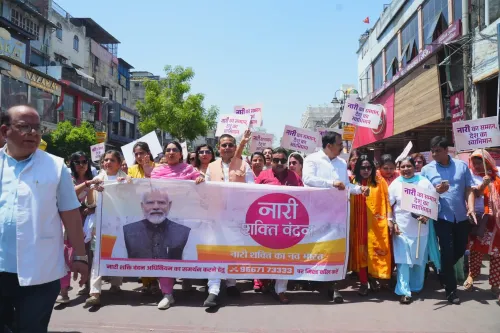
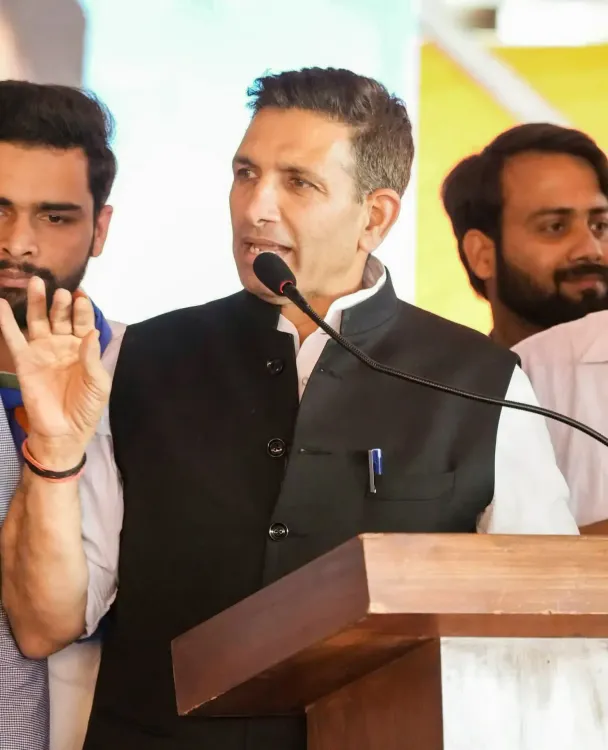
MPCC protest march in Bhopal on April 27 starts at 4 PM from Platinum Plaza , ending at Roshanpura Square , led by Jitu Patwari .
Congress demands 33% women's reservation in Lok Sabha implemented immediately, without linking it to census or delimitation.
The Nari Shakti Vandan Adhiniyam was passed by Parliament in September 2023 but has no confirmed implementation date.
Congress also demands equitable representation for OBC, SC, and ST women within the reservation framework.
The issue will dominate the Madhya Pradesh Legislative Assembly's one-day special session on April 27 , with Congress MLAs already briefed on legislative strategy.
Women currently hold only about 15% of Lok Sabha seats — the reservation law would more than double that figure if enforced.
Bhopal, April 27: The Madhya Pradesh Congress Committee (MPCC) is staging a major protest march in Bhopal on Sunday, April 27, demanding the immediate implementation of the Nari Shakti Vandan Adhiniyam — the women's reservation law — without linking it to the upcoming delimitation exercise. The march signals a sharp escalation in the political battle between the Indian National Congress and the ruling Bharatiya Janata Party (BJP) over one of India's most contested legislative reforms.
March Route and Leadership
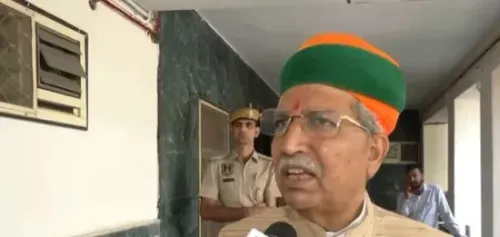
The protest march is scheduled to begin at 4 PM from Platinum Plaza, passing through Top & Town and New Market, before concluding at Roshanpura Square in the heart of Bhopal. MPCC President Jitu Patwari will lead the procession alongside several senior party leaders.
The Congress has framed the mobilisation as a direct challenge to what it calls the BJP government's 'anti-women stance', accusing the Centre of deliberately stalling the operationalisation of the reservation framework through procedural delays. The party is seeking to convert street momentum into legislative pressure ahead of the Madhya Pradesh Legislative Assembly's one-day special session on April 27.
Congress Demands: 33% Quota Without Conditions
The MPCC has issued a clear demand: enforce 33 per cent reservation for women in the Lok Sabha immediately, without conditioning it on the completion of the national census or the delimitation of constituencies. This directly contradicts the BJP's stated constitutional position.
The party has also called for equitable representation within the reservation framework for women belonging to Other Backward Classes (OBCs), Scheduled Castes (SCs), and Scheduled Tribes (STs) — a demand that adds a social justice dimension to what is already a charged political debate.
Jitu Patwari invoked the legacy of former Prime Minister Rajiv Gandhi, pointing to the 73rd and 74th Constitutional Amendments that enabled large-scale participation of women in Panchayati Raj institutions and urban local bodies. He also recalled that the Women's Reservation Bill was passed in the Rajya Sabha in 2010 under Prime Minister Manmohan Singh, arguing that the Congress has a proven track record of advancing women's political rights.
BJP's Counter: Constitutional Process Must Be Followed
The BJP has robustly defended the Nari Shakti Vandan Adhiniyam, describing it as a historic milestone for women's empowerment in India. The party maintains that the Act's implementation is constitutionally mandated to follow the completion of the next national census and the subsequent delimitation exercise, which are necessary to determine constituency-wise reservation allocations.
The ruling party has accused the Congress of political opportunism, arguing that the opposition is deliberately misrepresenting a constitutionally defined process to gain electoral traction among women voters. This divergence has entrenched both parties in contrasting narratives — Congress framing the delay as deliberate suppression, and BJP defending it as constitutional fidelity.
Assembly Session: Political Flashpoint on April 27
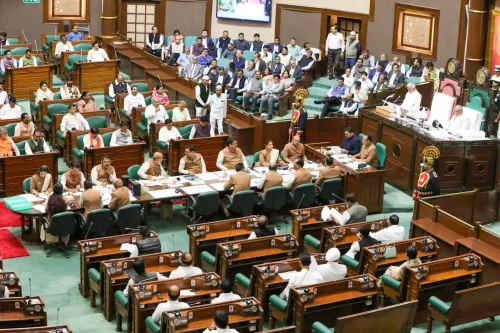
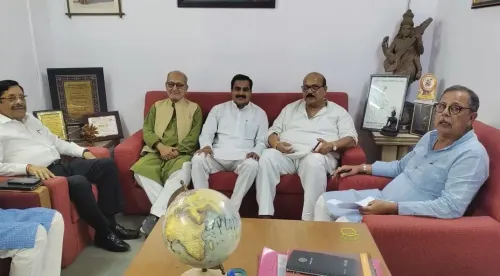
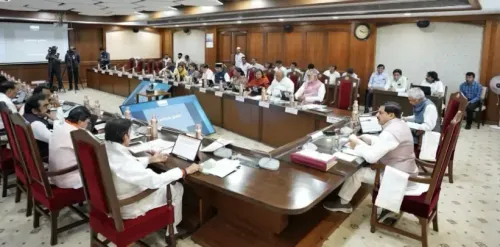
The women's reservation debate is set to dominate the one-day special session of the Madhya Pradesh Legislative Assembly on April 27. The Congress Legislature Party has already held a pre-session meeting of its MLAs to coordinate strategy and sharpen its legislative offensive against the BJP government.
Political observers expect sharp verbal exchanges inside the House, with Congress MLAs likely to press the government on the timeline for census completion, the delimitation schedule, and the administration's commitment to women's representation. The BJP, in turn, is expected to counter by highlighting the legal and procedural basis for its position.
Deeper Context: A Law Passed, A Promise Deferred
The Nari Shakti Vandan Adhiniyam was passed by the Indian Parliament in September 2023, receiving widespread cross-party support at the time. However, its actual enforcement has been suspended pending the census — which was itself delayed due to the COVID-19 pandemic and has yet to be conducted — and the subsequent delimitation of Lok Sabha and state assembly constituencies.
This creates a structural paradox: a law exists, but has no implementation date. Critics, including legal scholars and women's rights advocates, argue that this amounts to a deferred promise — legislation that delivers symbolic political capital without tangible change for women seeking elected office. The Congress is now attempting to convert this gap between law and reality into a sustained political campaign.
Notably, India has one of the lowest proportions of women in its national legislature among major democracies, with women constituting only around 15 per cent of Lok Sabha members as of the 2024 general elections. The reservation law, if implemented, would more than double that share — a transformation that would reshape Indian parliamentary politics.
As the protest march takes to Bhopal's streets and the Assembly session convenes, the women's reservation issue is rapidly evolving from a legislative matter into a defining electoral battleground, with both parties aware that how they are perceived on this issue could significantly influence voter sentiment — particularly among women — in upcoming state and national elections.
Point of View
Celebrated across party lines, yet engineered with a built-in delay mechanism — census plus delimitation — that ensures it cannot be implemented for years. Congress is right to call out the gap between symbolism and substance, but it must also answer why the Women's Reservation Bill languished for over a decade when it held power. The deeper irony is that both parties have historically used women's reservation as an electoral instrument rather than a governance priority. What India's women need is not another march — they need a census date, a delimitation timeline, and political will that outlasts election cycles.
NationPress
20 Sept 2026
Frequently Asked Questions
What is the Congress protest march in Bhopal about today?
The Madhya Pradesh Congress Committee (MPCC) is holding a protest march in Bhopal on April 27, demanding immediate implementation of the Nari Shakti Vandan Adhiniyam — the 33% women's reservation law — without linking it to census or delimitation. The march begins at 4 PM from Platinum Plaza and ends at Roshanpura Square, led by MPCC President Jitu Patwari.
What is the Nari Shakti Vandan Adhiniyam and why is it not yet implemented?
The Nari Shakti Vandan Adhiniyam, passed by Parliament in September 2023, reserves 33% of Lok Sabha and state assembly seats for women. It has not been implemented because the law is constitutionally tied to the completion of the national census and subsequent delimitation exercise, both of which are yet to take place.
What is the BJP's position on women's reservation implementation?
The BJP maintains that the implementation of the Nari Shakti Vandan Adhiniyam must follow the constitutional process — completion of the national census and delimitation of constituencies. The party defends this as legal necessity, not delay, and has described the Act as a historic reform for women's empowerment.
What will happen at the Madhya Pradesh Assembly special session on April 27?
The Madhya Pradesh Legislative Assembly is holding a one-day special session on April 27, where the women's reservation issue is expected to dominate proceedings. Congress MLAs have met to coordinate their legislative strategy and are expected to aggressively challenge the BJP government's position on the delay in implementing the reservation law.
What percentage of Lok Sabha members are women currently?
As of the 2024 general elections, women constitute approximately 15 percent of Lok Sabha members, making India one of the countries with lower female parliamentary representation among major democracies. The Nari Shakti Vandan Adhiniyam, if implemented, would raise that share to at least 33 percent.