Delhi HC: Private school staff suspension lapses without DoE nod in 15 days
Synopsis
A Delhi High Court Full Bench has settled a contested legal question: a private school employee’s suspension dies the moment the 15-day DoE approval window closes, and no belated nod can bring it back to life. School managements that let the clock run out must now start from scratch with a fresh suspension order and fresh prior approval.
Key Takeaways
A Delhi High Court Full Bench ruled on 3 July that private school staff suspensions automatically lapse without DoE approval within 15 days .
Approval granted after the 15-day deadline under Section 8(4) of the Delhi School Education Act, 1973 cannot revive a lapsed suspension.
An employer’s failure to allow an employee to resume duties after the lapse does not legally extend the suspension.
If management still wants to suspend the employee, it must issue a fresh suspension order with fresh DoE prior approval .
The Bench overruled the contrary view in Sharda Devi Sanskrit Vidyapeeth v.
Director of Education and endorsed Delhi Public School v.
Director of Education .
The main writ petition is next listed on 31 July before the appropriate Bench.
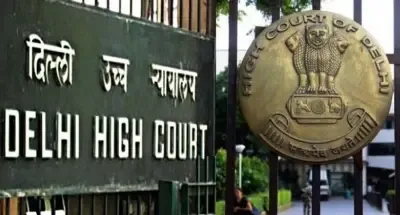
The Delhi High Court has ruled that the suspension of an employee at a recognised private school automatically lapses if the Directorate of Education (DoE) does not approve it within 15 days, and that any approval granted after this deadline cannot revive the suspension. The judgment, delivered on 3 July, settles a long-standing interpretive dispute over the Delhi School Education Act, 1973.
Background and the Legal Question
A Full Bench comprising Justice C. Hari Shankar, Justice Om Prakash Shukla, and Justice Renu Bhatnagar took up a reference arising from conflicting Division Bench judgments. The central question was whether a suspension ordered without prior DoE approval — permissible in cases of alleged gross misconduct under the first proviso to Section 8(4) of the Act — could be revived if the Director granted approval after the statutory 15-day window had closed.
The conflict stemmed from divergent readings of the second proviso to Section 8(4). An earlier judgment in Sharda Devi Sanskrit Vidyapeeth v. Director of Education had taken the view that a belated approval could still hold legal force. The Full Bench disagreed.
What the Court Held
The Full Bench was categorical: once the 15-day period expires without DoE approval, the suspension ceases to exist in law. “In case no approval of the director is received within a period of 15 days, the second proviso to Section 8(4) is categorical that the suspension would come to an end. Any approval granted to the suspension thereafter would, therefore, be of no consequence, as there was no suspension in existence. It is not possible to breathe life into a dead body,” the Bench stated.
The court further held that an employer’s failure to allow the employee to resume duties after the lapse cannot justify the continuation of the suspension. “The default of the employer in allowing him to rejoin work cannot result in continuance of the suspension of the employee, contrary to the clear mandate of the second proviso,” the Justice Hari Shankar-led Bench said.
Fresh Suspension Order Required
The Full Bench endorsed the principle laid down in an earlier Full Bench ruling in Delhi Public School v. Director of Education: if a school management still considers suspension necessary after the initial order has lapsed, it must pass a fresh suspension order and obtain prior approval from the DoE under Section 8(4).
“Thereafter, it is certainly open to the authorities to take a view that the employee is required to be again suspended, in which case they would have to pass a fresh order of suspension. That is the mandate of the law,” the court said.
Supreme Court Precedent Cited
The Full Bench also relied on the Supreme Court’s ruling in Mrs Y. Theclamma v. Union of India, which had established that a suspension order lapses in the absence of DoE approval within the stipulated period. The court noted that even the apex court had held that any fresh suspension would require fresh prior approval from the Director of Education.
What Happens Next
The Full Bench agreed with the view taken in Delhi Public School Dwarka v. Sarika Prasad and expressly disagreed with the contrary position in the Sharda Devi Sanskrit Vidyapeeth judgment. The matter has been directed to be listed before the appropriate Bench on 31 July for further proceedings in the main writ petition. The ruling is expected to have significant implications for private school managements across Delhi, which have historically used delayed DoE approvals to extend employee suspensions beyond the statutory limit.
Point of View
Then obtaining a backdated DoE approval to retroactively validate a suspension. The Full Bench’s unambiguous language — ‘it is not possible to breathe life into a dead body’ — leaves no room for creative lawyering. What mainstream coverage underplays is the accountability shift: the ruling places the cost of administrative delay squarely on management, not the suspended employee. Schools will now need tighter internal compliance timelines, and the DoE itself faces pressure to process approvals within the statutory window rather than treating it as advisory.
NationPress
7 Oct 2026
Frequently Asked Questions
What did the Delhi High Court rule about private school staff suspensions?
The Delhi High Court ruled that a private school employee’s suspension automatically lapses if the Directorate of Education does not approve it within 15 days. Any approval granted after this period is legally ineffective and cannot revive the suspension.
Which law governs this ruling?
The ruling interprets the second proviso to Section 8(4) of the Delhi School Education Act, 1973, which governs the suspension of employees in recognised private schools in Delhi.
Can a school still suspend an employee after the initial suspension lapses?
Yes, but only by issuing a completely fresh suspension order and obtaining prior approval from the Director of Education under Section 8(4). The lapsed order cannot be revived under any circumstances.
Which earlier judgments did the Full Bench overrule or endorse?
The Full Bench overruled the view in Sharda Devi Sanskrit Vidyapeeth v. Director of Education and endorsed the positions taken in Delhi Public School v. Director of Education and Delhi Public School Dwarka v. Sarika Prasad. It also relied on the Supreme Court ruling in Mrs Y. Theclamma v. Union of India.
What happens next in this case?
The Full Bench has directed the matter to be listed before the appropriate Bench on 31 July for further proceedings in the main writ petition, following the reference being answered.