Iran denies agreeing to transfer enriched uranium abroad amid US talks
Synopsis
Iran has flatly denied a Saudi media report claiming it agreed to ship its enriched uranium abroad — a claim Tehran says aligns with US psychological operations. With a 14-clause MoU still being negotiated and a final deal 30 to 60 days away, the uranium question could be the sharpest fault line in the Iran-US diplomatic process.
Key Takeaways
Iran denied on 26 May that it had agreed to transfer enriched uranium abroad, rejecting a Saudi Al Hadath report.
Tasnim stated the existing MoU text contains 'no statement declaring readiness to remove nuclear materials.' Iran's Supreme National Security Council Secretary Mohammad Bagher Zolghadr declared 'there will be no retreat' in a message to the nation.
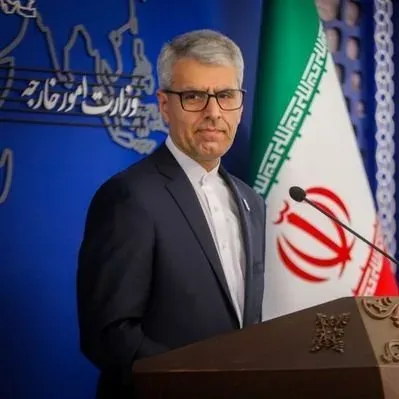
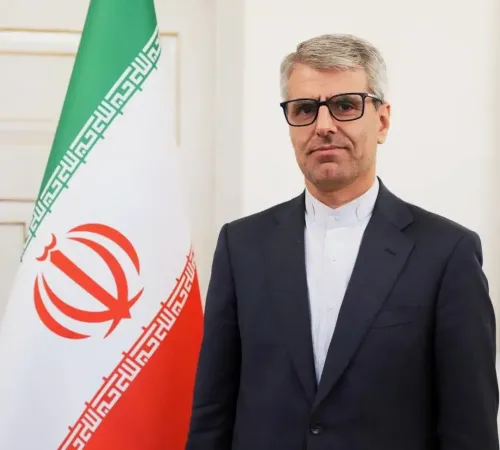
Foreign Ministry spokesman Esmaeil Baghaei confirmed a 14-clause MoU is under negotiation, with a final deal expected in 30 to 60 days .
Key MoU issues include the cessation of US maritime operations and the release of Iranian frozen assets .
A ceasefire between Iran , the US , and Israel has been in place since 8 April , following 40 days of fighting.
Iran has not agreed to transfer its enriched uranium outside its borders, the semi-official Tasnim news agency reported on Monday, 26 May, directly rejecting a claim by Saudi-based broadcaster Al Hadath that Tehran was prepared to remove its highly enriched uranium from its territory. The denial comes as Iran and the United States work toward finalising a memorandum of understanding (MoU) to formally end their recent conflict.
What Iran's Official Position Says
Tasnim stated that its investigations found the Al Hadath report — which cited high-ranking sources and detailed a potential MoU between Tehran and Washington — to be inaccurate. The agency added that the report, like several others from Saudi media on the Iran-US peace talks, appeared to align with what it described as US psychological operations.
According to Tasnim, 'In the text of the MoU that exists to this day, there is no statement declaring (Iran's) readiness to remove nuclear materials, and Iran has essentially made no commitment regarding nuclear actions in the memorandum.'
Security Council's 'No Retreat' Message
Separately, Mohammad Bagher Zolghadr, Secretary of Iran's Supreme National Security Council, issued a message to the nation on Monday stating that 'there will be no retreat.' Zolghadr said Iran requires unity and solidarity to, in his words, 'disappoint' the United States and Israel, according to Tasnim.
The 14-Clause MoU Under Negotiation
Iranian Foreign Ministry spokesman Esmaeil Baghaei told state broadcaster IRIB TV on Saturday that both sides are working to finalise an MoU structured around 14 clauses. He indicated that a final agreement could be reached 'within a period of 30 to 60 days.'
Baghaei identified two of the primary issues under negotiation: the cessation of US maritime operations — referred to by Washington as a naval blockade — and the release of Iranian frozen assets. The two countries have reportedly exchanged several proposed frameworks through Pakistani mediation over recent weeks.
Background: Ceasefire and Stalled Talks
Iran, the United States, and Israel reached a ceasefire on 8 April after 40 days of fighting. A subsequent round of peace talks held in Islamabad on 11 and 12 April between Iranian and US delegations failed to produce an agreement. The current MoU negotiations represent the next phase of that diplomatic process.
With a final agreement reportedly still weeks away, Tehran's public rejection of the uranium transfer claim signals that sensitive nuclear-related terms remain a significant sticking point in the talks.
Point of View
The 14-clause MoU framework and the 30-to-60-day window indicate talks are substantive, but the nuclear materials question — historically Iran's hardest line — has not been resolved. If the MoU excludes uranium transfer entirely, Washington will face pressure from Israel and domestic hawks; if it includes it in any form, Tehran faces its own political backlash. The gap between those two positions is where this deal could still collapse.
NationPress
10 Oct 2026
Frequently Asked Questions
Has Iran agreed to transfer its enriched uranium out of the country?
No. Iran's semi-official Tasnim news agency reported on 26 May that the existing MoU text contains no commitment to remove nuclear materials from Iranian territory, directly contradicting a claim by Saudi broadcaster Al Hadath.
What is the Iran-US MoU and what does it cover?
The MoU is a proposed 14-clause framework being negotiated between Iran and the United States to formally end their recent conflict. Key issues include the cessation of US maritime operations and the release of Iranian frozen assets, according to Iranian Foreign Ministry spokesman Esmaeil Baghaei.
When could a final Iran-US agreement be reached?
Iranian Foreign Ministry spokesman Esmaeil Baghaei said on Saturday that a final agreement could be reached 'within a period of 30 to 60 days' of finalising the MoU.
What is the current status of the Iran-US-Israel ceasefire?
A ceasefire between Iran, the United States, and Israel has been in place since 8 April, following 40 days of fighting. Peace talks held in Islamabad on 11 and 12 April failed to produce a formal agreement, leading to the current MoU negotiations through Pakistani mediation.
Why did Iran reject the Al Hadath report?
Tasnim stated its investigations found the Al Hadath report inaccurate, adding that it — like other Saudi media reports on the talks — appeared to align with what Tehran characterised as US psychological operations aimed at shaping the negotiation narrative.