Jal Sanchay Jan Bhagidari 2.0: Citizen feedback deadline extended to November 30

Synopsis
The Jal Shakti Ministry has extended the JSJB 2.0 citizen feedback deadline to 30 November, with over 1.5 crore water conservation structures already reported nationwide. The move is designed to deepen community ownership and strengthen transparency in one of India's largest water conservation drives, originally launched by PM Modi as a Jan Andolan in September 2024.
Key Takeaways
The Jal Shakti Ministry has extended the JSJB 2.0 citizen feedback deadline to 30 November 2026 .
The Citizen Feedback Portal has been open since 26 January , covering rainwater harvesting, groundwater recharge, and water storage works.
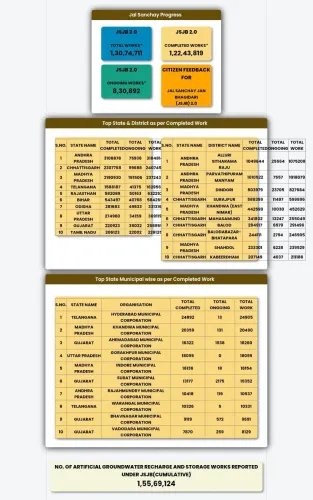
As of 31 May 2026 , more than 1.5 crore water conservation structures have been reported under JSJB 2.0 across India.
PM Narendra Modi launched the Jan Andolan vision for water conservation on 6 September 2024 in Surat, Gujarat .
Citizen feedback will support verification of reported assets and influence recognition given to Districts, States, and ULBs .
The Jal Shakti Ministry has extended the deadline for public feedback on the Jal Sanchay Jan Bhagidari (JSJB) 2.0 portal to 30 November 2026, allowing citizens across India to continue sharing their inputs on water conservation, rainwater harvesting, groundwater recharge, and storage works. The extension was announced on Thursday, 12 November, by a ministry official.
What the Citizen Feedback Portal Covers
The Citizen Feedback Portal under JSJB 2.0 has been accessible to the public since 26 January, giving citizens an opportunity to review and comment on water conservation structures reported under the initiative. The portal covers artificial recharge structures, rainwater harvesting units, groundwater recharge sites, and water storage works spread across the country.
According to the ministry, the extended window will enable citizens to continue providing feedback on these structures, helping to identify maintenance requirements, monitor functionality, and improve long-term effectiveness.
Scale of the Initiative
As of 31 May 2026, more than 1.5 crore rainwater harvesting, groundwater recharge, water conservation, and storage structures had been reported across India under the JSJB 2.0 initiative. The second phase of the programme builds on a vision articulated by Prime Minister Narendra Modi on 6 September 2024 at Surat, Gujarat, to transform water conservation into a 'Jan Andolan' — a mass public movement — through active community participation.
Why Citizen Feedback Matters
The ministry said feedback from citizens will support the verification and assessment of assets reported under the initiative. Recognition is awarded to Districts, States and Union Territories, and other stakeholders based on the number of artificial recharge and storage works completed. Citizen participation in the feedback process is therefore described as particularly significant, as it directly influences how reporting quality and credibility are assessed.
The mechanism is also expected to promote transparency in implementation and encourage Districts and Urban Local Bodies (ULBs) to ensure proper maintenance and sustained functionality of the structures created under the scheme.
Strengthening Community Ownership
By collecting citizen inputs, the ministry aims to deepen community ownership of water conservation infrastructure and advance the broader national goal of sustainable water management and water security. Officials described the feedback extension as a step towards ensuring that the initiative remains a genuinely participatory movement rather than a top-down reporting exercise.
With the deadline now set at 30 November 2026, citizens and local bodies are expected to intensify engagement on the portal in the weeks ahead.
Point of View
The credibility of those numbers depends entirely on independent public validation — a feedback loop that remains underutilised. The initiative's framing as a Jan Andolan sits in tension with a portal-based participation model that requires digital access, which is still unevenly distributed in rural India where most of these structures are located. Whether an extended deadline translates into meaningful grassroots verification, or merely inflates portal activity in urban centres, will determine how credible the final tally really is.
NationPress
12 Nov 2026
Frequently Asked Questions
What is the Jal Sanchay Jan Bhagidari (JSJB) 2.0 initiative?
JSJB 2.0 is the second phase of a nationwide water conservation movement launched by the Jal Shakti Ministry, envisioned by PM Narendra Modi on 6 September 2024 in Surat, Gujarat. It aims to transform water conservation into a mass public movement through community participation, covering rainwater harvesting, groundwater recharge, and storage structures.
Why has the JSJB 2.0 citizen feedback deadline been extended?
The Jal Shakti Ministry extended the deadline to 30 November 2026 to allow more citizens across the country to share feedback on water conservation structures. The extension is intended to strengthen community ownership, improve verification of reported assets, and promote transparency in implementation.
How many water conservation structures have been reported under JSJB 2.0?
As of 31 May 2026, more than 1.5 crore rainwater harvesting, groundwater recharge, water conservation, and storage structures have been reported across India under the JSJB 2.0 initiative.
How can citizens participate in the JSJB 2.0 feedback process?
Citizens can provide feedback through the Citizen Feedback Portal on the JSJB 2.0 platform, which has been open since 26 January. The portal allows users to review water conservation structures in their area, flag maintenance needs, and assess functionality — with the deadline now extended to 30 November 2026.
What impact does citizen feedback have under JSJB 2.0?
Citizen feedback directly influences the verification and credibility of assets reported under the initiative. Recognition is awarded to Districts, States, Union Territories, and Urban Local Bodies based on the number of verified artificial recharge and storage works, making citizen participation a key factor in how performance is assessed.