Karachi water crisis: Power failure at Dhabeji hits supply for 2nd month
Synopsis
Karachi's water crisis has now stretched into a second month — and a transformer failure at the Dhabeji Grid Station has made it worse. With 10 of 21 pumping units shut down, no restoration timeline given, and tanker prices doubled, the city's 20 million residents are paying the price for years of infrastructure neglect while politicians trade blame in the Sindh Assembly.
Key Takeaways
A transformer fault at Dhabeji Grid Station triggered an emergency shutdown, knocking out 10 of 21 pumping units supplying Karachi .
Karachi's water crisis has persisted for a second consecutive month , with some localities going without supply for over two months .
Residents face waits of 7–10 days for water tankers, whose prices have reportedly doubled .
MQM-P lawmakers protested in the Sindh Assembly , demanding water restoration ahead of Eidul Azha .
KWSC CEO Ahmed Ali blamed K-Electric for power-related disruptions; the K-IV project has been cited as the long-term fix but has no confirmed completion date.
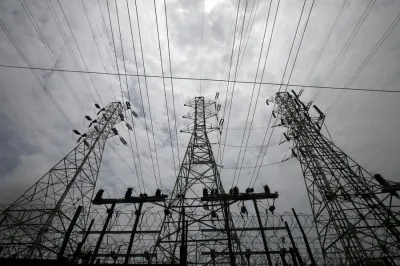
Karachi's deepening water crisis entered its second consecutive month as an emergency power shutdown at the Dhabeji Pumping Station disrupted water supply across large parts of the city, local media reported on Sunday, 31 May. The failure, triggered by a transformer fault at the Dhabeji Grid Station, knocked out 10 of 21 pumping units, significantly crippling the city's water transmission network.
What Caused the Latest Disruption
According to a statement issued by the Karachi Water and Sewerage Corporation (KWSC) on Saturday, power utility K-Electric reported a major fault in the transformer at the Dhabeji Grid Station, triggering an emergency shutdown at 6:30 pm local time. K-Electric had initially indicated the outage would last approximately one hour, but no definitive timeline for full restoration was provided, the KWSC statement noted.
'As a result of the power outage, 10 out of 21 pumping units at the Dhabeji Pumping Station were forced to shut down, significantly affecting the city's water transmission system and disrupting water supply to various parts of Karachi,' the KWSC statement read. The utility added that it was 'closely monitoring the situation and remains in constant contact with K-Electric officials to ensure the earliest possible restoration.'
A Crisis Months in the Making
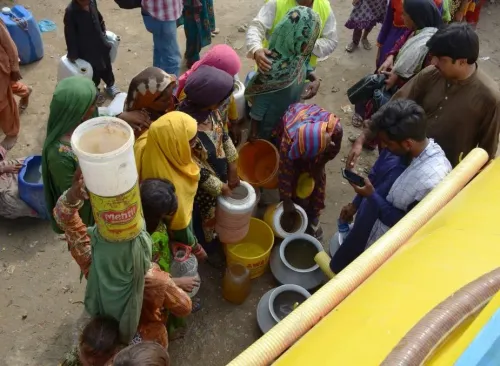
The disruption is not an isolated incident. Since March, Karachi's water supply has been progressively degraded by a combination of pipeline bursts, underground leaks, power breakdowns at pumping stations, and damage to key water mains. Residents in several localities have been without reliable tap water for over two months, according to reports.
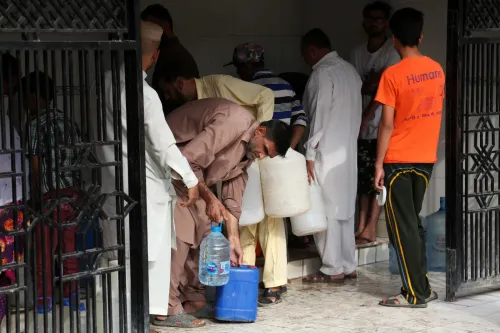
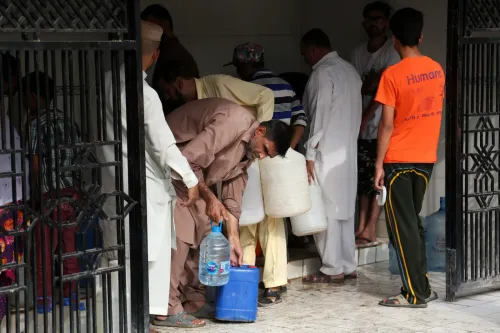
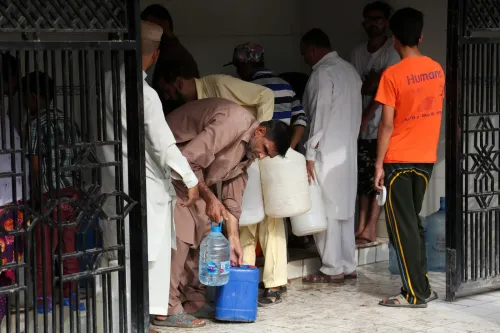
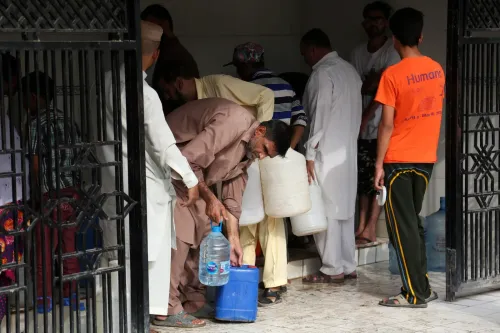
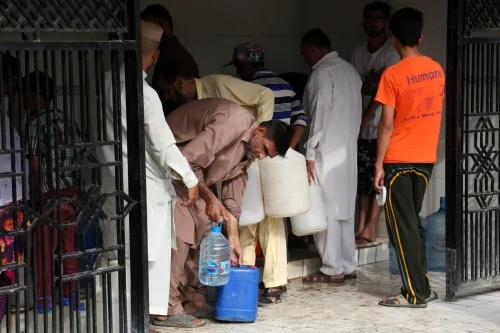
Forced to rely on private water tankers, most residents face waits of seven to ten days for delivery — and when tankers do arrive, prices have reportedly doubled. Many households, unable to afford the inflated rates, have gone without. This comes amid the Eid festivities, when demand for water — for ritual washing, animal care, and sanitation — peaks sharply.
Political Pressure Mounts in Sindh Assembly
On Monday, lawmakers from Muttahida Qaumi Movement-Pakistan (MQM-P) staged a protest inside the Sindh Assembly, gathering in front of the podium and raising slogans of 'give water to Karachi' ahead of Eidul Azha. Opposition Leader Ali Khurshidi said Karachi 'was thirsty for every drop of water' while authorities acted as 'silent, senseless spectators.' He added that he had personally tried to arrange a water tanker for two days without success.
In response, Sindh's Law and Parliamentary Affairs Minister Ziaul Hassan Lanjar pointed to the ongoing K-IV water supply project as the long-term solution, while deflecting responsibility toward the federal government. He noted that MQM-P, as a constituent of the federal coalition, should press the Centre to accelerate project completion.
A Grim Tradition, Residents Say
KWSC Chief Executive Officer Ahmed Ali claimed the utility was ensuring normal supply during Eid, placing blame squarely on K-Electric and its recurring power failures. However, residents have dismissed such assurances, describing the collapse of water supply during major religious occasions — including Eid, Ramzan, and Muharram — as a 'grim tradition' of the KWSC, according to reports. Critics argue that systemic infrastructure neglect, not just power outages, is the root cause of the recurring crisis.
With no firm restoration timeline announced and political blame-shifting ongoing, Karachi's 20 million-plus residents face continued uncertainty over one of the most basic civic necessities.
Point of View
Officials blame each other across federal and provincial lines, and residents absorb the cost. The K-IV project has been cited as a remedy for years; its slow progress reflects exactly the governance gap that makes these crises inevitable. Until accountability is tied to delivery timelines rather than press statements, Karachi's 20 million residents will keep buying water that should flow freely from their taps.
NationPress
15 Oct 2026
Frequently Asked Questions
Why is Karachi facing a water crisis?
Karachi has faced a worsening water shortage since March 2025, caused by pipeline bursts, underground leaks, repeated power failures at pumping stations, and damage to key water mains. The latest disruption was triggered by a transformer fault at the Dhabeji Grid Station that shut down 10 of 21 pumping units.
What is the Dhabeji Pumping Station and why does it matter?
The Dhabeji Pumping Station is a critical node in Karachi's water transmission network, housing 21 pumping units that supply water across large parts of the city. When K-Electric reported a transformer fault at the connected grid station, an emergency shutdown knocked out nearly half the units, severely disrupting supply.
How are Karachi residents coping with the water shortage?
Most residents have been forced to rely on private water tankers, but supply is limited and delivery waits stretch to 7–10 days. Tanker prices have reportedly doubled, making the option unaffordable for many households, particularly during the Eid period when demand for water is highest.
What has the government said about the Karachi water crisis?
KWSC CEO Ahmed Ali claimed the utility was maintaining normal supply during Eid and blamed K-Electric for power-related disruptions. Sindh's Law and Parliamentary Affairs Minister Ziaul Hassan Lanjar pointed to the ongoing K-IV project as the long-term solution but offered no completion timeline.
What is the K-IV project and will it solve Karachi's water problem?
The K-IV project is a major water supply scheme under construction in Karachi, intended to significantly increase the city's water availability. It has been cited by Sindh government officials as the structural fix to the recurring crisis, but no definitive completion date has been announced.