Maharashtra Cabinet waives stamp duty on intra-group land transfers for renewable energy
Synopsis
Maharashtra's Cabinet has zeroed in on land costs as the hidden bottleneck in clean energy rollout — waiving stamp duty on intra-group transfers and cutting transfer fees by 25% for renewable projects. With a ₹12,303 crore grid integration project already approved and a 16,000 MW solar target on the table, Tuesday's decisions signal that the Fadnavis government is moving from announcements to execution enablers.
Key Takeaways
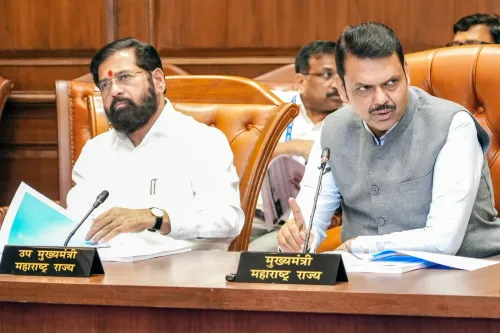
The Maharashtra Cabinet under CM Devendra Fadnavis waived stamp duty on intra-group land transfers for renewable energy projects on 11 August .
A 25 per cent exemption on transfer fees was granted for land acquired for renewable energy development.
The decisions support the MSKVY 2.0 target of adding 16,000 MW of renewable capacity and solarising agricultural feeders statewide.
The ₹12,303 crore MAGESTIC project aims to raise Maharashtra's renewable grid share from 17 per cent to 50 per cent by 2030 .
The Cabinet also amended Section 72 of the Land Acquisition Act, 2013, revising interest rates on delayed compensation.
The Shri Nilkantheshwar Farmers Co-operative Sugar Factory in Killari, Latur was cleared to seek a ₹18.009 crore loan from the NCDC .
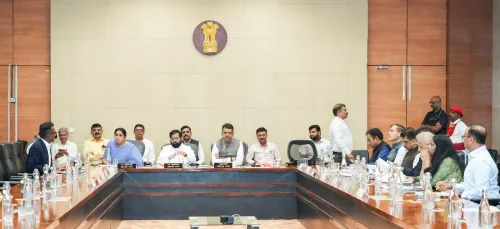
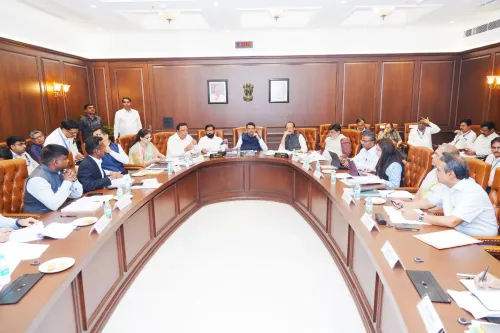
The Maharashtra Cabinet, chaired by Chief Minister Devendra Fadnavis, on Tuesday, 11 August approved a sweeping set of decisions covering clean energy acceleration, agricultural administration reform, higher education expansion, and cooperative sector support. The stamp duty waiver on intra-group land transfers for renewable energy projects stands out as the most consequential move, directly lowering transaction costs for companies and Special Purpose Vehicles (SPVs) developing solar and wind assets in the state.
Stamp Duty Waiver and Renewable Energy Push
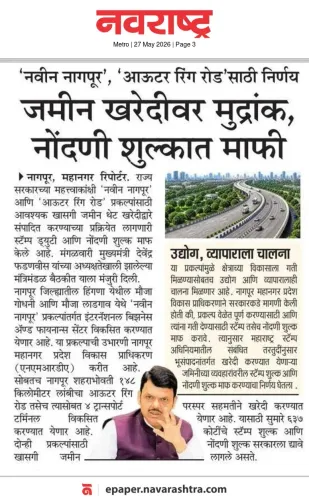
The Cabinet approved a full waiver of stamp duty on internal land transfer transactions within company groups or SPVs formed exclusively for renewable energy projects. Additionally, a 25 per cent exemption on transfer fees has been granted for land acquired specifically for such projects. The measures are designed to reduce the upfront cost burden that has historically slowed large-scale clean energy land assembly in Maharashtra.
These decisions are expected to support the state's target of adding 16,000 MW of renewable energy capacity under the Mukhyamantri Saur Krishi Vahini Yojana (MSKVY) 2.0, a programme aimed at solarising agricultural feeder capacity and providing farmers with reliable, uninterrupted daytime electricity for irrigation across the state.
MAGESTIC Project and Grid Transformation
This comes on the heels of the Cabinet's recent approval of the ₹12,303 crore project titled MAGESTIC — Maharashtra: Accelerating Green Energy and Storage Technologies Integration in Connected Grid. The project's stated goal is to raise Maharashtra's renewable energy share in the connected grid mix from 17 per cent to 50 per cent by 2030. The stamp duty and fee relief decisions announced Tuesday are seen as complementary enablers for MAGESTIC's land-intensive requirements.
Agricultural Administration Restructured
The Cabinet approved a revised organisational structure for the Agriculture Department's regional offices, creating four major executive positions: Director of Agriculture (Agricultural Engineering, Asset Management and AgriStack), Joint Director of Agriculture (Statistics), Director of Agriculture (Information and Technology) on deputation, and Additional Director, AgriStack (Revenue) on deputation. The restructuring is intended to modernise farm-sector governance and strengthen data-driven agricultural planning through the AgriStack digital infrastructure.
Separately, the Cabinet cleared a proposal allowing the Shri Nilkantheshwar Farmers Co-operative Sugar Factory in Killari, Ausa Taluka, Latur District, to raise capital expenditure and working capital loans from the National Cooperative Development Corporation (NCDC). The factory's loan proposal of ₹18.009 crore will be forwarded to the NCDC for processing.
Land Acquisition Act Amendment
The Cabinet also approved amendments to Section 72 of the Right to Fair Compensation and Transparency in Land Acquisition, Rehabilitation and Resettlement Act, 2013, revising the interest rates applicable to delayed compensation payments. The amendment is intended to bring greater fairness to landowners who face delays in receiving compensation under acquisition proceedings.
Higher Education and Skill Development
On the education front, the Cabinet upgraded guidelines and regulatory frameworks governing self-financed private skill universities to streamline their operations. Degree colleges across Maharashtra are now permitted to introduce 'Social Work' as an independent faculty, launch new courses, and add extra batches. Specialised Social Work colleges have been authorised to start new courses and additional batches on a permanent non-grant basis, broadening access to professional social work education statewide.
With the MAGESTIC project and MSKVY 2.0 now backed by cost-reduction measures on land transactions, Maharashtra's renewable energy pipeline moves closer to execution — and the next benchmark will be how quickly project developers translate these policy signals into commissioned capacity.
Point of View
000 MW under MSKVY 2.0, a grid share jump to 50% by 2030 — are large enough that transaction-cost drag on land deals could meaningfully delay timelines. What remains untested is whether SPV-level exemptions will survive legal scrutiny or invite misuse by non-renewable entities restructuring as SPVs. The MAGESTIC project's ₹12,303 crore outlay also needs independent tracking: Maharashtra has a history of green energy targets that outpace grid absorption capacity. Tuesday's Cabinet round is a coherent policy package, but execution rigour — not intent — will determine whether the 2030 grid target holds.
NationPress
25 Sept 2026
Frequently Asked Questions
What did the Maharashtra Cabinet decide on stamp duty for renewable energy projects?
The Maharashtra Cabinet waived stamp duty entirely on intra-group land transfer transactions within company groups or SPVs formed for renewable energy projects. It also granted a 25 per cent exemption on transfer fees for land acquired specifically for such projects.
What is the MSKVY 2.0 scheme and how does this decision help it?
Mukhyamantri Saur Krishi Vahini Yojana (MSKVY) 2.0 is Maharashtra's programme to solarise agricultural feeder capacity and supply farmers with reliable daytime electricity for irrigation. The stamp duty waiver and fee exemption reduce land assembly costs for developers, helping accelerate the scheme's 16,000 MW renewable capacity target.
What is the MAGESTIC project approved by the Maharashtra Cabinet?
MAGESTIC — Maharashtra: Accelerating Green Energy and Storage Technologies Integration in Connected Grid — is a ₹12,303 crore project approved by the Cabinet to raise Maharashtra's renewable energy share in the connected grid from 17 per cent to 50 per cent by 2030.
What changes were made to the Land Acquisition Act by the Maharashtra Cabinet?
The Cabinet approved amendments to Section 72 of the Right to Fair Compensation and Transparency in Land Acquisition, Rehabilitation and Resettlement Act, 2013, revising the interest rates applicable to delayed compensation payments to landowners.
What education-related decisions did the Maharashtra Cabinet take on 11 August?
The Cabinet permitted degree colleges to introduce 'Social Work' as an independent faculty and add new courses and batches. Specialised Social Work colleges were authorised to start new courses and additional batches on a permanent non-grant basis. Guidelines for self-financed private skill universities were also upgraded.