Modi govt at 12: GYAN framework, 11 crore LPG homes and key welfare milestones
Synopsis
Twelve years in, the Modi government's self-assessment booklet 'From Empowerment to Prosperity' frames its record around a four-pillar GYAN model — poor, youth, farmers, women. The numbers are striking: 11 crore LPG homes, 91 lakh SHGs, 7.3 crore maternal check-ups. The question mainstream coverage rarely asks is how many of these figures have been independently verified.
Key Takeaways
The Centre released the booklet 'From Empowerment to Prosperity' on 9 June 2025 , marking 12 years of the Modi government.
The GYAN framework identifies Garib, Yuva Shakti, Annadata and Nari Shakti as four pillars of a developed India.
Nearly 11 crore households have received LPG connections under PM Ujjwala Yojana .
More than 91 lakh Self-Help Groups and over 10 crore rural women have been covered under SHG networks.
Over 7.3 crore pregnant women received health check-ups under PM Surakshit Matritva Abhiyan ; over ₹20,000 crore disbursed under PM Matru Vandana Yojana .
Over 17 crore women workers are registered on the e-Shram portal .
The Centre on Tuesday, 9 June released a series of booklets marking 12 years of the Narendra Modi-led government, with one publication titled 'From Empowerment to Prosperity' laying out the administration's record on women, youth, farmers and marginalised communities. The booklet frames these four groups as the foundational pillars of a developed India under what it calls the GYAN framework.
The GYAN Framework Explained
According to the publication, Prime Minister Narendra Modi's vision for a developed India rests on four pillars collectively termed GYAN — Garib (Poor), Yuva Shakti (Youth), Annadata (Farmers), and Nari Shakti (Women). The government argues that empowering these groups has been central to inclusive development and broader participation in India's growth story.
Women's Empowerment: Key Initiatives
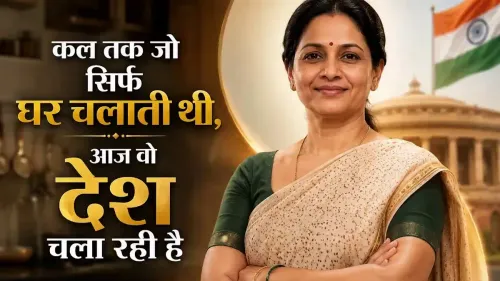
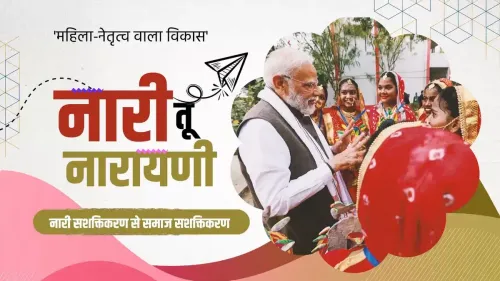
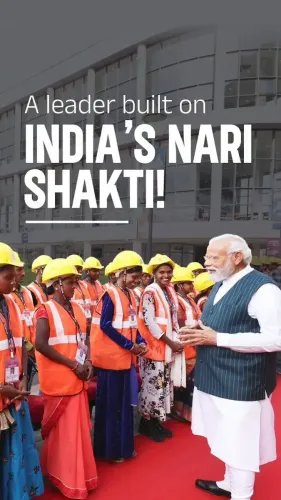
Women's empowerment occupies a major portion of the booklet. The government cites the abolition of Triple Talaq, greater participation of women in the armed forces, sports, entrepreneurship and research, and its commitment to implementing 33 per cent reservation for women in legislative bodies as headline achievements.
On the welfare front, the PM Ujjwala Yojana has provided LPG connections to nearly 11 crore households, the booklet states, with the scheme credited for improving health outcomes and reducing respiratory illness in rural homes. Financial inclusion has been advanced through the PM Jan Dhan Yojana, which has brought crores of women into the formal banking system via the Jan Dhan-Aadhaar-Mobile framework.
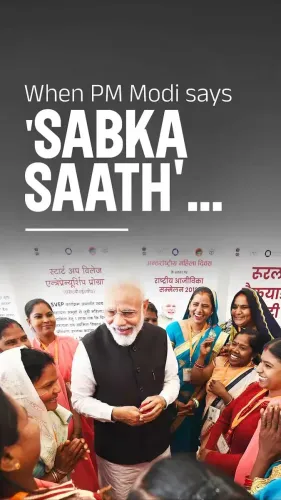
More than 91 lakh Self-Help Groups (SHGs) are highlighted as engines of rural livelihoods and entrepreneurship, with programmes such as Krishi Sakhi and Bima Sakhi cited as examples. Over 10 crore rural women have reportedly been empowered through SHG networks, and women entrepreneurs have accessed loans under the PM Mudra Yojana. The booklet also notes that over 17 crore women workers are registered on the e-Shram portal, connecting them with welfare schemes and social security benefits.
On maternal health, the publication states that more than 7.3 crore pregnant women have received health check-ups under the PM Surakshit Matritva Abhiyan, aiding early detection of high-risk pregnancies. Financial assistance of over ₹20,000 crore has been disbursed to pregnant women under the PM Matru Vandana Yojana, according to the booklet.
Youth and Farmers: Growth Drivers
The booklet identifies India's youth as a critical force behind the country's development aspirations, crediting the National Education Policy and skill development initiatives for creating new opportunities. From startups and unicorns to space exploration, the publication presents young Indians as central to the vision of a Viksit Bharat, quoting Prime Minister Modi's phrase: 'Yahi Samay Hai, Sahi Samay Hai, Bharat Ka Anmol Samay Hai.'
For farmers, the government highlights ensuring a Minimum Support Price (MSP) at 1.5 times production costs, strengthening agricultural infrastructure through the Agriculture Infrastructure Fund, and expanding market access via the e-NAM digital platform. Direct financial assistance under PM-KISAN — including support for women farmers — and India's growing agricultural exports and global recognition of millets (Shri Anna) are also cited as significant milestones.
Welfare for Marginalised Communities
A dedicated section addresses welfare for Scheduled Castes and Scheduled Tribes, noting increased budgetary allocations and greater participation of these communities in education, employment and entrepreneurship. The government states its approach has been guided by the principle of 'Priority to the Underprivileged', with access to basic amenities, financial inclusion and targeted interventions credited for improving living standards.
The booklet concludes by describing India's development journey over the past 12 years as a people-centric movement guided by 'Sabka Saath, Sabka Vikas, Sabka Vishwas, Sabka Prayas' — a formulation in which every citizen is framed as a stakeholder. Whether the metrics cited translate into verifiable ground-level outcomes will remain a subject of independent scrutiny in the months ahead.
Point of View
By design, self-assessments — and 'From Empowerment to Prosperity' is no exception. The figures cited are substantial, but several — SHG coverage, Ujjwala health outcomes, MSP uptake — have been contested by independent researchers and parliamentary committee reports over the years. The GYAN framework is a useful political communication device, but the harder question is whether the four pillars have moved structural indicators: women's labour force participation remains among the lowest in the G20, and farmer income doubling targets set for 2022 were quietly dropped. Marking 12 years with a booklet is legitimate; measuring 12 years against independently audited outcomes is the accountability standard India's policy discourse still needs to demand.
NationPress
23 Oct 2026
Frequently Asked Questions
What is the GYAN framework announced in the Modi government's 12-year booklet?
GYAN stands for Garib (Poor), Yuva Shakti (Youth), Annadata (Farmers), and Nari Shakti (Women) — the four groups the Modi government identifies as foundational pillars of a developed India. The framework is the organising principle of the booklet 'From Empowerment to Prosperity,' released on 9 June 2025 to mark 12 years of the government.
How many households have received LPG connections under PM Ujjwala Yojana?
According to the government booklet, nearly 11 crore households have received LPG connections under the PM Ujjwala Yojana. The scheme is credited with transforming traditional kitchens into smoke-free spaces and improving health outcomes in rural homes.
What has the government done for women's financial inclusion?
The government highlights the PM Jan Dhan Yojana for bringing crores of women into formal banking, the Jan Dhan-Aadhaar-Mobile framework for direct benefit transfers, and PM Mudra Yojana loans for women entrepreneurs. Over 17 crore women workers are also registered on the e-Shram portal, according to the booklet.
What support has the Modi government provided to farmers over 12 years?
The booklet cites MSP fixed at 1.5 times production costs, the Agriculture Infrastructure Fund, the e-NAM digital marketplace, and direct cash transfers under PM-KISAN as key interventions. India's growing agricultural exports and the global promotion of millets (Shri Anna) are also highlighted as milestones.
How many pregnant women have been covered under maternal health schemes?
According to the booklet, more than 7.3 crore pregnant women have received health check-ups under the PM Surakshit Matritva Abhiyan, helping detect high-risk pregnancies early. Financial assistance of over ₹20,000 crore has been disbursed under the PM Matru Vandana Yojana.