Pakistan naval ship collides with Indian Navy unit in North Arabian Sea
Synopsis
A Pakistan Naval Ship collided with an Indian Navy unit on routine patrol in the North Arabian Sea after what India's MEA called an 'unprofessional and unsafe' high-speed manoeuvre — prompting New Delhi to simultaneously summon Pakistan's envoy and instruct its own diplomat in Islamabad to file a parallel protest. India has explicitly cited a breach of the 1991 bilateral military agreement, raising the stakes beyond a mere operational incident.
Key Takeaways
A Pakistan Naval Ship collided with a frontline Indian Navy unit in the North Arabian Sea on the evening of 15 September .
The MEA summoned Pakistan's Charge d'Affaires in New Delhi on 16 September and lodged a formal protest.
India's Charge d'Affaires in Islamabad was simultaneously instructed to file a parallel protest with Pakistan's Ministry of Foreign Affairs .
The MEA stated the Pakistani vessel's conduct violated Article 10 of the India-Pakistan Agreement on Advance Notice on Military Exercises of April 1991 .
No major damage was reported from the collision; the Indian unit was on a routine surveillance mission at the time.
India on Wednesday, 16 September lodged a strong diplomatic protest with the Charge d'Affaires of the Pakistan High Commission in New Delhi after a Pakistan Naval Ship collided with a frontline Indian Navy unit in the North Arabian Sea, with the Ministry of External Affairs (MEA) describing the Pakistani vessel's conduct as 'unprofessional and unacceptable.' The incident, which occurred in international waters on the evening of 15 September, has sharply escalated maritime tensions between the two nuclear-armed neighbours.
How the Collision Unfolded
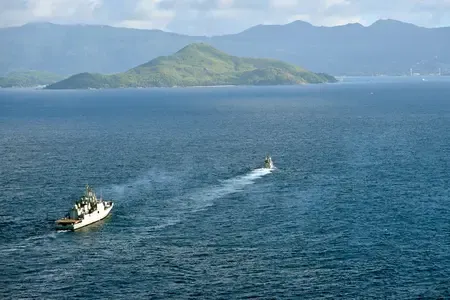
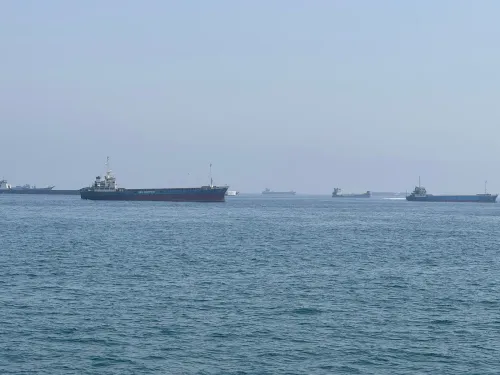
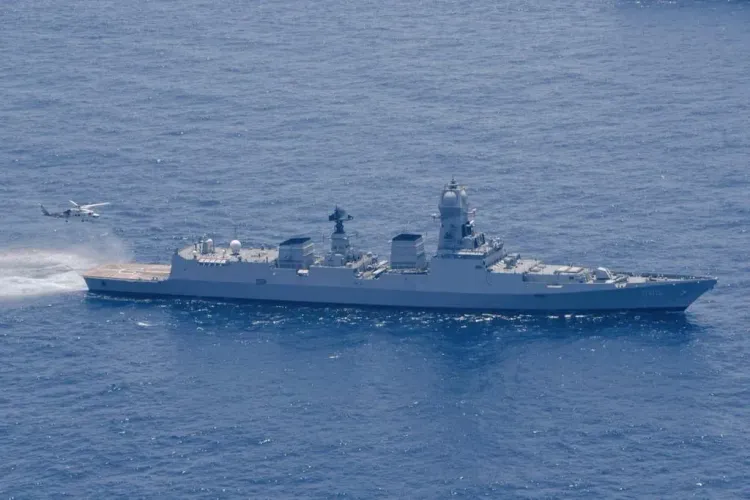
According to official sources, the Pakistani naval vessel approached a frontline Indian Navy unit — which was on a routine surveillance mission in the North Arabian Sea — at high speed, manoeuvring in what the MEA characterised as an 'unprofessional and unsafe manner.' The high-speed approach resulted in a collision between the two vessels. Authorities confirmed that no major damage was reported as a result of the incident.
Notably, the Indian Navy unit was engaged in a standard operational patrol at the time, making the Pakistani vessel's aggressive manoeuvre all the more significant, according to officials.
India's Diplomatic Response
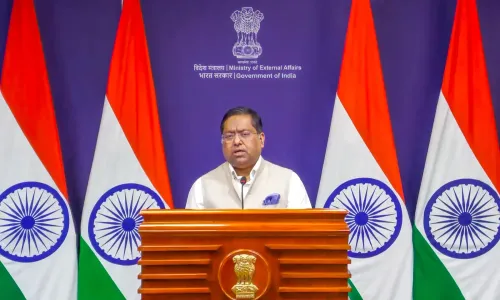
The MEA summoned Pakistan's Charge d'Affaires to its offices in New Delhi, where a formal and strongly worded protest was lodged. In an official statement, the MEA said: 'The Charge d'Affaires of the High Commission for the Islamic Republic of Pakistan in New Delhi was summoned to the Ministry of External Affairs today and a strong protest was lodged with him over the unacceptable and unprofessional conduct of Pakistani naval units at sea that led to a collision with a unit of the Indian Navy.'
Separately, India's Charge d'Affaires in Islamabad was also instructed to lodge a parallel protest directly with Pakistan's Ministry of Foreign Affairs, signalling that New Delhi is pursuing the matter through both bilateral diplomatic channels simultaneously.
Treaty Violation at the Heart of the Dispute
The MEA stated that the Pakistani naval ship's conduct was in direct contravention of Article 10 of the Agreement between India and Pakistan on Advance Notice on Military Exercises, Manoeuvres and Troops Movements, signed in April 1991. That agreement was designed precisely to prevent dangerous military encounters at sea and in the air from escalating into broader confrontations.
Pakistan's Charge d'Affaires was specifically asked to convey to Islamabad's military authorities 'the need for all military units to observe due care and respect the provisions of the relevant agreements between the two sides in order to prevent any repeat of such incidents,' the MEA noted in its statement.
Context and Regional Implications
This incident comes amid already strained India-Pakistan relations, with diplomatic ties operating at a reduced level. The North Arabian Sea is a strategically sensitive waterway, and both navies maintain active operational presences in the region. This is not the first time naval proximity has generated friction between the two countries, but a physical collision — even one causing no major damage — represents a significant escalation in the pattern of maritime encounters.
The invocation of the 1991 bilateral agreement underlines that India views this not merely as an operational lapse but as a breach of a legally binding commitment. Analysts note that such incidents, if left unaddressed, carry the risk of miscalculation in a theatre where both sides operate sophisticated naval assets. The next steps from Islamabad — and whether Pakistan formally responds to the protest — will be closely watched.
Point of View
India is framing this as a legal violation, not just a navigational lapse, which limits Islamabad's room to dismiss the incident as accidental. What is notable is the dual-channel protest: summoning the envoy in New Delhi while simultaneously instructing the Charge d'Affaires in Islamabad to file a parallel demarche signals that India wants the protest on the record in both capitals. The real question mainstream coverage is not asking is whether this was a deliberate test of Indian naval response protocols — and if so, what the absence of any major Indian Navy counter-manoeuvre signals about current rules of engagement in the North Arabian Sea.
NationPress
16 Sept 2026
Frequently Asked Questions
What happened between the Indian Navy and Pakistan Naval Ship in the North Arabian Sea?
A Pakistan Naval Ship approached a frontline Indian Navy unit on routine surveillance patrol in the North Arabian Sea at high speed on the evening of 15 September, manoeuvring in what the MEA described as an 'unprofessional and unsafe manner,' resulting in a collision. No major damage was reported from the incident.
How did India respond to the Pakistan naval collision?
India lodged a strong diplomatic protest on 16 September by summoning Pakistan's Charge d'Affaires to the MEA in New Delhi. Simultaneously, India's Charge d'Affaires in Islamabad was instructed to file a parallel protest with Pakistan's Ministry of Foreign Affairs.
Which treaty did Pakistan allegedly violate in the naval incident?
The MEA stated that the Pakistani vessel's conduct was in direct contravention of Article 10 of the Agreement between India and Pakistan on Advance Notice on Military Exercises, Manoeuvres and Troops Movements, signed in April 1991. The agreement is designed to prevent dangerous military encounters from escalating.
Was any damage caused in the India-Pakistan naval collision?
According to the MEA, the collision did not cause any major damage to the Indian Navy unit. However, India has still lodged a formal diplomatic protest, citing the unsafe and unprofessional nature of the Pakistani vessel's manoeuvre.
Where exactly did the India-Pakistan naval incident take place?
The incident took place in international waters in the North Arabian Sea on the evening of 15 September, while the Indian Navy unit was conducting a routine surveillance mission in the area.