Punjab HUMINT shift: How agencies counter Khalistan soft propaganda
Synopsis
Pro-Khalistan groups in Punjab have quietly abandoned hard-line agitation for a subtler playbook — small rural gatherings, grievance narratives, protest music, and one-sided documentaries. The shift is deliberate: keep it soft enough that police cannot act, but sustained enough to reshape youth opinion. India's intelligence agencies are now betting on community elders and HUMINT networks as the only viable counter.
Key Takeaways
Pro-Khalistan groups have shifted focus from urban centres to rural Punjab , using small community and religious spaces for low-profile propaganda.
The new soft propaganda relies on alleged human rights violations , protest music, and one-sided documentaries — replacing earlier overt Khalistan messaging.
Technical surveillance is largely ineffective against these gatherings, which appear legitimate in nature, prompting a pivot to human intelligence (HUMINT) .
Intelligence Bureau officials have identified community elders — who lived through peak militancy — as the most credible and effective HUMINT assets.
Officials warn that if unchecked, the soft propaganda risks becoming the dominant narrative among rural youth who have no direct memory of the violence of the Khalistan era.
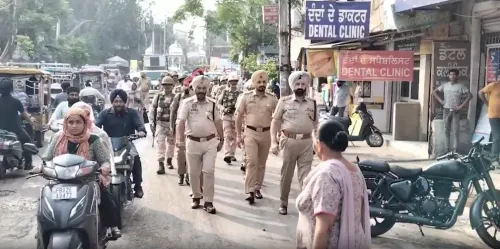
Intelligence agencies operating in Punjab are recalibrating their surveillance strategy in response to a deliberate tactical shift by pro-Khalistan groups, who have moved away from overt agitation toward a subtler, harder-to-detect form of soft propaganda. According to officials, the pivot toward human intelligence (HUMINT) is now central to the counter-strategy, as technical surveillance tools prove inadequate against activities that appear legitimate on the surface.
The Strategic Shift in Pro-Khalistan Activity
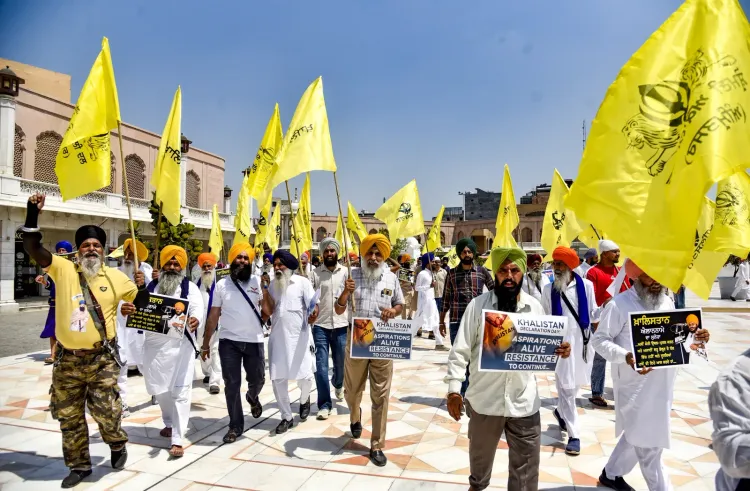
Pro-Khalistan groups have progressively moved their operations from urban centres into rural Punjab, where small clubs, community halls, and religious spaces are being used to quietly spread messaging, according to officials familiar with the matter. The gatherings are deliberately kept small to avoid drawing attention, and the tone of the propaganda has been softened — a calculated move, officials say, to stay below the radar of security agencies.
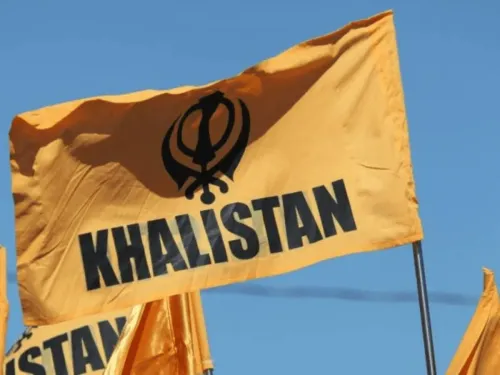
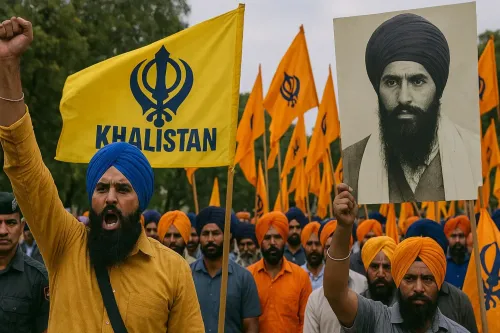
An Intelligence Bureau official noted that the hard-edged Khalistan agenda of the past — once propagated through books, pamphlets, flags, flyers, and explicit social media campaigns celebrating political assassinations and targeting foreign diplomats — has been largely abandoned in its current form. 'The in-your-face Khalistan agenda is no longer being pushed,' the official said, attributing the retreat to the movement's failure to gain traction due to its association with violent ideology.
What Soft Propaganda Looks Like Now
The current wave of soft propaganda focuses on alleged human rights violations by police during the peak of militancy in Punjab, the airing of community grievances both large and small, the screening of biopics and documentaries presenting a one-sided historical narrative, and the playing of protest music. These elements are deployed at regular intervals with the intent of making them the dominant topic of conversation among the youth.
Officials warn that such content, sustained over time, risks becoming the prevailing narrative in rural society — which is precisely the outcome pro-Khalistan groups are working toward. Critically, none of this activity is easily actionable under existing law. Discussing alleged police excesses in a religious space, for instance, cannot by itself lead to an arrest, but sustained exposure to such messaging can, officials argue, gradually shape perceptions among younger audiences who did not live through the era of militancy.
Why Technical Surveillance Falls Short
The nature of these gatherings presents a structural challenge for law enforcement. Because the events are framed as community or religious meetings, technical surveillance is difficult to justify or deploy. Officials acknowledged that agencies cannot readily explain why a seemingly routine gathering is being monitored, creating legal and reputational risk if they act without sufficient cause.
This is compounded by the fact that pro-Khalistan groups reportedly want agencies to intervene — particularly in religious spaces — anticipating that heavy-handed action would generate a public backlash that could, in turn, lend credibility to their grievance narrative. It is a calculated provocation, officials say.
HUMINT: The New Counter-Strategy
The response has been a decisive shift toward human intelligence. Agencies are now relying on local individuals embedded in communities to serve as observers — tracking what is being discussed, how frequently such events occur, and whether the messaging is escalating. This allows agencies to maintain situational awareness without triggering the backlash that overt action might provoke.
Officials identified community elders — those who lived through the violence of the Khalistan militancy at its peak — as the most valuable HUMINT assets in this context. These individuals carry firsthand knowledge of the atrocities committed against ordinary villagers and are positioned not only to report on pro-Khalistan activity but also to actively counsel younger generations against involvement. Their credibility within rural communities makes them a natural counterweight to the soft propaganda now in circulation.
The Broader Context
This development comes against the backdrop of a long-running effort by elements within the Sikh diaspora, primarily based in Canada, the United Kingdom, and Australia, to sustain the Khalistan cause through non-violent means after the movement's violent phase was suppressed in the early 1990s. The shift to soft propaganda represents an evolution of that strategy — one that Indian intelligence agencies are now racing to understand and counter before it takes root among a new generation in rural Punjab.
How effectively HUMINT networks can be built and maintained in the state's villages will likely determine whether this latest iteration of the Khalistan campaign gains any foothold.
Point of View
But it also carries risk: it places civilians in an adversarial role within their own communities, with no formal protection framework. The deeper question mainstream coverage is missing is whether Punjab's rural social fabric — already under economic stress from agrarian distress — is more susceptible to this kind of slow-burn narrative than it was a decade ago. HUMINT can track the spread; it cannot by itself address the conditions that make the messaging resonate.
NationPress
12 Oct 2026
Frequently Asked Questions
What is the soft propaganda strategy being used by pro-Khalistan groups in Punjab?
Pro-Khalistan groups have shifted from overt Khalistan messaging to a subtler approach that includes discussing alleged human rights violations by police, screening one-sided documentaries and biopics, playing protest music, and raising community grievances at small rural gatherings. The strategy is designed to stay below the threshold of legal action while gradually shaping youth opinion over time.
Why are intelligence agencies in Punjab turning to HUMINT?
Technical surveillance is ineffective against gatherings that appear to be routine community or religious meetings. Since the content being discussed — such as alleged police excesses — is not directly criminalised, agencies cannot easily justify monitoring these events. Human intelligence, involving local observers embedded in communities, allows agencies to track activity without triggering the public backlash that overt intervention might cause.
Why has the hard-line Khalistan agenda been toned down?
According to officials, the Khalistan movement failed to gain public traction because of its association with violent ideology. Many elders in Punjab who lived through the peak of militancy have actively warned younger generations about its consequences. Pro-Khalistan groups have responded by adopting softer messaging to distance themselves from that violent legacy and to evade security agencies.
Who are considered the most effective HUMINT assets in rural Punjab?
Intelligence officials have identified community elders — those with firsthand experience of the violence and atrocities of the Khalistan militancy era — as the most valuable human intelligence sources. They are trusted within their communities, can monitor pro-Khalistan activity, and are well-placed to counsel younger villagers against involvement in the movement.
What was the earlier form of pro-Khalistan propaganda and how has it changed?
Earlier propaganda included books, pamphlets, flags, flyers, and digital and social media content that explicitly promoted the Khalistan cause, including images celebrating political assassinations and the targeting of foreign diplomats. The current approach has replaced this with grievance-based narratives, protest music, and documentary content — material that is harder to prosecute but designed to achieve the same long-term ideological effect.