Raghav Chadha's Growing Rift with AAP: What You Need to Know
Synopsis
Raghav Chadha's ongoing estrangement from the Aam Aadmi Party raises questions about internal party dynamics. His recent removal as deputy leader and criticisms from fellow leaders highlight significant discord within AAP. This article delves into the circumstances surrounding his departure and the implications for the party's future.
Key Takeaways
Raghav Chadha is facing internal conflict within the Aam Aadmi Party (AAP) .
His removal as deputy leader signals deeper issues in the party.
Criticism from senior leaders highlights disagreements over priorities.
Several prominent figures have distanced themselves from AAP due to leadership issues.
The party's performance in the 2025 elections raised concerns about its future.
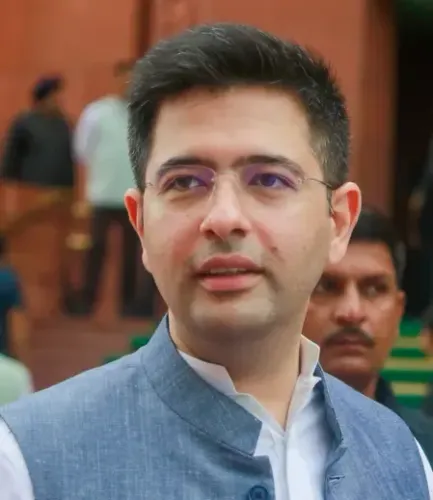
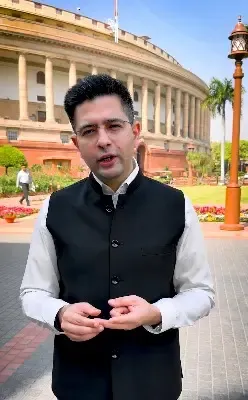
New Delhi, April 3 (NationPress) Recently, the growing rift between Rajya Sabha member Raghav Chadha and the Aam Aadmi Party (AAP) has sparked considerable political discourse and speculation, yet insiders have remained tight-lipped regarding the situation.
However, the truth is now emerging.
His recent ousting as the party’s deputy leader in the Rajya Sabha is perceived as more than a mere “administrative reshuffle”; it serves as a clear indicator of internal strife within AAP.
This was further underscored by the party's appeal to the House Chairman to deny Chadha time allocated for addressing significant public issues.
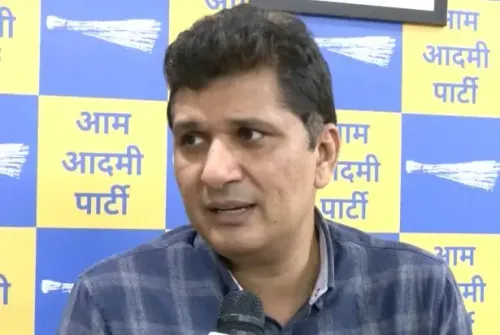
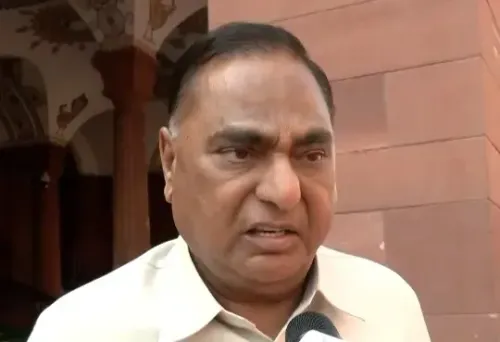
While the party appears to perceive Chadha as diverging from the topics it champions, senior leader and former Delhi Minister Saurabh Bharadwaj on Friday criticized him for prioritizing “less significant” matters in Parliament over “urgent issues” and failing to challenge the ruling Bharatiya Janata Party (BJP).
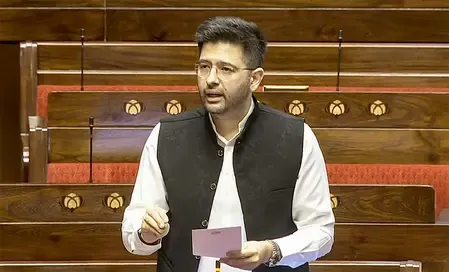
Chadha defended his parliamentary contributions as being focused on public interest.
On Friday, AAP senior leader and former Delhi Minister Saurabh Bharadwaj accused Chadha of choosing “less significant” issues in Parliament over “real matters” and not questioning the ruling Bharatiya Janata Party (BJP).
Conflicts and disagreements have historically led several key figures, who united against corruption in 2012 to form the AAP under the leadership of Arvind Kejriwal, to eventually part ways.
Multiple leaders, founding members, and aides have distanced themselves from the party chiefly due to internal disputes, ideological differences, leadership styles, and occasional political shifts.
Prominent figures include Yogendra Yadav, Prashant Bhushan, Ashutosh, Alka Lamba, Swati Maliwal, and Kumar Vishwas, among others. Yadav, Bhushan, and Kumar Vishwas reportedly fell out with Kejriwal mainly because they believed AAP had moved away from its founding principles of transparency, internal democracy, and alternative politics, leaning instead towards a centralization of power and personality-driven leadership under Kejriwal.
In early 2025, seven AAP MLAs resigned from the party just before the Delhi Assembly elections. According to a former aide, many of AAP's grassroots workers expressed dissatisfaction with Kejriwal’s leadership style, campaign strategies, and the party’s internal operations.
Campaign strategies were imposed from the top down, leaving little flexibility for local leaders or volunteers to tailor their messaging to reflect ground realities, asserted the former AAP member.
Notably, this was identified as a significant factor in AAP’s disappointing performance in the 2025 elections, during which the party secured only 22 out of 70 seats in the Delhi Assembly—a decline in 40 constituencies compared to previous elections. Consequently, the BJP formed the government, winning 48 seats.
Numerous long-time associates, as claimed by the former aide, felt overlooked as Kejriwal increasingly centralized decision-making power within a small inner circle.
In May 2023, in response to reports linking him to an Enforcement Directorate (ED) chargesheet concerning the Delhi excise policy case, Chadha held a press conference where he fervently defended himself, labeling the media reports as “factually incorrect” and part of a “campaign” aimed at undermining his reputation. Close allies of Kejriwal criticized Chadha for focusing on his self-defense rather than addressing the leadership of the party—Kejriwal included—who were also allegedly being “maligned.”
During April-May 2024, when AAP protested Kejriwal’s arrest over the excise policy case, Chadha was reportedly absent, much to the dismay of party activists. However, he was in London for an eye surgery at that time. Later, the criticism intensified as Chadha allegedly remained silent on the matter for several months.
Again, in February this year, he made headlines for not commenting when a Delhi court dismissed charges against Kejriwal and his associate, Manish Sisodia, in the same alleged corruption case. While he has recently defended himself in a video statement asserting he is “silenced, but not defeated,” it remains to be seen what the future holds for the Rajya Sabha member from Punjab, whose term is set to conclude in September 2028.
Point of View
The unfolding situation regarding Raghav Chadha and AAP illustrates the complexities of party politics in India. The internal conflicts and departures from AAP reflect broader trends of dissatisfaction and shifting alliances within political frameworks, raising questions about the party's long-term viability.
NationPress
9 Oct 2026
Frequently Asked Questions
What led to Raghav Chadha's removal from AAP's leadership?
Raghav Chadha's removal as deputy leader was perceived as a reflection of internal discord within AAP, with criticisms from party members highlighting his focus on less significant parliamentary issues.
Who are some of the notable figures that have distanced themselves from AAP?
Key figures include Yogendra Yadav, Prashant Bhushan, Ashutosh, Alka Lamba, Swati Maliwal, and Kumar Vishwas, who left due to disagreements over leadership and party direction.
How did AAP perform in the 2025 Delhi Assembly elections?
In the 2025 elections, AAP secured only 22 out of 70 seats, a significant decline from previous results, allowing the BJP to form the government.
What were Chadha's responses to the ED chargesheet linking him to the Delhi excise policy case?
Chadha held a press conference defending himself against the allegations, dismissing the media reports as factually incorrect and part of a campaign to harm his reputation.
What are the future implications for Raghav Chadha in AAP?
Chadha's future in AAP remains uncertain as he navigates the fallout from his recent conflicts, with his term in the Rajya Sabha continuing until September 2028.