Rubio reaffirms US security pledge to Bahrain, warns Iran on Hormuz
Synopsis
Rubio's Manama visit was more than a courtesy call — it was a calibrated signal to Tehran. By reaffirming C-SIPA, condemning Iran's attacks on Bahrain, and drawing a hard line on Hormuz tolls, Washington is telling Gulf partners that any US-Iran deal will not come at their expense. The economic agenda — AI, critical minerals, energy — adds a second strategic layer to a relationship long defined by defence.
Key Takeaways
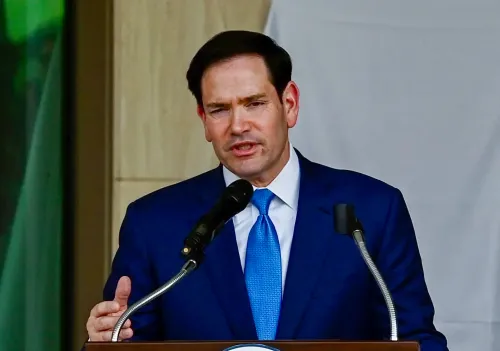
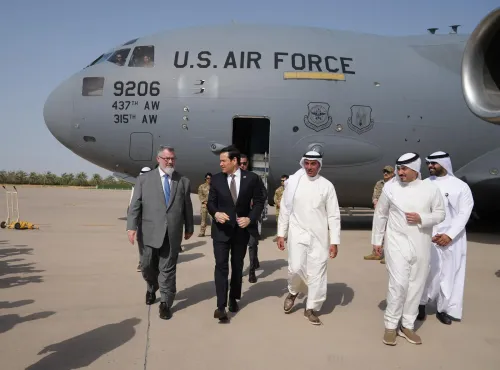
US Secretary of State Marco Rubio met King Hamad bin Isa Al Khalifa in Manama on 25 June 2025 .
Rubio reaffirmed the Comprehensive Security Integration and Prosperity Agreement (C-SIPA) as the bedrock of US-Bahrain strategic cooperation.
The State Department said Rubio condemned Iran's attacks on Bahrain and pledged 'unwavering' US solidarity.
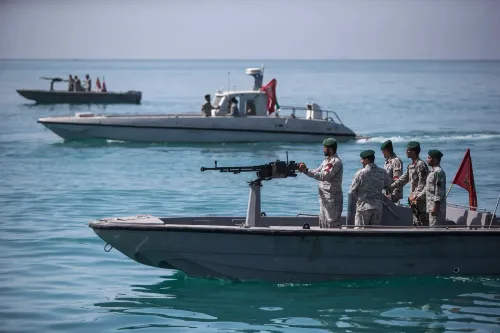
Rubio warned that Washington would not tolerate charges on international shipping through the Strait of Hormuz .
Both sides discussed expanding economic ties in energy , artificial intelligence , and critical minerals .
The visit followed a US-GCC ministerial co-chaired by Rubio and focused on the 17 June US-Iran memorandum of understanding.
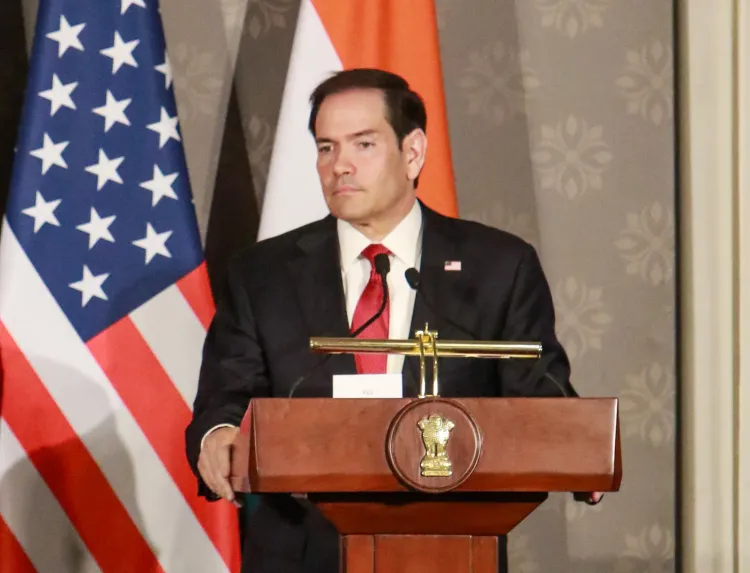
US Secretary of State Marco Rubio on Thursday, 25 June reaffirmed Washington's security commitment to Bahrain during talks with King Hamad bin Isa Al Khalifa in Manama, as both sides pledged deeper cooperation on regional stability, freedom of navigation through the Strait of Hormuz, and preventing Iran from acquiring nuclear weapons.
Key Commitments Reaffirmed
At the heart of the bilateral meeting was a reaffirmation of the Comprehensive Security Integration and Prosperity Agreement (C-SIPA), the framework that underpins US-Bahrain strategic cooperation. According to a State Department readout, Rubio explicitly restated Washington's commitment to Bahrain's security under the agreement.
The two sides also aligned on a shared vision for Gulf stability, safe maritime transit, and ensuring Iran does not cross the nuclear threshold — positions that carry heightened significance following a 17 June memorandum of understanding between Washington and Tehran.
Rubio Condemns Iran's Attacks on Bahrain
In a pointed signal, Rubio condemned what the State Department described as Iran's recent attacks against Bahrain. 'The Secretary condemned Iran's attacks on Bahrain and reaffirmed unwavering U.S. partnership and solidarity with the Bahraini people,' the State Department said in its readout.
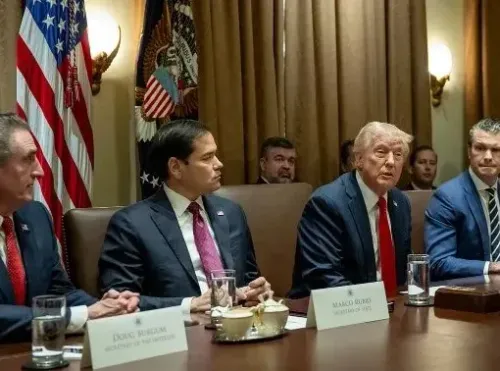
The condemnation came hours after Rubio co-chaired a ministerial meeting between the United States and the Gulf Cooperation Council (GCC), where regional leaders discussed the implementation of the June 17 US-Iran memorandum and broader Gulf security concerns.
Hard Line on Strait of Hormuz
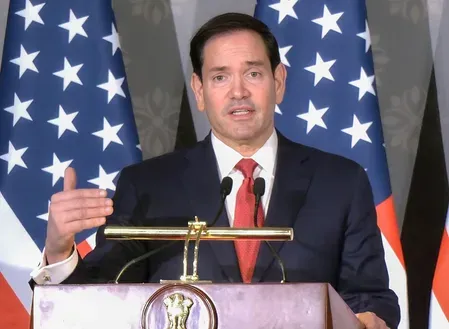
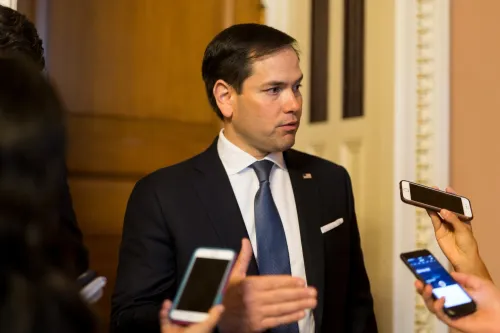
Rubio drew a firm line on the question of tolls or charges on international shipping through the Strait of Hormuz. Speaking to reporters after the GCC ministerial, he said: 'If you are charging money to use the straits, we won't support it. We won't tolerate it; we won't allow it.' He described this as a position of unanimous agreement among Gulf partners.
Rubio also pledged that Washington would keep Gulf allies fully briefed throughout any ongoing negotiations with Iran. 'We're not going to do anything or agree to anything that they're not aware of, that our partners in the area are not aware of, that our partners in the area are not aligned with, and that in any way could undermine their security and their stability,' he said.
Economic Cooperation on the Agenda
Beyond security, Rubio and King Hamad explored avenues to broaden bilateral economic ties. The State Department readout cited discussions on deepening cooperation in energy, artificial intelligence, critical minerals, and other strategic sectors — signalling that the US-Bahrain relationship is being repositioned as a comprehensive strategic partnership, not merely a defence arrangement.
Why This Visit Matters
The Manama meetings underscore Bahrain's role as one of Washington's closest Gulf security partners at a particularly sensitive moment. Regional diplomacy has intensified since the US-Iran memorandum of understanding, and Gulf states have sought assurances that any Washington-Tehran deal will not compromise their security interests. Rubio's visit, and his pointed public statements on Iran and the Strait of Hormuz, appear designed to provide exactly that reassurance.
With GCC-US coordination now formally elevated and economic tracks opened alongside the security dialogue, the next phase will test whether diplomatic momentum translates into concrete agreements on the Iran nuclear file.
Point of View
Rubio is signalling that Gulf security is non-negotiable in the Iran talks. The economic agenda — AI, critical minerals — is also notable: it suggests Washington is trying to deepen the relationship's commercial roots before any Iran deal reshapes the regional order. Whether these assurances hold when the hard bargaining with Tehran begins is the question Gulf capitals are quietly asking.
NationPress
24 Sept 2026
Frequently Asked Questions
What did Marco Rubio reaffirm during his visit to Bahrain?
Rubio reaffirmed the United States' security commitment to Bahrain and the Comprehensive Security Integration and Prosperity Agreement (C-SIPA) during talks with King Hamad bin Isa Al Khalifa in Manama on 25 June 2025. Both sides also pledged cooperation on Gulf stability, freedom of navigation through the Strait of Hormuz, and preventing Iran from acquiring nuclear weapons.
What is the C-SIPA agreement between the US and Bahrain?
The Comprehensive Security Integration and Prosperity Agreement (C-SIPA) is the bilateral framework underpinning US-Bahrain strategic cooperation. It covers defence commitments, security coordination, and broader partnership objectives, and was reaffirmed by Rubio during his 25 June 2025 visit to Manama.
Why did Rubio warn against charges on the Strait of Hormuz?
Rubio said Washington would not support, tolerate, or allow any attempt to impose fees on international shipping through the Strait of Hormuz, describing it as a position of unanimous agreement among Gulf partners. The warning is directed at any actor — implicitly Iran — that might seek to monetise or restrict transit through the strategically critical waterway.
What did Rubio say about Iran's attacks on Bahrain?
The State Department said Rubio 'condemned Iran's attacks on Bahrain' and reaffirmed 'unwavering US partnership and solidarity with the Bahraini people.' The condemnation came during the bilateral meeting with King Hamad and was included in the official State Department readout.
What economic areas did the US and Bahrain discuss?
Rubio and King Hamad discussed deepening bilateral economic ties in energy, artificial intelligence, critical minerals, and other strategic sectors, according to the State Department readout. The discussions signal an effort to broaden the relationship beyond its traditional security focus.