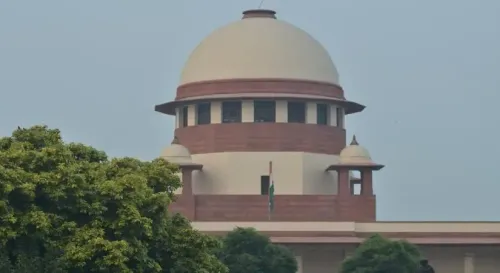
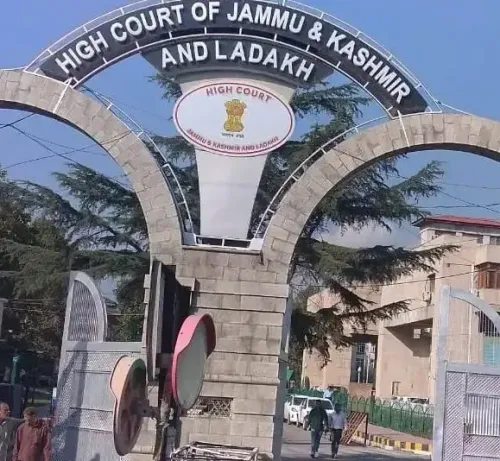
SC Collegium recommends 11 judges for MP, Chhattisgarh HCs in single sitting

Synopsis
In a two-day burst of judicial appointments, the Supreme Court Collegium under CJI Surya Kant has recommended 20 new high court judges across Madhya Pradesh, Chhattisgarh, and Jammu and Kashmir — a significant push to fill vacancies that have long fuelled case backlogs in central India and the Union Territory.
Key Takeaways
The Supreme Court Collegium , headed by CJI Surya Kant , on 30 October 2026 recommended five judicial officers for the Madhya Pradesh High Court .
The names cleared for MP HC are Renuka Kanchan , Krishnamurty Mishra , Virendra Singh Rajput , Mamta Jain , and Ashita Shrivastava .
Six nominees — four advocates and two judicial officers — were recommended for the Chhattisgarh High Court , including Anand Shukla , Ratna Nidhi Pusty , Shashank Thakur , Sourabh Sharma , Rajnish Shrivastava , and Balram Prasad Verma .
A day earlier, on 29 October 2026 , the Collegium also approved nine advocates for the Jammu and Kashmir and Ladakh High Court .
In total, 20 high court judge appointments were recommended across three benches over two consecutive days.
Following Collegium recommendation, files move to the Union Law Ministry and then to the President of India for formal warrants.
The Supreme Court Collegium, chaired by Chief Justice of India (CJI) Sanjiv Khanna — wait — chaired by Chief Justice of India Surya Kant, on Friday, 30 October 2026, recommended the appointment of five judicial officers as judges of the Madhya Pradesh High Court and six nominees — comprising four advocates and two judicial officers — as judges of the Chhattisgarh High Court, in a single sitting of the apex court's internal appointment body.
Madhya Pradesh High Court: Five Officers Cleared
The Collegium approved the appointment of judicial officers Renuka Kanchan, Krishnamurty Mishra, Virendra Singh Rajput, Mamta Jain, and Ashita Shrivastava as judges of the High Court of Madhya Pradesh. The decision was formalised through a statement uploaded to the Supreme Court's official website. 'The Supreme Court Collegium, in its meeting held on 30th October, 2026, has approved the proposal for appointment of the following Judicial Officers, as Judges of the High Court of Madhya Pradesh,' the statement read.
Chhattisgarh High Court: Four Advocates, Two Officers Named
For the Chhattisgarh High Court, the Collegium cleared four advocates — Anand Shukla, Ratna Nidhi Pusty (also known as R.N. Pusty or Ratan Pusty), Shashank Thakur, and Sourabh Sharma — along with judicial officers Rajnish Shrivastava and Balram Prasad Verma. The combined batch of six recommendations is a sizeable single-day addition to the court, which has faced a persistent judge vacancy problem in recent years.
Jammu and Kashmir Collegium: Nine Advocates Approved
In a separate but related development, the Supreme Court Collegium — in its meeting held on Thursday, 29 October 2026 — also approved the appointment of nine advocates as judges of the High Court of Jammu and Kashmir and Ladakh. The recommended advocates are Vishal Sharma, Vikram Kumar Sharma, Namgyal Wangchuk, Pawan Kumar Kundal, Tahir Majid Shamsi, Tabasum Zafar, Amit Gupta, Pranav Kohli, and Anupam Raina. This brings the total number of high court judge appointments recommended across three benches in two consecutive days to 20.
How the Appointment Process Works
The appointment of judges to the higher judiciary in India is a continuous, integrated, and collaborative process involving both the executive and the judiciary. It requires consultation and approval from multiple constitutional authorities at the state and Central levels. Crucially, only candidates whose names have been recommended by the Supreme Court Collegium are eligible for appointment as judges of the high courts — a constitutional convention that has stood since the landmark Second Judges Case (1993). This is the Collegium system that has, over the decades, been the subject of ongoing debate between the judiciary and successive governments over transparency and accountability.
Significance and What Comes Next
The twin recommendations for Madhya Pradesh and Chhattisgarh — both high courts carved out of the same region after Chhattisgarh's formation in 2000 — signal an active period of judicial capacity-building in central India. Pending vacancies in these courts have contributed to case backlogs that critics say delay justice for ordinary litigants. Following the Collegium's recommendation, the files move to the Union Law Ministry, and thereafter to the President of India for formal appointment warrants. The process typically takes several weeks to months.
Point of View
But the real story is structural: India's high courts collectively carry hundreds of vacancies, and each unfilled seat compounds the backlog crisis that delays justice for millions. The Collegium's opacity — it does not routinely explain why specific candidates are chosen or why others are passed over — remains a democratic accountability gap that no government has successfully reformed. The J&K and Ladakh batch is also politically significant, reflecting the normalisation agenda in a Union Territory still navigating its post-Article 370 legal architecture. Speed of formal appointment by the executive, not the pace of Collegium recommendation, will determine whether these names translate into functioning benches.
NationPress
30 Oct 2026
Frequently Asked Questions
Which judges did the SC Collegium recommend for the Madhya Pradesh High Court?
The Collegium recommended five judicial officers — Renuka Kanchan, Krishnamurty Mishra, Virendra Singh Rajput, Mamta Jain, and Ashita Shrivastava — as judges of the Madhya Pradesh High Court on 30 October 2026.
Who were recommended as judges of the Chhattisgarh High Court?
Six nominees were cleared: advocates Anand Shukla, Ratna Nidhi Pusty, Shashank Thakur, and Sourabh Sharma, along with judicial officers Rajnish Shrivastava and Balram Prasad Verma. Together they form the largest single-day batch recommended for the Chhattisgarh bench in recent memory.
What is the Supreme Court Collegium and how does it appoint judges?
The Supreme Court Collegium is a body comprising the Chief Justice of India and the four most senior Supreme Court judges, which recommends appointments and transfers of high court and Supreme Court judges. Its recommendations are binding in practice, following the Second Judges Case of 1993, after which files move to the Union Law Ministry and then to the President for formal appointment warrants.
Were any judges also recommended for the Jammu and Kashmir High Court?
Yes. In a separate Collegium meeting held on 29 October 2026, nine advocates — Vishal Sharma, Vikram Kumar Sharma, Namgyal Wangchuk, Pawan Kumar Kundal, Tahir Majid Shamsi, Tabasum Zafar, Amit Gupta, Pranav Kohli, and Anupam Raina — were approved as judges of the High Court of Jammu and Kashmir and Ladakh.
When will the recommended judges be formally appointed?
After the Collegium's recommendation, the files are forwarded to the Union Law Ministry and subsequently to the President of India, who issues the formal appointment warrants. This process typically takes several weeks to a few months, depending on administrative timelines.