Trump's Asia trip: Nuclear talks, Quad limits, Ukraine and trade deals
Synopsis
Trump's post-Asia briefing was a sprint through global diplomacy: a three-way nuclear risk dialogue with China and Russia, a 2027 Quad business summit, US AI protectionism, Ukraine peace overtures with no ceasefire date, and trade frameworks with Thailand and the Philippines — all with India's growth rate invoked to pressure the Fed into cutting rates.
Key Takeaways
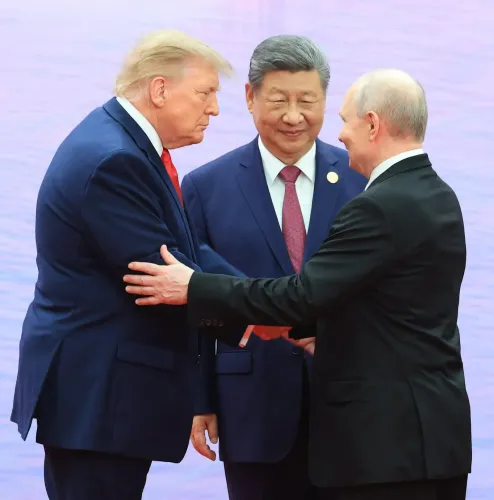
China's President Xi Jinping agreed in Shenzhen to three-way nuclear-risk talks with the US and Russia ; no timetable or arms cuts were announced.
Trump cited India's 7% growth and low interest rates as a basis for pressing the US Federal Reserve to cut rates, projecting US growth could reach 14–20% with cheaper borrowing.
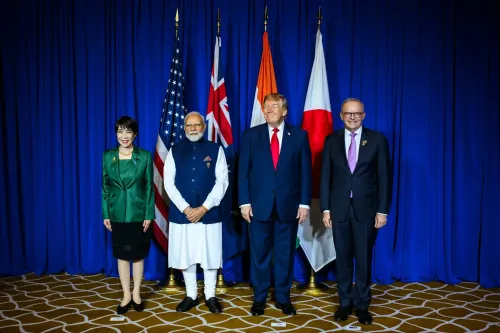
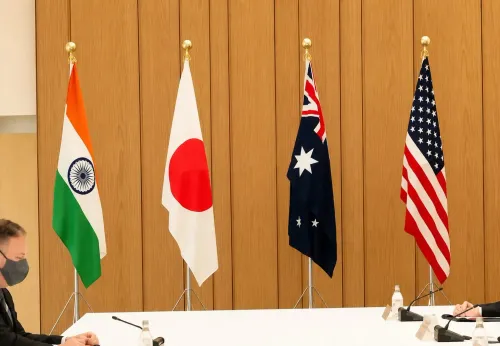
Quad companies from India, the US, Japan and Australia will meet in early 2027 for commercial talks; PM Modi attended the Quad summit in Manila .
Trump restricted Quad AI cooperation, insisting most development stay in the US, and threatened a 'substantial tax' on American firms building overseas data centres.
Russia's Putin expressed desire to end the Ukraine war, but no ceasefire or negotiating date was set.
Thailand agreed to eliminate tariffs on US goods and may buy $2.6 billion in US farm products annually; Canada faces demands to cut its ~$80 billion trade surplus with the US to zero.
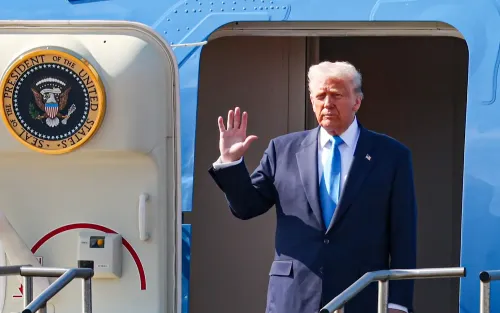
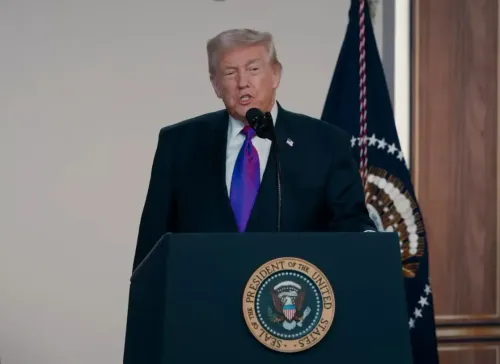
US President Donald Trump, speaking at a news conference on Friday, 21 November 2026 after returning from his Asia tour, revealed that China had agreed to nuclear-risk talks involving Washington and Moscow, cited India's 7% economic growth to argue for lower US interest rates, and drew firm limits on technology-sharing within the Quad. The wide-ranging briefing covered everything from Ukraine and AI governance to bilateral trade frameworks with Thailand and the Philippines.
Nuclear Risk Talks: Xi Agrees to Three-Way Dialogue
President Trump said that Chinese President Xi Jinping agreed during their meeting in Shenzhen to discuss reducing nuclear risks with both the US and Russia. All three leaders, he said, declared that nuclear conflict must never be allowed to happen. However, no timetable was announced and no arms reductions were agreed upon. Trump himself acknowledged he would find it difficult to agree to halving the US nuclear arsenal — a candid admission that any eventual deal faces domestic constraints.
India Cited in Trump's Push for Fed Rate Cuts
In a notable reference to India, Trump pointed to New Delhi's relatively low interest rates and 7% annual growth as a model, arguing that cheaper borrowing could propel US growth to 14 or 15% — and possibly even 20%. He offered no methodology behind those projections, and economists have been sceptical of such figures. The remarks signal that Trump's pressure on the US Federal Reserve to cut rates is likely to intensify following his Asia visit.
Quad: Business Summit in 2027, AI Guardrails
Secretary of State Marco Rubio announced that leading companies from India, the US, Japan, and Australia would meet in early 2027 to explore commercial deals, following the Quad summit in Manila attended by Prime Minister Narendra Modi. Leaders also agreed to cooperate on supply chains and maritime surveillance. On artificial intelligence, Trump said the Quad had launched an advanced AI initiative but insisted that the bulk of development work remain in the US, threatening a 'substantial tax' on American companies that build data centres abroad. Separately, he said he and Xi had agreed to work together on AI safeguards — suggesting a parallel, bilateral track on AI governance alongside the Quad framework.
Ukraine, Iran and the Nvidia Question
On Ukraine, Trump said Russian President Vladimir Putin had expressed a desire to end the war at their Shenzhen meeting. Pressed on a fresh Russian attack, Trump maintained that both leaders wanted the fighting to stop, though no ceasefire date or negotiating framework was announced. On Iran, Trump acknowledged that the ongoing conflict had pushed up fuel prices but said preventing Tehran from acquiring a nuclear weapon justified the decision. Vice President J.D. Vance defended that stance when asked whether the war was worth Republicans losing the Senate. In a separate remark, Trump said he would like Jensen Huang to 'apologise and return' to Nvidia — having earlier reportedly suggested Tim Cook for the role — and credited Huang with developing Nvidia's Blackwell chips. He also said any American chips sold to China should be older models, signalling continued technology export restrictions.
Trade: Thailand Deal, Philippine Pressure, Mexico Progress, Canada Friction
Thailand signed an agreement to eliminate tariffs on US goods and expressed interest in buying $2.6 billion in American farm products annually, though Trump called that figure preliminary. Under a separate framework with the Philippines, Trump said he pressed Manila to source all its agricultural and energy imports from the US. On Mexico, Trump said he was 'close to a deal' after meeting Mexican President Claudia Sheinbaum. Canada, however, continues to face pressure: Trump welcomed Canadian Prime Minister Mark Carney's interest in the Keystone pipeline but demanded the US trade deficit with Canada — which he put at approximately $80 billion — be reduced to zero. On domestic politics, Trump said Democrats had contacted him on immigration and healthcare, particularly regarding undocumented individuals who have lived and worked in the US for years. He made no commitment on whether they could remain.
The breadth of Trump's post-Asia briefing underscores a foreign policy sprint that spans nuclear diplomacy, tech nationalism, trade realignment and two active conflict zones — with outcomes on most fronts still far from settled.
Point of View
Ukraine peace signals without a ceasefire date, and AI cooperation with built-in protectionism. The invocation of India's growth rate to pressure the Fed was rhetorical rather than analytical; the 14–20% US growth projection has no credible basis and reveals more about Trump's rate-cut lobbying than any serious benchmarking. For India, the Quad business summit in 2027 is a tangible gain, but the limits Trump placed on advanced technology sharing suggest New Delhi will need to manage expectations carefully. The bilateral China-US AI safety track, running parallel to the Quad framework, also raises questions about whether the Quad remains the primary vehicle for Indo-Pacific tech governance — or whether Washington is hedging across multiple lanes simultaneously.
NationPress
21 Nov 2026
Frequently Asked Questions
What did Trump announce about nuclear talks after his Asia trip?
Trump said Chinese President Xi Jinping agreed in Shenzhen to participate in three-way nuclear-risk discussions with the US and Russia, with all three leaders declaring that nuclear conflict must never be allowed to happen. No timetable was set and no arms reductions were agreed upon.
Why did Trump mention India's economy at his post-Asia press conference?
Trump cited India's approximately 7% economic growth rate and low interest rates as evidence that cheap borrowing spurs growth, using it to press the US Federal Reserve for rate cuts. He claimed US growth could reach 14–20% under lower rates, though he offered no calculation to support that figure.
What was decided at the Quad summit in Manila?
Leaders at the Quad summit in Manila — including Prime Minister Narendra Modi — agreed to cooperate on supply chains and maritime surveillance. A business summit bringing together leading companies from India, the US, Japan and Australia was announced for early 2027.
What did Trump say about Ukraine and Russia at the briefing?
Trump said Russian President Vladimir Putin expressed a desire to end the Ukraine war at their Shenzhen meeting. However, no ceasefire was announced and no negotiating date was set, even as a fresh Russian attack was reported.
Which trade deals did Trump announce following his Asia trip?
Thailand signed an agreement to eliminate tariffs on US goods and expressed interest in buying up to $2.6 billion in US farm products annually. A separate framework with the Philippines saw Trump press Manila to source all agricultural and energy imports from the US. Trump also said he was close to a deal with Mexico, while demanding Canada reduce its roughly $80 billion trade surplus with the US to zero.