UN votes 130-17 to end US Cuba embargo; Diaz-Canel hails 'victory'
Synopsis
For the 34th year running, the world told Washington to lift its Cuba embargo — this time with 130 votes. But the margin narrowed sharply from 165 in 2025, hinting at fresh diplomatic pressure. Diaz-Canel called it a 'victory'; the embargo, non-binding resolutions aside, stays intact.
Key Takeaways
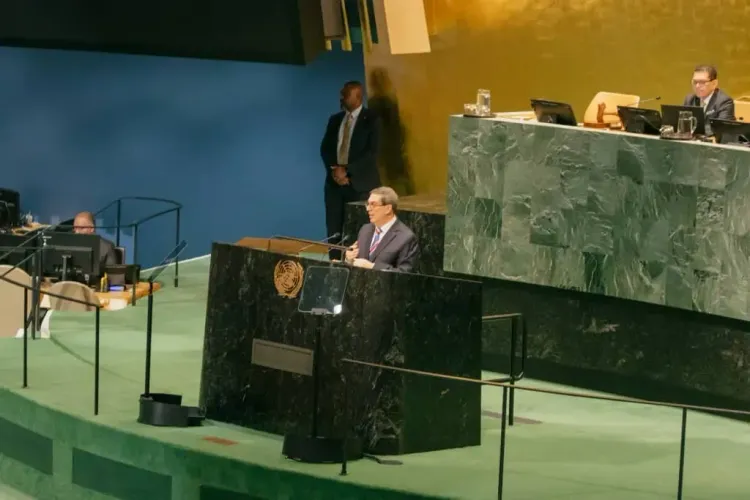
The UN General Assembly adopted its 34th consecutive resolution demanding an end to the US embargo on Cuba on 29 October 2026 .
The vote was 130 in favour , 17 against , and 25 abstentions — a narrower margin than 2025's 165-7 vote .
Cuban President Miguel Diaz-Canel called the outcome a 'victory for the heroic Cuban people' in a post on X .
Cuba's official figures estimate the embargo has caused nearly $179 billion in economic losses to the island.
The resolution targets the Helms-Burton Act (1996) and calls on states to repeal extraterritorial sanctions; it is non-binding .
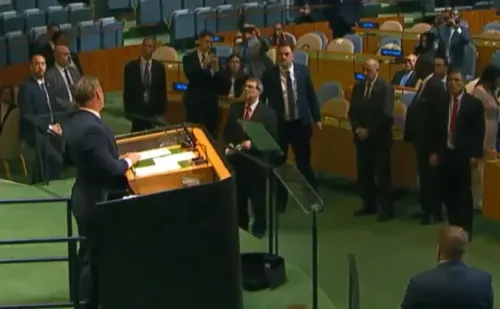
The UN General Assembly on 29 October 2026 adopted a resolution demanding an end to the decades-long US economic embargo on Cuba, with 130 nations voting in favour, 17 against, and 25 abstentions. The vote marks the 34th consecutive year the international community has passed such a resolution, underscoring the near-universal diplomatic isolation of Washington's Cuba policy.
What the Resolution Says
The resolution expresses concern over the continued application of laws and regulations — including the Helms-Burton Act, enacted by the United States in 1996 — whose extraterritorial effects are said to undermine the sovereignty of other states and restrict the freedom of trade and navigation. It calls on all member states to refrain from enacting such measures and urges those that have already done so to take steps to repeal or invalidate them at the earliest opportunity.
The resolution also requests the UN Secretary-General to prepare a report on the implementation of the resolution and submit it to the General Assembly at its next annual session.
Cuba's Response: 'Victory Against Pressure'
Cuban President Miguel Diaz-Canel, in a post on X, described the outcome as a 'victory for the heroic Cuban people,' who he said had not surrendered despite what he called 'economic suffocation, threats and abuse by the US government.' He characterised the result as 'a triumph of the truth over those who rely on lies and blackmail to subject an entire nation to collective punishment.'
Diaz-Canel also underscored the breadth of international opposition to the embargo, 'even in the face of the crudest pressure and blackmail' from Washington to alter the vote's outcome — a pointed reference to reported US lobbying ahead of the session.
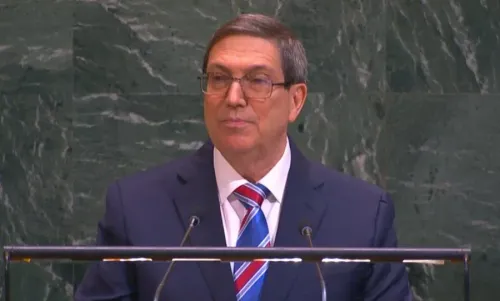
Cuban Foreign Minister Bruno Rodriguez, who led Havana's delegation to the UN General Assembly, called the result a 'new victory' against US sanctions, adding that the vote proved 'Cuba is not a threat, the embargo is.'
Historical Context and Economic Toll
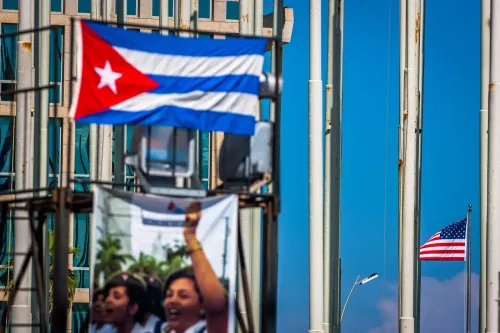
The United States has maintained stiff economic, commercial, and financial sanctions on Cuba for more than six decades — a policy that official Cuban figures say has caused nearly $179 billion in economic losses to the Caribbean island. The Trump administration is credited with intensifying the restrictions in recent years.
Notably, the margin has shifted from last year's vote: in 2025, 165 countries voted to condemn the embargo, with only seven against and 12 abstentions. The narrower 2026 majority — 130 in favour versus 17 against — suggests some diplomatic movement, though the resolution still passed by a wide margin.
What Happens Next
UN General Assembly resolutions on this matter are non-binding, which means the embargo remains in force regardless of the vote. Washington has historically dismissed these resolutions, and there is no indication the current US administration intends to change course. The Secretary-General's implementation report, due at the next annual session, will be closely watched by advocacy groups pressing for sanctions relief. Cuba's government has indicated it will continue to mobilise international support for a binding mechanism.
Point of View
And Washington has ignored every one of them. More telling is the vote-count shift: from 165 in favour last year to 130 in 2026, a drop of 35 nations that points to effective US lobbying ahead of the session. Diaz-Canel's 'victory' framing is politically useful at home but obscures a trend that, if it continues, could eventually erode the symbolic value Cuba draws from this annual ritual. The real question is whether a non-binding vote, repeated for over three decades with no change on the ground, still serves as meaningful multilateral pressure — or has simply become a calendar fixture.
NationPress
29 Oct 2026
Frequently Asked Questions
What did the UN General Assembly vote on regarding Cuba?
The UN General Assembly voted to adopt a resolution calling for an end to the US economic, commercial, and financial embargo on Cuba, passing it with 130 votes in favour, 17 against, and 25 abstentions on 29 October 2026. This is the 34th consecutive year such a resolution has been adopted.
Is the UN resolution on the Cuba embargo legally binding?
No. UN General Assembly resolutions are non-binding, meaning the US embargo on Cuba remains in force despite the vote. Washington has consistently disregarded these resolutions since they began in 1992.
Why did Cuba call the vote a 'victory'?
Cuban President Miguel Diaz-Canel described the broad international support as a 'victory for the heroic Cuban people,' arguing it demonstrated global opposition to what he called 'economic suffocation' by the US government. Cuba also pointed to reported US pressure on member states ahead of the vote as making the outcome more significant.
What is the Helms-Burton Act and why is it mentioned in the resolution?
The Helms-Burton Act is a US law enacted in 1996 that codified and extended the Cuba embargo, including provisions with extraterritorial reach that affect companies in third countries doing business with Cuba. The UN resolution specifically criticises these extraterritorial effects as undermining the sovereignty of other states.
How does the 2026 vote compare to previous years?
In 2025, the resolution passed with 165 votes in favour, 7 against, and 12 abstentions. The 2026 margin — 130 in favour, 17 against, 25 abstentions — represents a notable narrowing, suggesting some member states shifted position, possibly due to US diplomatic lobbying ahead of the vote.