US proposes 25% tariffs on Indian goods after overcapacity probe
Synopsis
Washington has put a 25 per cent tariff ceiling on all Indian goods — with a 17 per cent off-ramp if New Delhi signs a reciprocal deal — after a manufacturing-overcapacity probe. No duty bites yet, but pharma, steel, solar and ICT are in the crosshairs.
Key Takeaways
The US on 25 November 2026 proposed tariffs of up to 25 per cent on all Indian goods, net of existing Section 301 duties.
A lower 17 per cent rate is possible if India reaches a reciprocal trade agreement addressing USTR findings.
The proposal does not impose new duties immediately and would exempt certain products.
USTR flagged pharmaceuticals, medical devices, steel, solar products and ICT as sectors of particular concern.
India is among 14 economies named; comments are due by 5 January 2027 , with hearings from 25 January .
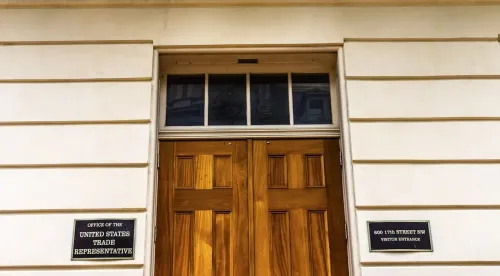
The United States on 25 November 2026 proposed tariffs of up to 25 per cent on Indian goods after an investigation into manufacturing overcapacity, while signalling a possible 17 per cent rate if India concludes a reciprocal trade agreement that addresses Washington’s concerns. The proposal, unveiled in Washington by the Office of the US Trade Representative (USTR), would be calculated net of existing Section 301 duties, exempt certain products, and does not impose new tariffs immediately.
What Washington proposed for India
US Trade Representative Jamieson Greer announced findings covering India among 14 economies whose manufacturing policies the agency said were unreasonable and burdened or restricted US commerce, making them subject to possible action under US trade law. For India, USTR proposed tariffs of up to 25 per cent on all goods of India, net of existing Section 301 tariffs, with exemptions for certain goods.
That formulation means current Section 301 duties would be taken into account when the proposed rate is calculated. The announcement also sought consideration of adjustments for duties under Section 232, a separate statute used for national security-related trade restrictions. A lower possible rate of 17 per cent would depend on India reaching an agreement on reciprocal trade that responds to the investigation’s findings.
Sectors flagged by USTR
USTR identified pharmaceuticals, medical devices, steel, solar products, and information and communications technology as sectors in which it said Indian policies particularly affected US commerce. The agency argued those practices reduced opportunities for US producers in India and other markets, contributed to lost American production, exports, jobs and investment, and raised economic security risks.
Greer said President Donald Trump was proposing action to eliminate practices that international discussions had failed to change. Section 301 allows the United States to respond to foreign government practices it determines unfairly burden American commerce. Notably, the package is still a proposal: comments, testimony and hearings must run their course before any duty is actually levied.
Fourteen economies, uneven rates
India is not the sole target. The other economies covered by Wednesday’s findings are China, the European Union, Singapore, Switzerland, Indonesia, Malaysia, Cambodia, Thailand, South Korea, Vietnam, Taiwan, Bangladesh and Japan. Proposed rates and adjustments differ across those economies. USTR has not yet made determinations concerning Mexico and Norway, which were also included in the original investigations.
This is a multi-country manufacturing-overcapacity action rather than a standalone India measure, though the headline rate proposed for Indian goods — up to 25 per cent, or 17 per cent with a deal — will be closely watched in New Delhi given the breadth of products theoretically in scope.
Timeline and what happens next
USTR began the investigations into manufacturing overcapacity on 11 March. It said it received 1,070 comments and testimony from nearly 140 witnesses concerning the 16 economies originally investigated. Written comments on the current proposals are due by 5 January 2027. Requests to testify, accompanied by summaries of planned testimony, are due the same day. Hearings are scheduled to begin on 25 January and continue as needed.
Until that process concludes, no new duty is in force. Exporters, importers and New Delhi will now weigh whether to contest the findings, seek product-level exemptions, or pursue the reciprocal-trade path that USTR has tied to the lower 17 per cent rate. The coming weeks will test whether India-US commercial diplomacy can convert a proposed levy into a negotiated outcome — or whether the higher ceiling becomes the baseline in 2027.
Point of View
The EU and East Asia. The 17 per cent off-ramp is the real bargaining chip — it converts a tariff threat into leverage for a reciprocal deal on terms the US has already decided are non-negotiable. New Delhi should not confuse process (comments, hearings, exemptions) with protection: once Section 301 findings are on the record, the default is action unless India bargains them down. The sectors named — pharma, steel, solar, ICT — sit at the heart of India’s export and Make in India story, which is precisely why this cannot be treated as another routine trade spat.
NationPress
25 Nov 2026
Frequently Asked Questions
What tariffs has the US proposed on Indian goods?
The United States has proposed tariffs of up to 25 per cent on all goods of India, calculated net of existing Section 301 duties and with exemptions for certain products. A possible 17 per cent rate would apply if India reaches a reciprocal trade agreement that addresses USTR’s findings.
Do the new US tariffs on India take effect immediately?
No. The announcement does not impose new duties immediately. Written comments are due by 5 January 2027 and hearings are scheduled to begin on 25 January before any determination is finalised.
Which Indian sectors did USTR single out?
USTR identified pharmaceuticals, medical devices, steel, solar products, and information and communications technology as sectors in which it said Indian policies particularly affected US commerce. It argued those practices reduced opportunities for US producers and contributed to lost American production, jobs and investment.
Why did the US open this investigation?
USTR began manufacturing-overcapacity investigations on 11 March covering 16 economies, concluding that certain manufacturing policies were unreasonable and burdened or restricted US commerce. Section 301 allows the United States to respond to foreign government practices it determines unfairly burden American commerce.
Which other countries are covered besides India?
The other economies in Wednesday’s findings are China, the European Union, Singapore, Switzerland, Indonesia, Malaysia, Cambodia, Thailand, South Korea, Vietnam, Taiwan, Bangladesh and Japan. Proposed rates differ by economy; determinations on Mexico and Norway have not yet been made.