Is the West Bengal Crisis a Political Challenge Rather than a Law-and-Order Issue?
Synopsis
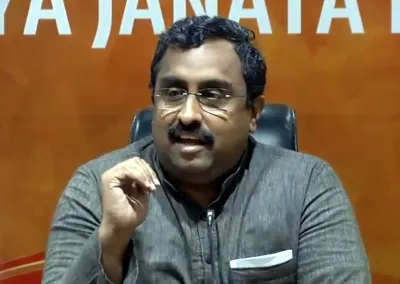
In a recent discussion, Ram Madhav stressed that the West Bengal crisis should be tackled politically, dismissing calls for central intervention. He highlighted ongoing violence and intimidation during elections while expressing confidence in the BJP’s ability to improve electoral outcomes in the future.
Key Takeaways
Political engagement is essential to address the crisis in West Bengal.
Violence and intimidation during elections remain significant challenges.
The ruling TMC has extensive control over administrative structures.
Demographic changes pose long-term challenges for political dynamics.
The BJP is optimistic about improving its electoral performance in upcoming elections.
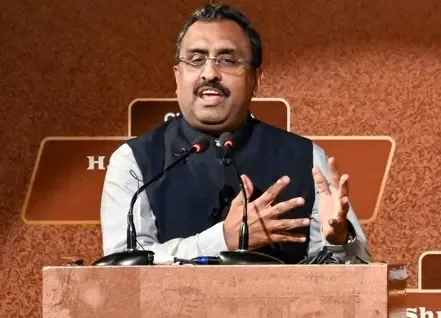
Washington, Jan 12 (NationPress) The crisis in West Bengal should be resolved through political discussions rather than through drastic federal actions, asserted senior BJP leader Ram Madhav. He emphasized that patience and ongoing political dialogue are essential to confront the ruling Trinamool Congress (TMC).
During an interaction hosted by the Overseas Friends of BJP (OFBJP) in Washington, Madhav dismissed calls for severe measures in the eastern state. “This is fundamentally a political battle. We must engage politically and exercise patience,” he stated.
He warned against hasty decisions, saying, “Avoid thinking that if they don’t heed my words, I will take direct action.” He highlighted that India’s democratic framework demands electoral solutions.
Madhav pointed out that the issues of violence and intimidation during elections in West Bengal are pressing concerns. “The state has a culture of violence. Following elections, there are often attacks on villagers and families,” he remarked, labeling post-poll violence as “the unfortunate aspect.”
He accused the ruling party of employing various tactics to maintain dominance. “They control the entire government,” he claimed, indicating that party workers are entrenched within administrative frameworks, even at the village level.
According to Madhav, the TMC integrates party organization, governmental resources, and non-governmental organizations. “They possess an NGO and an IPAC-like framework with paid operatives extending to the village level,” he explained.
Despite the challenges, Madhav noted that the BJP’s electoral success has been on the rise. “In the 2021 elections, we performed admirably, securing second place,” he stated, believing that many constituencies narrowly lost can be targeted for victory.
He stressed that the focus should be on converting those second-place finishes into victories. “Winning those number two seats is crucial for government formation,” he emphasized.
Madhav also highlighted long-term demographic changes as a challenge. “Significant demographic shifts have occurred in the state over decades,” he explained, associating them with migration following the formation of Bangladesh in 1971.
He mentioned that infiltration along the India-Bangladesh border has transformed the political landscape in several districts. “Currently, eight to ten districts have predominantly immigrant populations,” he noted.
Madhav stated that the border is now fenced, which has slowed infiltration. “We have completed a 2,009-kilometer fence along the border,” he said, adding that managing the political ramifications remains a challenge.
Regarding voter verification initiatives, he revealed that “nearly six million individuals were identified as non-genuine voters,” although he remarked that the issue was handled discreetly. “Some matters should unfold without excessive discussion,” he suggested.
Madhav expressed confidence in the BJP’s prospects in future elections. “I firmly believe we will perform significantly better than in 2021,” he stated.
He reiterated that federal rule is not the solution. “This is a political battle only. Do not view it in any other context,” he concluded.
Point of View
It’s crucial to recognize that the issues in West Bengal are deeply rooted in political dynamics rather than mere law enforcement failures. The emphasis on political engagement reflects the need for a nuanced approach to governance, highlighting the importance of dialogue and electoral integrity in addressing the challenges faced by the state.
NationPress
15 Sept 2026
Frequently Asked Questions
What is the main issue in West Bengal according to Ram Madhav?
Ram Madhav believes that the crisis in West Bengal should be addressed through political means rather than central intervention.
What concerns did Madhav raise about elections in West Bengal?
He pointed out issues of violence and intimidation during elections, describing it as a serious concern.
How does the TMC maintain its control in West Bengal?
Madhav alleged that the TMC operates at various levels, embedding party cadres within governmental structures.
What demographic changes has West Bengal experienced?
Madhav noted significant demographic shifts due to migration following the creation of Bangladesh in 1971.
What is Madhav's outlook on future elections for the BJP?
He expressed confidence that the BJP will perform better in future elections compared to 2021.