WTO's 14th Ministerial Conference Charts Future Discussions
Synopsis
At the WTO's 14th Ministerial Conference in Cameroon, crucial discussions took place addressing vital issues such as fisheries subsidies, e-commerce, and agriculture. This gathering sets a significant political direction for upcoming negotiations, highlighting the commitment of members towards enhancing global trade frameworks.
Key Takeaways
WTO MC14 focused on significant trade issues.
119 countries accepted the Fisheries Subsidies Agreement .
India advocates for a balanced approach to fisheries subsidies.
Investment facilitation is crucial for developing nations .
E-commerce discussions emphasize growth and development.
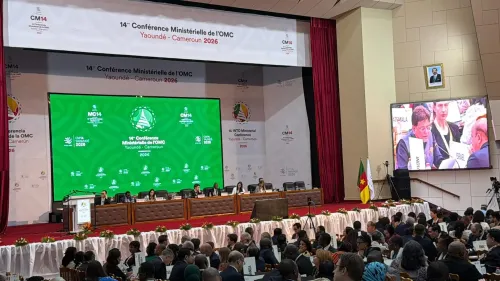
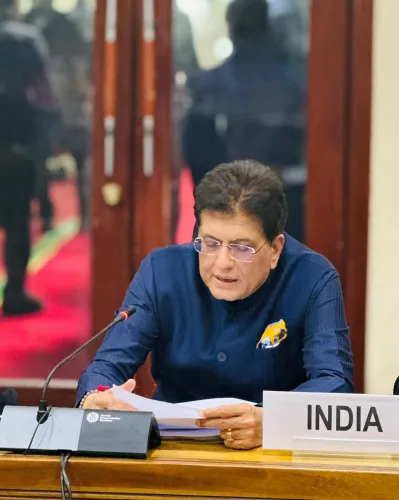
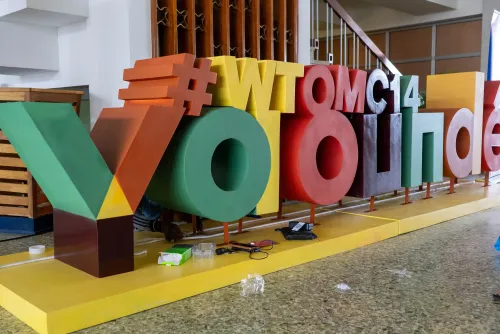
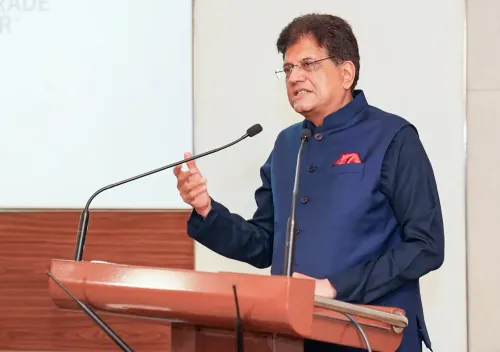
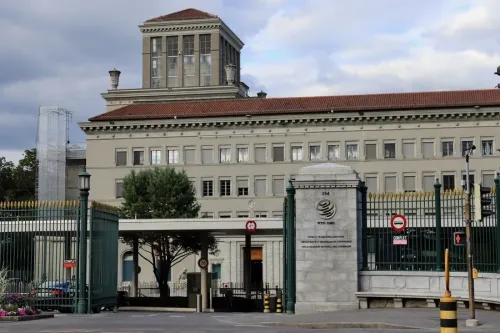
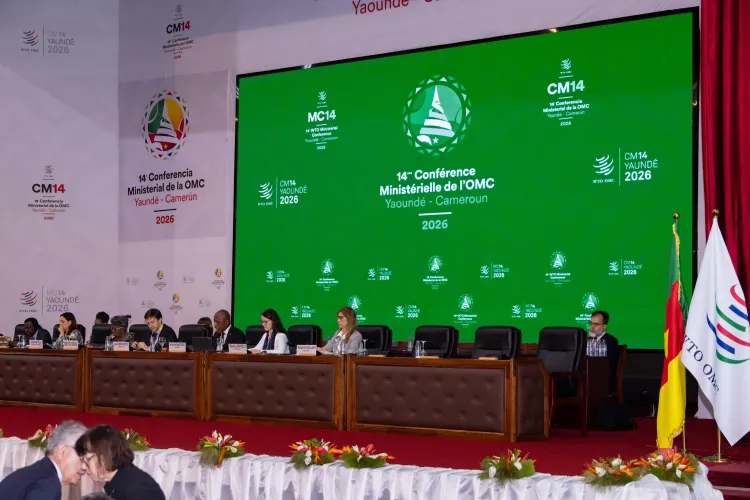
New Delhi, March 29 (NationPress): During the WTO's 14th Ministerial Conference (MC14) held in Cameroon, ministers and senior officials engaged in a variety of discussions aimed at addressing pivotal topics on the WTO agenda and establishing a political roadmap for the future, as stated by the organization.
The meetings focused on critical issues including fisheries subsidies, the Investment Facilitation for Development (IFD) Agreement, the E-Commerce Work Programme and its moratorium, as well as agriculture and development challenges facing least developed countries.
Prior to the ministerial sessions, Ambassador Clare Kelly of New Zealand, who chairs the WTO’s Dispute Settlement Body (DSB), presented an update on efforts to reform dispute settlement mechanisms.
Ambassador Kelly mentioned that she conducted two rounds of consultations with members in July and November 2025, during which there was a strong consensus on the significance of advancing dispute settlement reform. However, she acknowledged that many members are aware of the current challenges and favor resuming discussions post-MC14 when the timing is appropriate.
In the session dedicated to fisheries subsidies, moderated by Atty Asis G. Perez, Undersecretary at the Department of Agriculture of the Philippines, WTO members celebrated the enactment of the WTO Agreement on Fisheries Subsidies. They also recognized the acceptance of the agreement by Paraguay, Samoa, and Saint Vincent and the Grenadines as of March 26, bringing the total to 119 members.
India reiterated its dedication to negotiating a comprehensive Fisheries Subsidies Agreement that considers both current and future fishing needs while ensuring the livelihoods of impoverished fishers are protected through suitable Special and Differential Treatment (S&DT).
Furthermore, members committed to continuing negotiations on unresolved fisheries subsidies to reach a consensus on additional provisions that will further tighten the regulations.
The discussion on the IFD Agreement was led by Dwright Fitzgerald Bramble, Minister of Foreign Affairs, Trade, Investment and Diaspora Affairs of Saint Vincent and the Grenadines, who addressed the integration of the IFD Agreement into the WTO legal framework.
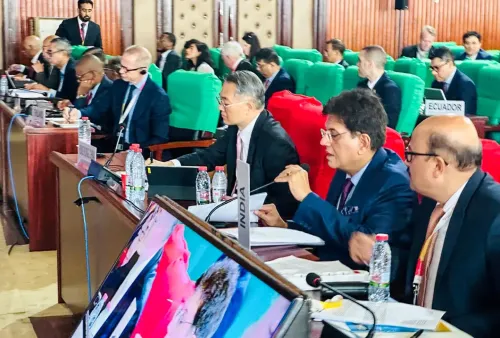
India contended that investment should not be classified as a trade issue under the Marrakesh Agreement, warning against the use of plurilateral agreements that could undermine outstanding multilateral obligations.
During the session, Bangladesh declared its intention to join the IFD Agreement, increasing the number of co-sponsors to 129.
The e-commerce session, facilitated by Kamina Johnson Smith, Minister of Foreign Affairs and Foreign Trade of Jamaica, involved discussions on elements for a potential e-commerce package. Key topics included revitalizing e-commerce discussions through the Work Programme on E-Commerce or a new Committee on Digital Trade, enhancing the developmental aspects of e-commerce at the WTO, and determining the duration for maintaining the moratorium on customs duties for electronic transmissions. Members expressed their opinions on these elements.
As the session concluded, the facilitator noted that while there was progress towards convergence, members' positions had not fully aligned. She emphasized the importance of e-commerce for growth and development, relevant to the future of all members.
The agricultural session featured vibrant discussions among members regarding market access, food security, public stockholding, and special safeguard measures. Many members expressed their eagerness to continue substantive discussions in Geneva.
India asserted that agriculture is vital for the livelihoods of millions, especially in the Global South, and emphasized the urgency of achieving a permanent solution for public stockholding for food security, a special safeguard mechanism, and addressing cotton issues as long-standing mandates that require prompt attention.
Point of View
The discussions at the WTO's Ministerial Conference are crucial for shaping future global trade policies. The emphasis on cooperation among nations, particularly regarding issues affecting the Global South, highlights a commitment to equitable trade practices. It's essential that these negotiations prioritize the needs of vulnerable economies while ensuring sustainable practices.
NationPress
27 Oct 2026
Frequently Asked Questions
What was the primary focus of the WTO's 14th Ministerial Conference?
The primary focus included discussions on fisheries subsidies, the Investment Facilitation for Development Agreement, e-commerce, and agricultural issues, particularly concerning least developed countries.
How many countries have accepted the WTO Agreement on Fisheries Subsidies?
As of March 26, 119 WTO members have formally accepted the Agreement on Fisheries Subsidies.
What is India's stance on the Fisheries Subsidies Agreement?
India remains committed to negotiating a comprehensive Fisheries Subsidies Agreement that balances fishing needs and protects the livelihoods of poor fishers.
What is the significance of the IFD Agreement?
The IFD Agreement aims to facilitate investment within the WTO framework, which is crucial for economic development, especially among developing nations.
What is the outcome of the discussions on e-commerce?
Members discussed key elements for a potential e-commerce package, focusing on revitalizing discussions and establishing a moratorium on customs duties for electronic transmissions.