Piyush Goyal Advocates for Inclusive WTO Reforms at MC14
Synopsis
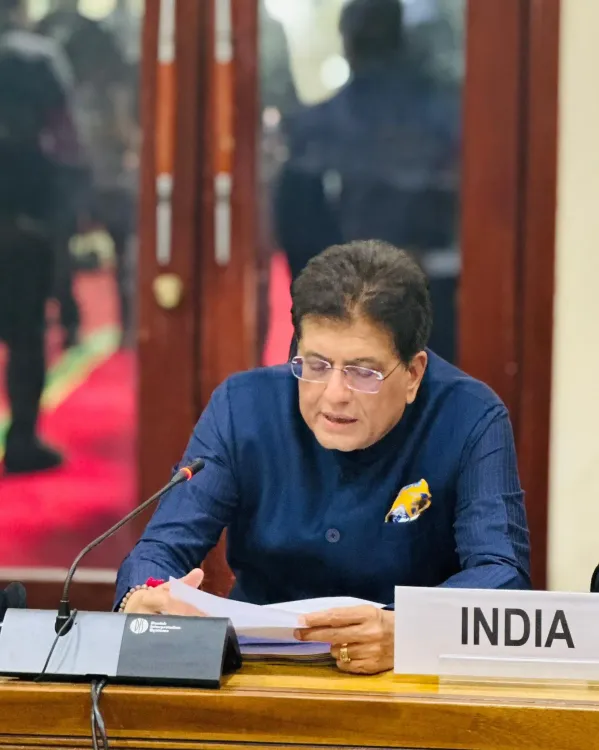
At the ongoing 14th Ministerial Conference in Yaounde, Cameroon, Union Commerce Minister Piyush Goyal calls for WTO reforms to be inclusive and member-driven, emphasizing development and core principles like non-discrimination.
Key Takeaways
Piyush Goyal advocates for member-driven WTO reforms.
Importance of non-discrimination and consensus-based decision-making .
Engagement with Cameroon to strengthen cooperation.
Focus on development-centric trade agendas.
Reiteration of foundational principles from the Marrakesh Agreement .
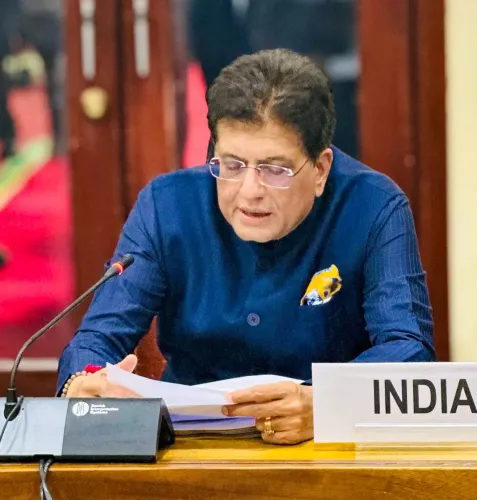
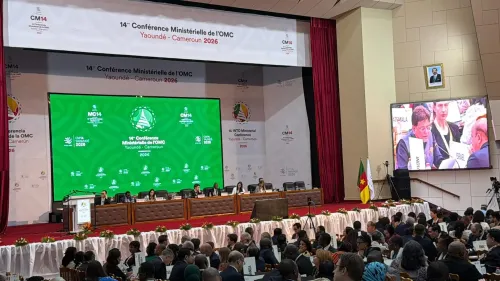
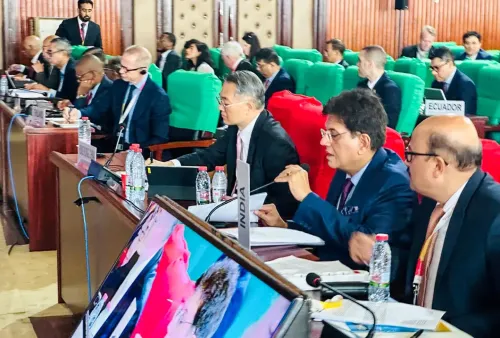
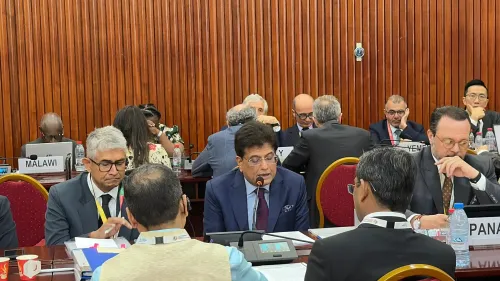
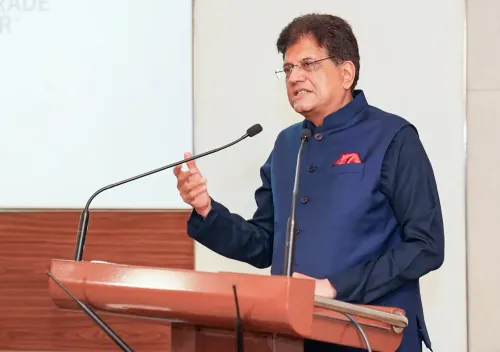
New Delhi, March 27 (NationPress) - Union Minister for Commerce and Industry, Piyush Goyal, emphasized the necessity for WTO reforms to be approached through a process that is both transparent and inclusive, prioritizing a member-driven model with development at its core during the ongoing 14th Ministerial Conference (MC14) in Yaounde, Cameroon, according to an official statement released on Friday.
He stressed the importance of maintaining essential principles such as non-discrimination, consensus-based decision-making, and equity.
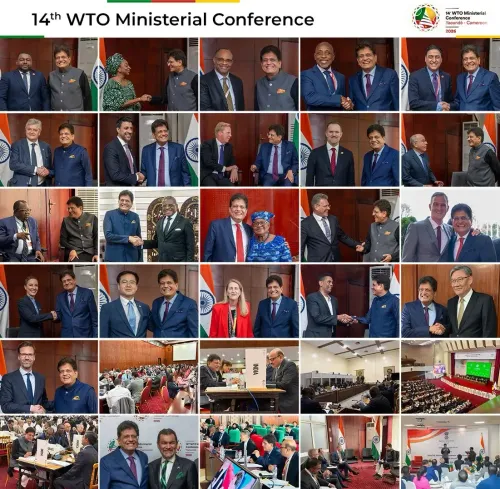
While attending the conference, Goyal engaged in discussions with Cameroon Prime Minister Joseph Dion Ngute, addressing both bilateral and multilateral matters, particularly focusing on enhancing cooperation between India and Cameroon.
The discussions also encompassed fundamental aspects of the WTO, including its core principles.
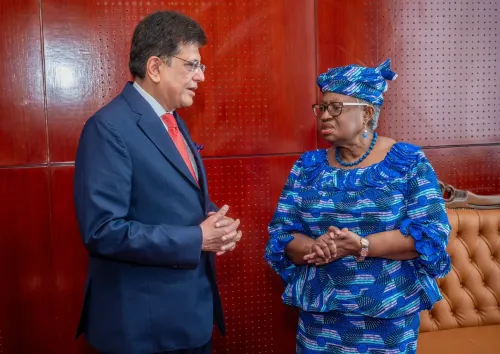
Goyal conducted a meeting with WTO Director-General Ngozi Okonjo-Iweala to deliberate on the agenda for MC14. Additionally, he met with his counterparts from The Netherlands, France, and Ethiopia to assess and strengthen bilateral trade relations.
On a parallel note, Commerce Secretary Rajesh Agrawal held several bilateral meetings with officials from countries including Chile, Paraguay, the US, Nepal, The Philippines, Saudi Arabia, Mexico, Peru, Russia, and New Zealand, alongside a delegation of European Union parliamentarians.
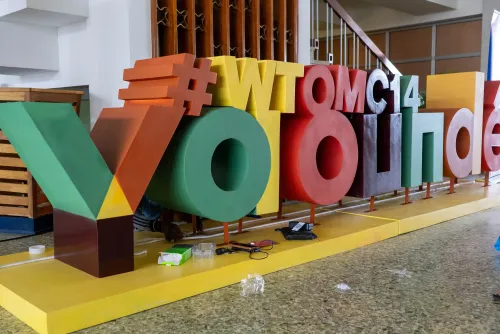
The MC14 of the World Trade Organisation started in Yaounde on March 26, highlighted by a ceremonial session led by Cameroon’s Trade Minister, and is set to conclude on March 29.
The inaugural session saw participation from WTO Director-General Ngozi Okonjo-Iweala, alongside trade ministers and senior representatives from member nations.
Following this, a brief event took place to mark the implementation of the Agreement on Fisheries Subsidies.
Key discussions revolved around the MC14 agenda and prospects for enhancing bilateral trade relations. Talks with Chile and Peru included ongoing negotiations for free trade agreements, while the discussions with the European Union and New Zealand focused on the progress of their respective FTA dialogues.
India reiterated that non-discrimination is a foundational principle of the WTO framework, as outlined in the Marrakesh Agreement. The country also highlighted the importance of a development-centric agenda, advocating for a permanent solution regarding public stockholding (PSH) for food security, effective Special and Differential Treatment (S&DT) provisions for developing and least developed countries (LDCs), and the reinstatement of a fully functional dispute settlement mechanism.
Point of View
It is apparent that Piyush Goyal's stance reflects India's commitment to a fair and equitable global trading system. His push for reforms at the WTO highlights a proactive approach to international cooperation and development, ensuring that the voices of all member nations are heard.
NationPress
27 Oct 2026
Frequently Asked Questions
What is the focus of the 14th Ministerial Conference (MC14)?
The MC14 focuses on discussing reforms within the WTO, emphasizing inclusivity, transparency, and development-driven processes.
Who did Piyush Goyal meet during the conference?
Piyush Goyal met with various leaders, including Cameroon Prime Minister Joseph Dion Ngute, WTO Director-General Ngozi Okonjo-Iweala, and counterparts from multiple countries to discuss bilateral trade relations.
What principles did Goyal emphasize regarding WTO reforms?
Goyal emphasized the importance of non-discrimination, consensus-based decision-making, and equity as key principles for WTO reforms.
What is India's stance on non-discrimination in WTO?
India reiterated that non-discrimination is a foundational principle of the WTO framework, as stated in the Marrakesh Agreement.
What are some key agenda items discussed at MC14?
Key agenda items include the Agreement on Fisheries Subsidies, bilateral trade enhancements, and ongoing free trade agreement negotiations with countries like Chile and Peru.