BRICS Summit Delhi Declaration signals consensus, raises stakes for India: Expert
Synopsis
India pulled off a notable diplomatic feat at the BRICS Summit, securing consensus on the Delhi Declaration across a membership with sharply divergent geopolitical loyalties. But analysts warn the harder test is ahead: converting summit goodwill into real multilateral outcomes on West Asia, Ukraine, and global development finance.
Key Takeaways
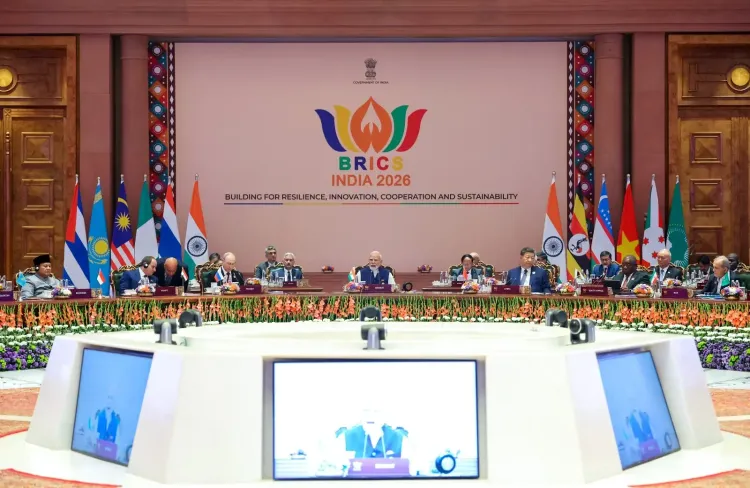
The BRICS Summit concluded with the adoption of the Delhi Declaration , achieved through full member consensus, according to Chintan Research Foundation Fellow Indrani Talukdar .
Talukdar called the summit 'a huge success' but stressed it has created greater responsibility for India to capitalise on the goodwill generated.
The West Asian crisis and the Strait of Hormuz are expected to be key priorities for BRICS going forward, alongside the ongoing Ukraine conflict .
Prime Minister Narendra Modi's stance — 'this is not an era of war' — was cited as relevant to BRICS's collective push for conflict resolution.
The Indian Council of World Affairs (ICWA) was highlighted as a key institutional voice in shaping India's foreign policy narrative on the global stage.
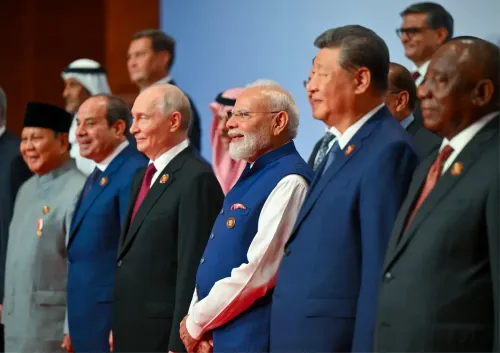
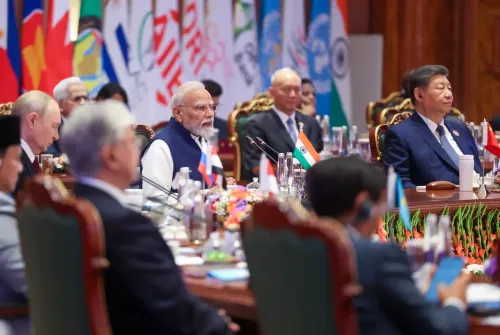
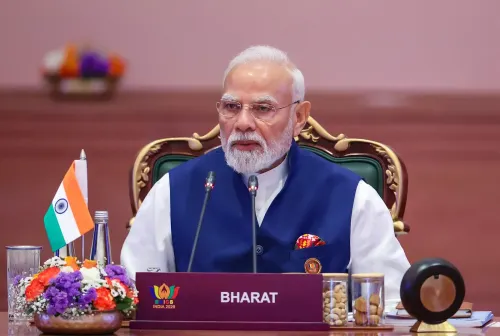
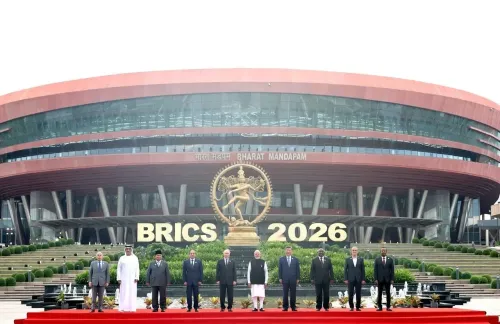
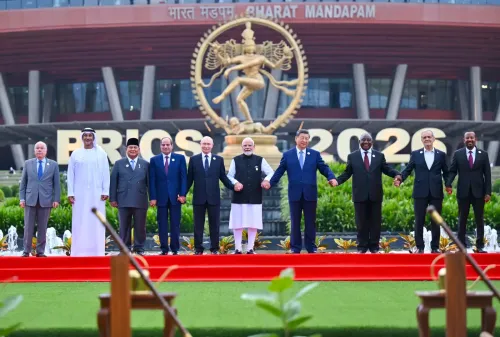
The BRICS Summit concluded as a significant diplomatic achievement for India, with the adoption of the Delhi Declaration reflecting broad consensus among member nations, according to Indrani Talukdar, Fellow at the Chintan Research Foundation. Speaking on Tuesday, 15 September 2026, Talukdar said India's ability to unite the grouping behind a shared declaration underscores both the summit's success and the weight of responsibility that now rests on New Delhi.
Delhi Declaration: Key Achievement of the Summit
Talukdar described the adoption of the Delhi Declaration as one of the summit's foremost accomplishments. She argued that securing consensus among the increasingly diverse BRICS membership — which now includes nations with divergent geopolitical alignments — was no small feat. 'The outcome has also created greater responsibility for India to capitalise on the goodwill it has gathered,' she noted.
She added that the focus must now shift toward 'optimizing and customizing' the opportunities that the grouping presents. According to her, India has considerable work ahead, particularly in translating summit goodwill into concrete policy and economic outcomes.
Geopolitical Priorities Shaping BRICS's Future
On the question of whether BRICS could emerge as a credible counterweight to Western-led global institutions, Talukdar pointed to a cluster of geopolitical flashpoints that will define the grouping's near-term agenda. Chief among them is the West Asian crisis, which she said is likely to receive sustained attention from both BRICS members and Global North nations seeking a resolution pathway, including concerns around the Strait of Hormuz.
She also highlighted the protracted Ukraine conflict, arguing that it 'cannot continue indefinitely.' Citing Prime Minister Narendra Modi's oft-repeated position — 'this is not an era of war' — Talukdar stressed that the grouping has a collective stake in pushing for a negotiated end to the hostilities. This comes amid growing signals that BRICS members are increasingly vocal on global peace and security matters, areas previously dominated by G7 frameworks.
India's Diplomatic Footprint and Institutional Role
Talukdar also drew attention to the role of the Indian Council of World Affairs (ICWA) in shaping India's foreign policy narrative. Drawing on her own experience as a former ICWA employee, she said the institution has been instrumental in articulating and strengthening India's perspective on global affairs.
Notably, she framed India's rising stature not merely as a government achievement but as a broader national project — one that institutions like ICWA are uniquely positioned to advance. 'With India emerging as a powerful country,' she said, platforms such as ICWA have an important role to play in shaping the country's global voice.
What Comes Next for India After the Summit
Analysts and foreign policy observers will be watching closely to see how New Delhi converts the diplomatic capital earned at the BRICS Summit into tangible multilateral outcomes — particularly on trade corridors, development financing, and conflict mediation. The Delhi Declaration has set a high bar; the harder task of implementation now begins.
Point of View
But translating it into a concrete mediation role demands far more than summit declarations.
NationPress
15 Sept 2026
Frequently Asked Questions
What is the BRICS Summit Delhi Declaration?
The Delhi Declaration is a consensus document adopted by all BRICS member nations at the recent BRICS Summit hosted by India in New Delhi. It reflects the grouping's shared positions on geopolitical, economic, and multilateral issues, and is being cited as a key indicator of India's diplomatic effectiveness in leading the bloc.
Why is the BRICS Summit 2026 considered a success for India?
According to Chintan Research Foundation Fellow Indrani Talukdar, India succeeded in uniting BRICS members — a group with increasingly divergent geopolitical alignments — behind a common declaration. She said this demonstrated both the effectiveness of the summit and India's growing stature in multilateral diplomacy.
What geopolitical issues will BRICS focus on after the Delhi Summit?
Talukdar identified the West Asian crisis, concerns around the Strait of Hormuz, and the ongoing Ukraine conflict as the grouping's likely priority areas. She echoed PM Modi's position that the Ukraine war 'cannot continue indefinitely' and must be resolved through dialogue.
How does BRICS compare to Western-led global institutions?
Whether BRICS can emerge as a stronger alternative voice to Western-led institutions such as the G7 or IMF remains an open question. Talukdar indicated that several geopolitical developments will shape the grouping's future priorities, but stopped short of claiming BRICS is ready to supplant existing multilateral frameworks.
What role does the Indian Council of World Affairs play in India's foreign policy?
The Indian Council of World Affairs (ICWA) is described by Talukdar as a key institutional platform for articulating and strengthening India's narrative on global affairs. She noted that as India's international stature grows, bodies like ICWA become increasingly important in shaping how the country's perspective is communicated globally.