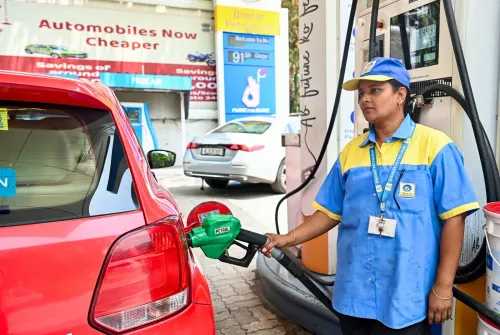
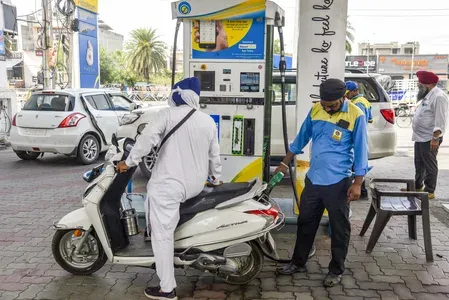
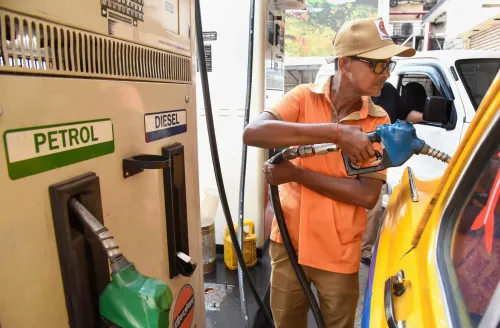
Petrol, diesel up ₹3/litre: CAIT backs hike as responsible call

Synopsis
India's largest traders' body has broken ranks with public sentiment to openly back the ₹3 per litre fuel price hike, framing it as an energy security necessity rather than a burden — a significant signal from a body that represents millions of small businesses directly exposed to rising logistics costs.
Key Takeaways
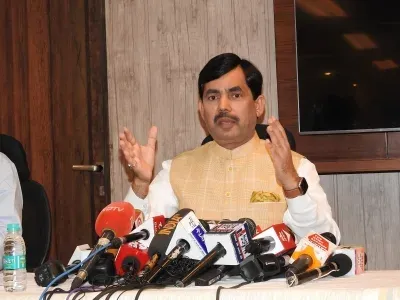
CAIT on 15 May termed the ₹3 per litre petrol and diesel price hike a 'measured and responsible decision.' CAIT Secretary General and BJP MP Praveen Khandelwal cited geopolitical tensions and global crude supply disruptions as the primary justification.
Khandelwal warned that prolonged artificial price suppression could strain public finances and oil marketing companies.
CAIT acknowledged the hike will raise transportation and logistics costs but urged businesses to support the decision in the national interest.
The revision is framed as a calibrated step to protect India's energy security during a period of global volatility.
The Confederation of All India Traders (CAIT) on Friday, 15 May backed the ₹3 per litre increase in petrol and diesel prices, describing it as a 'measured and responsible decision' designed to protect fuel availability and sustain economic stability amid heightened global uncertainty.
Why CAIT Supports the Hike
CAIT Secretary General and Bharatiya Janata Party (BJP) Member of Parliament Praveen Khandelwal said the decision must be read against the backdrop of ongoing geopolitical tensions and disruptions across global crude oil markets. He pointed to wars and conflicts in multiple regions as key factors that have severely strained international crude supply chains, pushing up prices and amplifying energy market uncertainty.
'Since India imports a substantial portion of its crude oil requirements, fluctuations in international crude prices inevitably influence the domestic fuel economy,' Khandelwal said.
The Case Against Prolonged Price Controls
Khandelwal argued that artificially suppressing fuel prices over an extended period risks placing unsustainable pressure on public finances and oil marketing companies — a strain that could ripple through the broader economy. 'Artificially controlling fuel prices for a prolonged period could put excessive pressure on public finances and oil marketing companies, which may adversely affect the overall economy,' he said.
He added that the government has consistently tried to shield consumers through balanced pricing and targeted relief measures. 'In the present scenario, a limited increase is understandable and necessary to safeguard the nation's energy security,' Khandelwal stated.
Impact on Trade and Logistics
CAIT acknowledged that the revised prices are likely to push up transportation and logistics costs for businesses. However, the trade body urged citizens and the commercial sector to support decisions taken in the larger national interest during a period of exceptional global stress.
Notably, oil marketing companies had held domestic fuel prices steady for an extended stretch even as international crude benchmarks remained volatile — a policy that critics had flagged as fiscally unsustainable. The ₹3 per litre revision is being positioned as a course correction rather than a windfall measure.
The Bigger Picture
'India's economic resilience and energy stability are of utmost importance. Temporary adjustments made with a long-term vision will strengthen the country's capacity to face global challenges with confidence,' Khandelwal said. The revision will directly affect transportation costs across supply chains, with downstream pressure on retail prices of goods that depend on road freight. How swiftly those costs pass through to consumers will be closely watched in the weeks ahead.
Point of View
Which makes the statement as much a party alignment signal as an independent trade assessment. The core economic argument about prolonged price suppression straining oil marketing companies is legitimate and well-documented, but the absence of any demand for compensatory relief for small traders and transporters — the very constituency CAIT claims to represent — is a conspicuous gap. Fuel price hikes in India have historically triggered cascading cost increases in food and freight; whether this ₹3 revision stays contained or becomes a base for further hikes will determine its real economic footprint.
NationPress
5 Oct 2026
Frequently Asked Questions
Why did petrol and diesel prices increase by ₹3 per litre?
The ₹3 per litre hike in petrol and diesel prices has been attributed to sustained disruptions in global crude oil supply chains driven by ongoing geopolitical conflicts. Oil marketing companies had held prices steady for an extended period, and the revision is being described as a calibrated step to maintain energy supply and financial stability.
What is CAIT's position on the fuel price hike?
The Confederation of All India Traders (CAIT) has backed the hike, calling it a 'measured and responsible decision.' CAIT Secretary General Praveen Khandelwal argued that artificially suppressing fuel prices for too long would harm public finances and oil marketing companies.
Will the fuel price hike affect transportation and trade costs?
CAIT has acknowledged that the revised prices will have some impact on transportation and logistics costs. The trade body has nonetheless urged businesses and citizens to support the decision, framing it as necessary for long-term energy security.
Who is Praveen Khandelwal and why does his statement matter?
Praveen Khandelwal is the Secretary General of CAIT and a sitting BJP Member of Parliament. His statement carries weight both as the voice of a major national traders' body and as a signal of the ruling party's framing of the fuel price revision.
How does India's crude oil import dependence affect domestic fuel prices?
India imports a substantial share of its crude oil requirements, meaning international price swings directly feed into domestic fuel costs. When global crude prices rise due to geopolitical disruptions, oil marketing companies face higher input costs that eventually necessitate retail price adjustments.